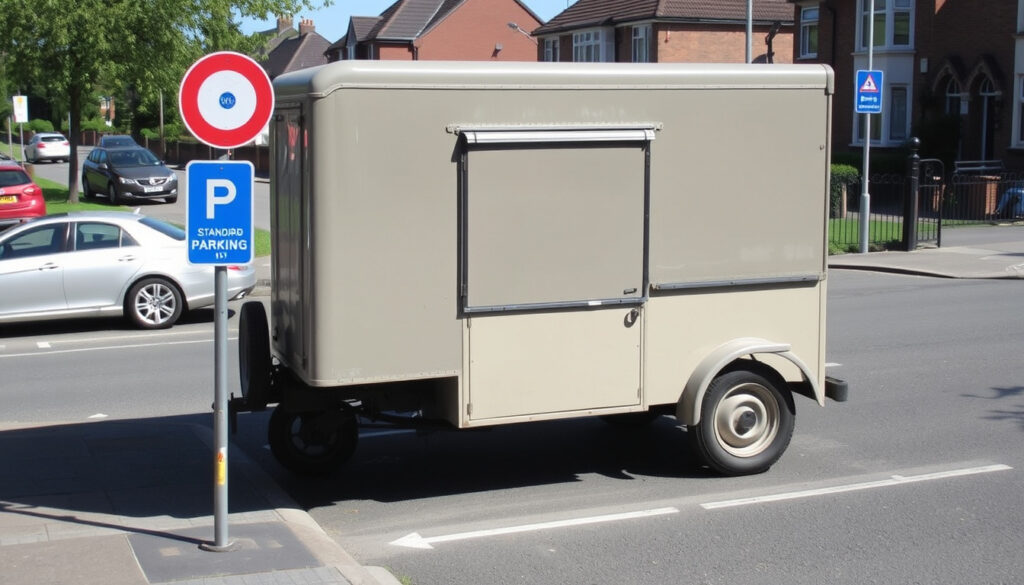
Luton Van Guide: Licence, Size & History
If you’ve ever hired a van for a house move or a bulky delivery, you’ve probably come across the term ‘Luton van’ – a box van with a distinctive over-cab storage compartment above the driver’s cab. Here’s everything you need to know about Luton vans, from their odd naming history to the licence rules that apply across the UK and Ireland, and whether one is right for your next move.
Typical gross vehicle weight: 3.5 tonnes ·
Minimum payload capacity: 800 kg ·
Common engine size: 2.2 litre ·
Typical cargo length: 4.3 m (14 ft) ·
Typical cargo height: 2.2 m (7.2 ft)
Quick snapshot
- Box van with over-cab storage (Hirefleet)
- 3.5 tonnes gross weight typical (Pace Van Hire)
- Used for removals and dry freight (Nationwide Hire UK)
- Driven on a standard B licence in UK and Ireland (Trott Rentals)
- Check weight does not exceed 3.5 tonnes (Edmonton Van Hire)
- Tail lift models may add weight (GOV.UK)
- Interior length ~4.3 m (Nationwide Hire UK)
- Payload from 800 kg up (Edmonton Van Hire)
- Larger than a Sprinter box van (Pace Van Hire)
- Adequate for a one-bed flat (Hirefleet)
- Multiple trips needed for larger homes (Nationwide Hire UK)
- Economical alternative to a lorry (Trott Rentals)
A quick glance at the key numbers that define a typical 3.5-tonne Luton van.
| Specification | Value |
|---|---|
| Weight limit (B licence) | Up to 3.5 tonnes GOV.UK (official UK driving guidance) |
| Typical engine | 2.2 litre diesel |
| Cargo volume | ~20 m³ |
| Hourly hire cost (rough) | £60–£90 per day |
| Common brand | Bedford, Mercedes, Ford, VW |
| Maximum authorised mass (MAM) | 3,500 kg |
| Typical payload | 800–1,500 kg Edmonton Van Hire (UK hire industry) |
| Tail-lift capacity | 500 kg Nationwide Hire UK (van rental provider) |
| MOT class | Class 4 (up to 3,000 kg design gross weight) or Class 7 (3,000–3,500 kg) |
| Zero-emission van allowance (B licence) | Up to 4,250 kg |
Most Luton vans sit right at the 3.5-tonne limit. That means every kilogram of payload counts – fill the tank, add a passenger, and the margin before you need a C1 licence is razor-thin.
What Is a Luton Type Van?
A Luton van is a box van with an over-cab storage compartment – the “Luton box” that extends above the driver’s cab. It’s designed for dry freight and secure loads, making it a favourite among removal companies and delivery drivers. According to Hirefleet (specialist van hire comparison site), Luton vans are “ideal for dry freight removals because the over-cab area provides extra storage without reducing the main load space.”
Key features of a Luton box van
- Over-cab compartment – typical height about 0.7–1 m, accessed from inside the load area or by a separate door.
- Flat floor and square sides – maximises usable volume for stacked boxes and furniture.
- Rear roller shutter or barn doors – common options for loading.
- Tail lift often available – adds weight but simplifies loading heavy items.
Typical uses for Luton vans
- House removals – the over-cab space is perfect for bedding and cushions.
- Furniture deliveries – flat-pack wardrobes, sofas, and mattresses.
- Dry freight – parcels, electronics, office supplies.
Luton van vs other van types
The key difference between a Luton van and a standard panel van (like a Ford Transit or Mercedes Sprinter) is the over-cab box. A panel van has a bulkhead separating the cab from the load area; a Luton van fills the entire body with cargo space, including above the cab. The trade-off: you lose the option to carry very tall items that need to stand upright in the middle of the load bay.
The over-cab compartment reduces the maximum load height for the main area. If you’re moving tall wardrobes, a standard Luton van might force you to lay them flat – check internal door heights before loading.
“A standard Luton van can be hired by anyone with a full B licence, provided the van is under 3.5 tonnes.”
— Enterprise Rent-A-Car (van hire division)
Why Is a Van Called a Luton?
The name ‘Luton van’ is widely believed to originate from the town of Luton, Bedfordshire. According to historical accounts, in the 1920s, Bedford Vehicles (former British vehicle manufacturer) was based in Luton and popularised a van body that extended over the cab for extra load space. The design stuck, and the name “Luton” became generic for any van with that over-cab box – much like “Hoover” for vacuum cleaners.
History of the Luton van name
- 1920s–30s: Bedford Vehicles is believed to have started producing vans with a “Luton body” – the over-cab extension.
- Post-war: The Luton van becomes the go‑to for UK removals and delivery fleets.
- Today: “Luton van” is a generic term used by hire companies across the UK and Ireland, regardless of actual manufacturer.
Origin of the over-cab design
The over-cab compartment wasn’t an accident – it was a clever way to add load volume without lengthening the vehicle. By building into the space above the cab, designers could keep the overall length manageable while offering more cubic capacity than a standard panel van. That original engineering choice is still the reason Luton vans are popular for house moves: they hold a surprising amount of stuff in a relatively short footprint.
“The Luton van is a dry freight vehicle with a distinctive over-cab storage compartment, ideal for secure removals.”
— Hirefleet.co.uk (van hire comparison site)
The pattern: a local design innovation from a small English town became the industry standard – and the name stuck for nearly a century.
Can I Drive a Luton Van on a B Licence?
This is the most common question about Luton vans – and the answer is usually yes, but with one critical caveat: the van must not exceed 3,500 kg Maximum Authorised Mass (MAM).
B licence weight limits
According to GOV.UK (official UK driving guidance), a standard Category B licence allows you to drive a van up to 3,500 kg MAM. That weight includes the van itself, driver, passengers, fuel, and load. Most Luton vans are built to this limit, so they can be driven on a B licence. However, fitting a tail lift or heavy racking can push the van over 3,500 kg – you must check the specific vehicle’s plate.
Rules in the UK vs Ireland
The same 3,500 kg threshold applies across the UK (including Northern Ireland) and the Republic of Ireland. Trott Rentals (UK van hire company) notes that drivers who passed their test before 1 January 1997 may have additional entitlements (C1 or C1E) that allow vans over 3.5 tonnes, but for most drivers today, the B licence is the relevant one.
What to check before driving
- Find the GVWR plate – it’s usually on the door pillar or bulkhead.
- If the van has a tail lift, add its weight to the tare weight.
- Account for fuel and passengers – every 70‑kg passenger reduces your legal payload.
- If the van is a zero-emission electric model, the B licence limit rises to 4,250 kg (GOV.UK).
“Most Luton vans fall within the 3.5-tonne licence limit, so they are commonly drivable on a standard Category B licence.”
The catch: the 3,500 kg limit is unforgiving. Exceed it by even a few kilograms and you’re driving without the correct licence – which can mean fines, points, and insurance invalidation.
How Big Is a 3.5 Tonne Luton Van?
Three numbers sum up a typical 3.5‑tonne Luton van: about 4.3 metres of cargo length, 2.1 metres width, and 2.2 metres height. That gives around 20 cubic metres of load volume – enough for a one‑bedroom flat’s contents in a single trip.
Typical internal dimensions
From Nationwide Hire UK (van rental provider), a Luton van with tail lift has internal dimensions of 3.65 m (length) × 2.00 m (width) × 2.00 m (height). A standard Luton van without tail lift usually has a longer load area – around 4.3 m length – because the tail‑lift mechanism is absent. So the “classic” Luton van without tail lift is bigger inside than the tail‑lift variant.
Payload capacity
Payload ranges vary by manufacturer and specification. Edmonton Van Hire (UK van hire company) states typical load capacity is between 0.8 and 1.21 tonnes. The Nationwide Hire UK van with tail lift has a specific payload of 1,000 kg. That means most Luton vans can handle the weight of furniture for a two‑bedroom house, but heavy items like a grand piano or a large safe may push the limit.
Comparison with a Mercedes Sprinter
It’s common to ask whether a Luton van is bigger than a Sprinter. The answer: a Luton van is typically wider and taller than a standard Sprinter box van, but similar in length. While a Sprinter panel van maxes out at about 18 m³, a Luton van gives you that extra over‑cab volume – often 20‑22 m³. The trade‑off is access: the Sprinter’s rear doors can be lower, but the Luton’s box shape gives more usable square footage.
Here’s a side-by-side comparison of three common Luton van configurations.
| Specification | Standard Luton van (3.5t) | Luton van with tail lift (3.5t) | Electric Luton van (up to 4.25t) |
|---|---|---|---|
| Licence required | B (up to 3.5t) | B (if ≤3.5t) | B (up to 4.25t) |
| Internal length | ~4.30 m | 3.65 m (Nationwide Hire UK) | Similar to standard |
| Internal width | ~2.10 m | 2.00 m (Nationwide Hire UK) | ~2.10 m |
| Internal height | ~2.20 m | 2.00 m (Nationwide Hire UK) | ~2.20 m |
| Payload | 800–1,500 kg | 1,000 kg | May be lower (battery weight) |
The trade-off: a tail lift adds convenience for heavy loading but costs you nearly 0.6 metres of load length and up to 200 kg of payload. If you don’t regularly need a lift, a standard Luton van gives you more usable space.
Is a Luton Van Big Enough to Move a House?
Short answer: it depends on the house. For a one‑bedroom flat or a two‑bedroom house, a single Luton van can often carry everything in one trip – provided you pack efficiently. For a three‑bedroom home with a garage, you’ll likely need two trips or a larger lorry.
Volume required for a 3-bed home
A typical three‑bedroom house (including living room, dining room, study, and utility) generates about 35–45 m³ of goods. A standard Luton van offers roughly 20 m³ – so two loads are usually enough, but you’ll need to plan the order carefully to avoid moving the same boxes twice.
Luton vs removal truck
A dedicated removal lorry (7.5‑tonne or larger) can carry 40–60 m³ in a single load. But it requires a C1 or C licence, costs more to hire, and is harder to park on a residential street. For most single‑house moves, a Luton van is the more practical – and affordable – option, even if it means an extra trip.
When a Luton van is sufficient
- Studio or one‑bedroom apartment – one Luton van, one trip, done.
- Two‑bedroom house – often one trip, maybe two if you have lots of white goods.
- Three‑bedroom house – plan for two trips or consider a small lorry for the heavy furniture.
Why this matters: hiring a Luton van for a house move costs around £60–90 per day – compared to £150+ for a 7.5‑tonne lorry. The saving is significant, but only if you’re realistic about how many loads you’ll need.
Overloading a Luton van is easy – and dangerous. A full load of packed boxes can exceed 1,000 kg before you add furniture. Always weigh the van at a public weighbridge before you set off, especially if you’re moving heavy items like books or tools.
Related reading: Can you drive a Luton van on your licence? · Luton van with tail lift hire
Frequently Asked Questions
Can I drive a Luton van if I passed my test after 1997?
Yes – a standard B licence obtained after 1997 allows you to drive a Luton van up to 3,500 kg MAM, as long as the van’s weight does not exceed that limit. GOV.UK (official UK driving guidance) confirms this rule applies to both pre‑1997 and post‑1997 B licence holders, with the same 3.5‑tonne ceiling.
Does a Luton van require a tachograph?
Generally no. Tachographs are required for goods vehicles over 3.5 tonnes used for commercial purposes. Since most Luton vans are under that weight, a tachograph is not needed. However, if you are towing a trailer that pushes the combined weight over 3.5 tonnes, you may need to check the rules. GOV.UK (official UK driving guidance) explains the operator licence exemptions.
What is the difference between a Luton van and a box van?
Strictly, a Luton van is a type of box van – the box extends over the cab. A general “box van” may have a straight cargo box behind the cab with no over-cab compartment. All Luton vans are box vans, but not all box vans are Luton vans.
Do I need special insurance for a Luton van?
If you hire a Luton van, the rental company will include basic insurance in the hire fee. For personal use, your existing car insurance may not cover a Luton van – you’ll usually need a separate van insurance policy or hire cover. Always check the policy documents before driving.
Can I use a Luton van for a house move in one trip?
For a one‑bedroom flat, yes – one Luton van is usually enough. For a two‑bedroom house, you may need two trips. For three bedrooms or more, plan for multiple runs or consider a larger lorry.
What are the width and height restrictions for Luton vans?
A typical Luton van is about 2.1 m wide and 3.15 m tall (external). The internal height is around 2.0–2.2 m, so you can stand inside but not for very tall items. Be aware of low bridges and overhanging trees – the roof of a Luton van is higher than a regular car and can be damaged easily.
Is a Luton van suitable for long distance removals?
Yes, Luton vans are perfectly capable of long distances – they’re designed for motorway travel. However, the fuel economy (around 20–25 mpg for a 2.2‑litre diesel) means fuel costs add up. Plan your route to avoid low bridges and toll roads where height may be an issue.
For anyone in the UK or Ireland facing a house move, a Luton van offers the best balance of cubic capacity, licence accessibility, and daily cost. The decision is clear: if your move fits in 20 m³ and stays under 1.2 tonnes of payload, a Luton van on a B licence is the smartest hire. If your household is larger, you’ll need two trips – or a bigger vehicle and a C1 licence to drive it.
More related posts
 James Franco 2026: Career, Allegations, Relationships & Sobriety
 JB Gill: Pop Star, Farmer, and TV Presenter Biography
 Bobcat Goldthwait: Voice, Career, and What He Does Now
 Janice Dickinson: Age, Lawsuit and Supermodel Claim
 Why Do Yoga Classes End With Namaste
 Audie Murphy: War Hero, Actor, and Irish American Icon
 Ministry of Sound Classical 2026: Tracks, Tickets & Live Review
 David Olusoga: Illness, Children, Relationship, Hair, and More