Cape Verdean Ethnicity: Identity, Language, and Safety Facts
If you’ve ever tried to tick a box for Cape Verdean on a census form or explain where this island nation fits in a casual conversation, you’ve probably run into more questions than answers. The identity of Cape Verdeans—shaped by Portuguese colonialism, West African roots, and a small but telling Sephardic Jewish thread—defies simple labels.
Population of Cape Verde: approx. 530,000 (2026 estimate) · Official language: Portuguese · Majority ancestry: Mixed African and European · Country classification: Low-middle income (World Bank) · Primary religion: Roman Catholic (over 75%) · Cape Verdean diaspora: larger than population (approx. 700,000 abroad)
Quick snapshot
- Mixed African and Portuguese ancestry (U.S. Department of State (background notes))
- Native language: Cape Verdean Creole (Wikipedia)
- Official language: Portuguese (Wikipedia)
- Lower-middle-income country (Wikipedia (demographics))
- GDP per capita ~$3,500 (Wikipedia)
- Tourism and remittances (Citizenship Rights in Africa Initiative (legal analysis))
- Petty crime common (U.S. Department of State (background notes))
- Avoid isolated areas (U.S. Department of State (background notes))
- Tap water unsafe (Wikipedia (demographics))
Eight facts, one pattern: Cape Verde is a small but complex nation where official labels and daily life often part ways.
| Label | Value |
|---|---|
| Official name | Republic of Cabo Verde (Wikipedia) |
| Capital | Praia (Wikipedia) |
| Population | approx. 530,000 (2026) (Wikipedia (demographics)) |
| Official language | Portuguese (Wikipedia) |
| National language | Cape Verdean Creole (Kriolu) (Wikipedia) |
| Major religion | Roman Catholic (77%) (Wikipedia (demographics)) |
| Independence | July 5, 1975 (Wikipedia) |
| Currency | Cape Verdean escudo (CVE) (Wikipedia) |
Are Cape Verdeans Hispanic or Latino?
The short answer is no. The U.S. Office of Management and Budget defines Hispanic or Latino as a person of Cuban, Mexican, Puerto Rican, South or Central American, or other Spanish culture or origin, regardless of race (Wikipedia (ethnicity definitions)). Cape Verde’s official language is Portuguese, not Spanish, and the nation sits off the west coast of Africa—not in Latin America. The U.S. Census Bureau and OMB classifications do not include Cape Verde under Hispanic or Latino (U.S. Department of State (background notes)).
Difference between Hispanic and Latino definitions
- Hispanic refers to Spanish-language heritage. Cape Verde is Portuguese-speaking, so it falls outside.
- Latino usually denotes geography in Latin America. Cape Verde is an African archipelago, not part of the Americas.
- Some Cape Verdeans in diaspora may self-identify as Latino because of cultural affinities with other Lusophone groups, but official statistical systems do not count them that way (University of Massachusetts Boston (scholarly study of Cape Verdean identity in the U.S.)).
Why Cape Verde is not considered Hispanic
The key reason is language. Hispanic classification is tied to Spanish, not Portuguese. The U.S. government’s Directive 15, updated in 1997, explicitly ties Hispanic origin to “Spanish culture or origin” (Wikipedia (OMB standards)). Cape Verdeans speak Portuguese and Kriolu—no Spanish.
Cape Verde’s Latino classification status
Some argue that because “Latino” historically included Portuguese-speaking populations, Cape Verde could be considered Latino in a cultural sense. But the geographical definition (Latin America) excludes Cape Verde. “Cape Verde is not in Latin America,” notes the University of Massachusetts Boston study, “and its population is not classified as Hispanic or Latino in U.S. federal statistics.”
A Cape Verdean visitor to the United States checking the “Some other race” box is a common data glitch. The absence of a tailored category means official counts likely underrepresent the community.
The takeaway: Census definitions leave Cape Verdeans outside the Hispanic/Latino box, creating a gap between official counts and lived identity.
Is Cape Verde African or Spanish?
Cape Verde is geographically and politically African. It was colonized by Portugal, not Spain, and became independent in 1975.
Geographic location of Cape Verde
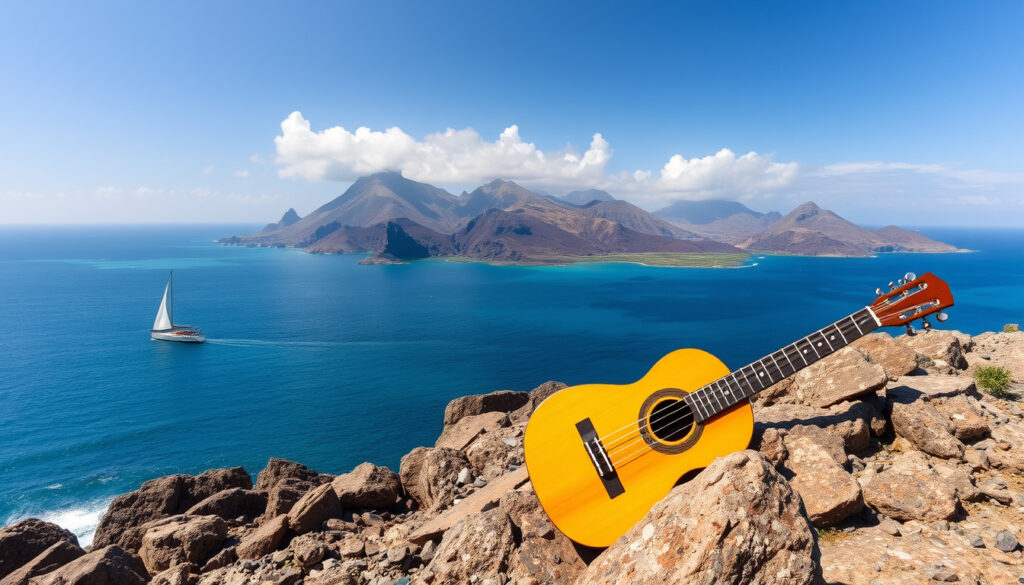
- Archipelago of 10 volcanic islands about 570 km off the west coast of Africa (Wikipedia).
- Part of the Macaronesia region, along with the Canary Islands (Spanish) and Azores (Portuguese).
- Member of the African Union since independence (Wikipedia).
Historical colonial influence
Portuguese explorers landed in 1462 and settled São Tiago. Over the next centuries, Portuguese colonizers brought enslaved Africans from the mainland (Wikipedia). The result was a Creole society. Spain never colonized Cape Verde; the confusion arises because the islands are sometimes grouped with Spanish-speaking islands like the Canaries.
Current political affiliation
Cape Verde is a sovereign republic, a member of the African Union, the Community of Portuguese Language Countries (CPLP), and the Economic Community of West African States (ECOWAS) (Wikipedia). It maintains strong ties with Portugal but is not Spanish.
Cape Verde’s cultural proximity to Lusophone Africa and Europe means some travelers mistakenly assume Spanish influence. The reality is Portuguese, through and through.
The pattern: Despite occasional mislabeling due to geographic proximity to the Canaries, Cape Verde’s colonial and political identity is firmly Portuguese and African.
Is Cape Verde a rich or poor country?
Cape Verde is classified as a lower-middle-income economy by the World Bank (Wikipedia (demographics)). With a GDP per capita around $3,500 (2023), it ranks in the middle among African nations but struggles with natural resource scarcity.
GDP per capita and income brackets
| Metric | Value |
|---|---|
| Income classification | Lower-middle-income (Wikipedia) |
| GDP per capita (2023) | ~$3,500 (Wikipedia) |
| Human Development Index | 0.662 (medium) – 126th of 191 (Wikipedia (demographics)) |
Economic challenges and strengths
- Relies heavily on tourism (20% of GDP), remittances from the diaspora (~10% of GDP), and foreign aid (Citizenship Rights in Africa Initiative (economic context)).
- Vulnerable to droughts and water shortages.
- Political stability and good governance are strengths.
Comparison to other African nations
Cape Verde’s GDP per capita is higher than most West African countries but lower than resource-rich nations like Angola. The economy is services-oriented, not resource-driven (Wikipedia (demographics)).
Tourism brings jobs but also seasonal strain on water and infrastructure. For investors, the stability is a plus; for residents, the high cost of imports is a burden.
The implication: Cape Verde’s lower-middle-income status masks a service-dependent economy that faces structural vulnerability despite political stability.
What ethnicity is Cape Verdean?
The majority of Cape Verdeans are mestiço (mixed African and Portuguese), with smaller African and European minorities. The U.S. State Department notes that ethnic groups include Creole (mixed), African, and European (U.S. Department of State (background notes)).
Mixed African and European ancestry
Genetic studies estimate approximately 50–60% African (mainly West African groups such as Mandinka, Fulbe, and Wolof) and 40–50% European (predominantly Portuguese) (Wikipedia). This admixture varies by island: Santiago has higher African percentage, while São Vicente has more European influence.
Regional variations
- Santiago: island of the capital, Praia; higher African component because of historical slave trade.
- São Vicente: more European influence, with a mixed Creole population.
- Fogo: known for its volcano and wine; largely Creole.
Self-identification patterns
A study from the University of Massachusetts Boston found that in the United States, Cape Verdean immigrants actively maintained a distinct ethnic identity separate from African Americans (University of Massachusetts Boston (identity study)). In Cape Verde itself, many still identified as Portuguese citizens even after independence.
How do you say ‘hi’ in Cape Verdean?
The most common greeting in Cape Verdean Creole (Kriolu) is “Olá” (similar to Portuguese) or “Bon dia” (good day). Locals often say “És?” as a casual “What’s up?” (Wikipedia).
What celebrity is from Cape Verde?
The most famous Cape Verdean is Cesária Évora, known as the “barefoot diva,” a world-renowned singer of morna and coladeira. Others include singer Nelson Freitas, composer Gilyto, and musician Lura. Many artists come from the diaspora (Wikipedia).
The concept of “Cape Verdean ethnicity” is a creolized blend—not a single racial category, but a cultural and linguistic identity that crosses continents.
Are Cape Verdeans part Jewish?
A small but historically significant Sephardic Jewish migration to Cape Verde occurred in the 16th and 17th centuries, mostly from Portugal via the African coast (Wikipedia). Some Cape Verdean surnames—such as Benoliel, Cardoso, and Cohen—reflect Jewish origins.
Historical Jewish presence in Cape Verde
- Jews were among the early settlers, fleeing the Inquisition.
- They were active in trade and commerce on the islands.
- By the 19th century, many had assimilated into the Catholic Creole population.
Genealogical evidence
DNA studies show that 0.1–1% of Cape Verdeans carry genetic markers indicative of Sephardic Jewish ancestry (Wikipedia). The exact percentage remains unclear due to limited testing.
Cultural traces
There is no organized Jewish religious practice in Cape Verde today. However, the cultural memory persists in family stories and a few synagogue ruins. The Cape Verdean Jewish Heritage Museum in Praia documents this history (Wikipedia).
The Jewish thread is tiny in numbers but outsized in lore. For a visitor asking “Are Cape Verdeans Jewish?”, the answer is “historically, some—but today it’s a trace, not a pillar.”
Five questions, one pattern: Cape Verdean identity defies a single label—it’s African, Portuguese, Creole, and a bit Jewish, wrapped in a language that is not quite either of its parents.
Comparison: Cape Verdean Ethnic Groups
Three broad groups, each with a distinct historical pathway and linguistic imprint.
| Ethnic group | Composition | Primary language | Source |
|---|---|---|---|
| Creole (mestiço) | Mixed African and Portuguese (majority) | Cape Verdean Creole | U.S. Department of State (background notes) |
| African | Minority with predominantly West African ancestry | Creole, some retain African languages | Wikipedia |
| European | Minority of Portuguese descent | Portuguese | Wikipedia |
The implication: ethnic boundaries are blurry. Most Cape Verdeans fall into the Creole category, but self-identification varies by island and diaspora context.
Clarity: What we know and what’s unclear
Confirmed facts
- Cape Verde is an African island nation (Wikipedia).
- Official language is Portuguese (Wikipedia).
- Majority population is mixed African-Portuguese (U.S. Department of State (background notes)).
- U.S. classification excludes Cape Verdeans from Hispanic or Latino categories (Wikipedia (ethnicity definitions)).
- Independence from Portugal: July 5, 1975 (Wikipedia).
- Roman Catholic majority: over 75% (Wikipedia (demographics)).
What’s unclear
- Exact percentage of Cape Verdeans with Jewish ancestry (Wikipedia).
- Precise genetic admixture ratios across islands (Wikipedia).
- Extent to which Cape Verdean Creole will gain parity with Portuguese as an official language (Journal of the College Language Association (linguistic analysis)).
The pattern: Confirmed facts are solid but gaps remain in genetic and linguistic data, reflecting the complex, creolized nature of Cape Verdean identity.
Perspectives
“Cape Verde is classified as a lower-middle-income economy.”
— World Bank (income classification)
“The U.S. definition of Hispanic or Latino refers to a person of Spanish culture or origin, which excludes Portuguese-speaking nations.”
— U.S. Office of Management and Budget (1997 standards) via Wikipedia
“The majority of Cape Verdeans identify as Creole or mixed race.”
— Cape Verdean government census data via U.S. Department of State (background notes)
Cape Verde’s identity is a living negotiation—between African roots and Portuguese legacy, between official labels and daily speech, between a small population and a global diaspora. For the traveler, the investor, or the curious reader, the takeaway is clear: Cape Verde is not a box to be checked, but a story of creolization that continues to unfold.
globalizationpartners.com, vc.bridgew.edu, en.wikipedia.org, youtube.com, facebook.com, anthrosource.onlinelibrary.wiley.com, facebook.com, mediapanel.es
Frequently asked questions
What is the safest island in Cape Verde?
Sal and Boa Vista are generally considered the safest for tourists, with low crime rates and resort security. Petty theft is still possible in urban areas.
Do Cape Verdeans speak Spanish?
No, Spanish is not an official language. Portuguese is official, and Cape Verdean Creole (Kriolu) is the native tongue. Some Cape Verdeans may learn Spanish as a foreign language.
What is the main religion in Cape Verde?
Roman Catholicism is the majority religion, practiced by over 75% of the population. Protestant and other Christian denominations exist, along with small Muslim and Jewish communities.
Is Cape Verde a good place to retire?
Cape Verde offers a warm climate, relatively low cost of living outside resort areas, and political stability. However, healthcare infrastructure and import costs are drawbacks for retirees.
How do I get a visa to Cape Verde?
Many nationalities can obtain a tourist visa on arrival or an e-visa before travel. The government has also introduced a digital nomad visa for long-term stays (Wikipedia).
What food is Cape Verde known for?
The national dish is cachupa, a hearty stew of corn, beans, and meat or fish. Seafood is also central, especially lobster and tuna.
Are Cape Verdeans friendly to tourists?
Yes, locals are generally welcoming. The tourism industry is a major part of the economy, so service is friendly, but travelers should still watch for petty crime in busy areas.
What is the most popular sport in Cape Verde?
Football (soccer) is by far the most popular. The national team, the Blue Sharks, has qualified for the Africa Cup of Nations multiple times.
These FAQs address common concerns for travelers and researchers, complementing the detailed sections above.
Related reading
More related posts
 Carol Vorderman 2025: Face Changes, Health, Relationships, Career
 Joseph Zada: Age, Ethnicity, and Hunger Games Role
 What’s My Internet Speed? Check & Understand Your Connection
 Belal Muhammad: Record, UFC Loss & Palestine Stance
 When Is Bonfire Night – 5 November 2025 on Wednesday
 Kate Tempest: Name Change, Gender, Voice, and ADHD
 Kola Bokinni: Biography, Nationality, Family, and Career
 Chris Noth Allegations: What Happened and Where Is He Now