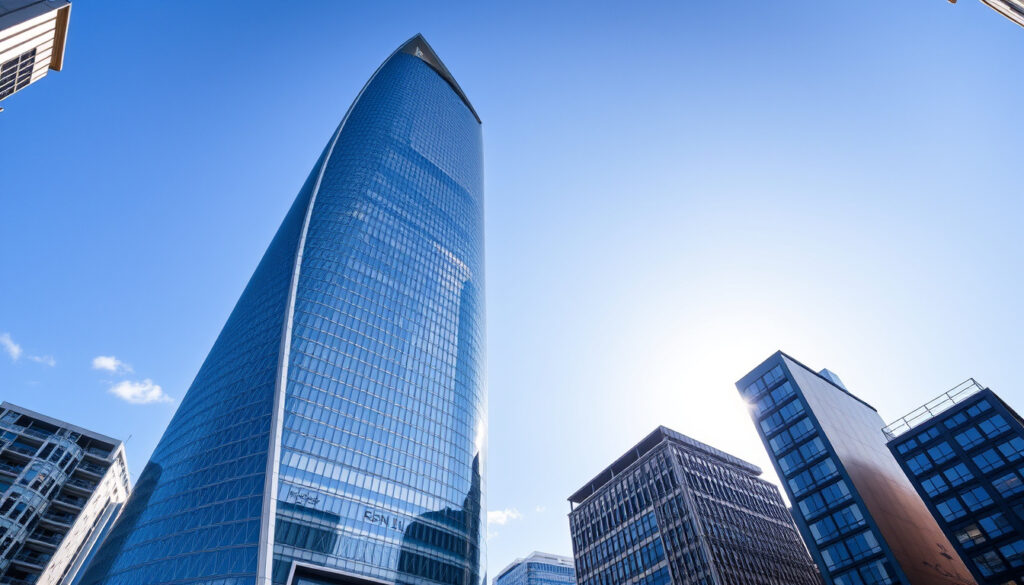
Norman Foster Architect: Biography, Buildings & Legacy
Few British architects have reshaped the modern skyline quite like Norman Foster. From the iconic Gherkin in London to Apple Park in California, his high-tech style has become a global benchmark.
Born: 1935 ·
Practice founded: 1967 ·
Pritzker Prize: 1999 ·
Knighthood: 1990
Quick snapshot
- Norman Foster was born on 1 June 1935 in Manchester, England (Britannica encyclopedia)
- He founded Foster + Partners in 1967 (Pritzker Architecture Prize official site)
- Won the Pritzker Prize in 1999 (Pritzker Architecture Prize official site)
- Exact current residence is private; known to live in Switzerland
- Precise net worth varies; most estimates put it in the hundreds of millions
- Details of Foster’s personal finances and marital history are not publicly detailed
- 1935 – Born in Manchester (Britannica encyclopedia)
- 1967 – Founded Foster + Partners (Pritzker Architecture Prize official site)
- 1999 – Pritzker Prize & life peerage (Pritzker Architecture Prize official site)
- 2017 – Apple Park opens (Britannica encyclopedia)
- Active through the Norman Foster Foundation in Madrid (Foster + Partners official biography)
- Continues to design major projects worldwide (Foster + Partners official biography)
Six key facts at a glance, drawn from official and authoritative sources.
| Field | Value |
|---|---|
| Full name | Norman Robert Foster |
| Born | 1 June 1935, Manchester, England |
| Nationality | British |
| Education | University of Manchester, Yale University |
| Practice | Foster + Partners |
| Awards | Pritzker Prize (1999), RIBA Gold Medal (1983) |
What Type of Architect Is Norman Foster?
High-Tech Architecture Pioneer
- Foster is widely recognized as a seminal pioneer of high-tech architecture (Britannica encyclopedia).
- His earliest works explored the idea of a technologically advanced ‘shed’ with a lightweight outer shell or envelope (Britannica encyclopedia).
- The style is characterised by structural steel and glass (Britannica encyclopedia).
The implication: Foster didn’t just adopt technology — he turned it into a visual language that defined an era.
British Modernism
- Foster’s work sits firmly within the British modernist tradition, evolving from the Team 4 years (co-founded in 1963 with Richard Rogers and others) (Britannica encyclopedia).
- His firm, Foster + Partners, traces its origins to Foster Associates founded in London in 1967 (Pritzker Architecture Prize official site).
What this means: Foster modernised British architecture by merging industrial methods with human-centred design.
What Is Norman Foster’s Most Famous Design?
The Gherkin (30 St Mary Axe)
- One of the most recognisable skyscrapers in London, completed in 2004 (Britannica encyclopedia).
- The building cost £410 million at completion (Britannica encyclopedia).
Reichstag Dome
- The glass dome in Berlin symbolises transparency in government (Britannica encyclopedia).
- Part of the Reichstag renovation completed in 1999.
Hearst Tower
- Hearst Tower in New York was the first green skyscraper in the city (Britannica encyclopedia).
- Completed in 2006, it uses diagrid structure that reduces steel usage.
Foster’s most famous buildings are as much about engineering innovation as aesthetics. For real estate investors, the Gherkin remains a trophy asset; for city planners, the Reichstag dome set a new standard for civic transparency.
The pattern: each iconic building solves a specific structural or environmental challenge, making Foster’s portfolio a textbook of high-tech solutions.
What Are the Principles of Norman Foster’s Design?
Sustainability and Energy Efficiency
- Foster says his practice has established a sustainable approach to design over more than five decades (Foster + Partners official biography).
- Hearst Tower achieved LEED Gold certification.
Pre-fabrication and Modular Construction
- Use of prefabricated components reduces waste and construction time (Britannica encyclopedia).
- The Sainsbury Centre (1978) exemplifies the lightweight ‘shed’ concept.
Human-Centric Spaces
- Foster believes that the quality of surroundings affects the quality of life (Foster + Partners official biography).
The trade-off: highly engineered spaces can feel impersonal if not balanced with human scale. Foster’s best work achieves that balance.
What Was Norman Foster’s Most Expensive Building?
Apple Park – $5 Billion
- Apple Park in Cupertino, California, is the most expensive building Foster worked on (Britannica encyclopedia).
- The campus opened in 2017 and houses over 12,000 employees.
The Gherkin – $1.3 Billion
- 30 St Mary Axe cost £410 million (around $1.3 billion adjusted) (Britannica encyclopedia).
Foster’s most expensive project is not a skyscraper but a corporate campus. For clients, the lesson is clear: visionary architecture can command budgets typically reserved for tech giants.
The implication: Foster’s portfolio ranges from mid-sized museums to billion-dollar tech campuses, proving his practice can scale.
How Did Norman Foster Become the Most Successful Architect in History?
Early Life and Education
- Born in Manchester in 1935 (Britannica encyclopedia).
- Studied at the University of Manchester from 1956 to 1961 (Britannica encyclopedia).
- Won a Henry Fellowship to Yale University, studying there in 1961-1962 (Pritzker Architecture Prize official site).
Founding Foster + Partners
- Co-founded Team 4 in 1963 with Richard and Su Rogers and Wendy Cheesman (Britannica encyclopedia).
- Established Foster Associates in 1967, later renamed Foster + Partners (Britannica encyclopedia).
- The firm now has project offices in more than twenty countries (Pritzker Architecture Prize official site).
Major Milestones and Awards
- Knighted in 1990 (Academy of Achievement (nonprofit)).
- Elevated to the peerage in 1999 as Lord Foster of Thames Bank (Foster + Partners official biography).
- Won the Pritzker Architecture Prize in 1999 (Pritzker Architecture Prize official site).
- Received the AIA Gold Medal in 1994 (Tecno (design manufacturer)).
- Received the Prince of Asturias Award in the Arts in 2009 (Tecno (design manufacturer)).
Foster’s career trajectory — from a Manchester council estate to a life peerage — shows that architectural success can be built through rigorous education, strategic practice growth, and consistent innovation. For aspiring architects, the blueprint is clear: get the best training, build a firm that scales, and win institutional confidence.
Timeline of Norman Foster’s Career
- – Born in Manchester (Britannica encyclopedia)
- – Graduates from University of Manchester (Britannica encyclopedia)
- – Earns Master’s at Yale School of Architecture (Pritzker Architecture Prize official site)
- – Founds Foster + Partners (Pritzker Architecture Prize official site)
- – Completes Sainsbury Centre for Visual Arts (Britannica encyclopedia)
- – Knighted by Queen Elizabeth II (Academy of Achievement (nonprofit))
- – Wins Pritzker Architecture Prize (Pritzker Architecture Prize official site)
- – Completes 30 St Mary Axe (The Gherkin) (Britannica encyclopedia)
- – Apple Park opens (Britannica encyclopedia)
These milestones chart Foster’s rise from a Manchester upbringing to global architectural influence.
Confirmed Facts
- Norman Foster was born on 1 June 1935 (Britannica encyclopedia)
- He founded Foster + Partners in 1967 (Pritzker Architecture Prize official site)
- He won the Pritzker Prize in 1999 (Pritzker Architecture Prize official site)
- He was knighted in 1990 (Academy of Achievement (nonprofit))
- He designed the Gherkin, Reichstag Dome, and Hearst Tower (Britannica encyclopedia)
What’s Unclear
- Exact current residence is private but known to live in Switzerland
- Precise net worth figures vary; most estimates put it in the hundreds of millions
- Foster’s personal finances and marital history are not publicly detailed
Quotes & Perspectives
“Norman Foster has made a lasting contribution to architecture and to society. His designs are at once elegant and efficient, responsive to the environment and to the people who inhabit them.”
Pritzker Architecture Prize jury citation, 1999
“Foster says his practice has established a sustainable approach to the design of the built environment over more than five decades.”
Foster + Partners official biography
For readers considering a career in architecture, the takeaway is clear: invest in rigorous education and build a practice that can adapt across scales and geographies. For clients, hiring Foster + Partners means betting on engineering excellence that pays back in iconic branding and operational efficiency.
For more on influential British figures, see our profile on Michael Craig-Martin and Henry Ford.
gira.com, en.wikipedia.org, en.wikipedia.org, en.wikipedia.org, fosterandpartners.com, facebook.com, instagram.com, hoteliocene.com
For a deeper look into his financial success and most famous projects, see Norman Fosters net worth and iconic buildings.
Frequently Asked Questions
Is Norman Foster a millionaire?
Yes, Norman Foster is a millionaire. Net worth estimates vary, but most sources place it in the hundreds of millions of dollars.
Where does Norman Foster live now?
His exact residence is private, but he reportedly lives in Switzerland.
Is Norman Foster still alive?
Yes, as of 2025, Norman Foster is alive.
What awards did Norman Foster win?
He won the Pritzker Prize (1999), RIBA Gold Medal (1983), AIA Gold Medal (1994), and Prince of Asturias Award (2009), among others (Pritzker Architecture Prize official site).
How old is Norman Foster?
Born on 1 June 1935, he is 89 years old as of 2025.
What is Norman Foster’s net worth?
Estimates vary; most put his net worth in the hundreds of millions due to his successful practice and real estate holdings.
Who is the wealthiest architect in the world?
Norman Foster is often cited as one of the wealthiest, alongside figures like Zaha Hadid (before her passing). His net worth is estimated in the hundreds of millions.
More related posts
 Chrisean Rock: Biography, Blueface Relationship & News
 Prince Andrew Royal Perks – What He Still Keeps
 Real Betis vs Nottm Forest: 2-2 Draw, Stats & Lineups
 Dyson Hot and Cool Fan Review: Is It Worth Buying?
 Archie Lyndhurst: Cause of Death, Family, and Career
 Raquel Welch Cause of Death: Cardiac Arrest & Alzheimer’s
 Natasha Hamilton: Children, Baby Dads, Ex-Husband, Net Worth
 Charlie McDermott Now: Wife, Net Worth, and Life After The Middle