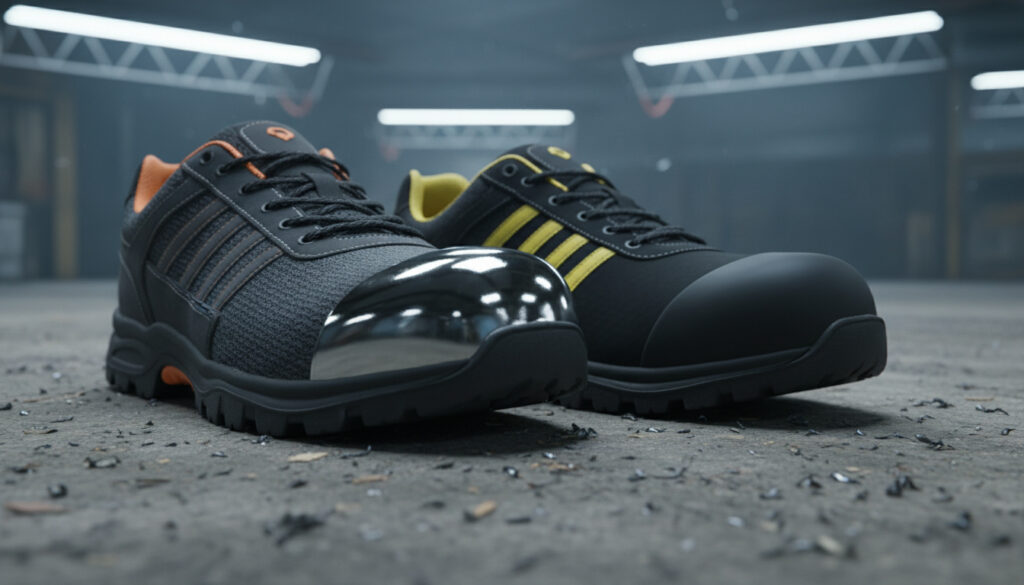
Steel Toe Cap Trainers – Steel vs Composite Safety Guide
Steel toe cap trainers have emerged as a critical evolution in protective footwear, bridging the gap between industrial safety requirements and the ergonomic comfort of athletic shoes. Unlike traditional heavy safety boots, these trainers incorporate certified toe protection into lightweight, flexible designs that accommodate dynamic work environments.
The market has shifted significantly toward composite materials in 2025, with fiberglass, carbon fiber, and Kevlar alternatives offering substantial weight reductions while maintaining identical impact resistance standards to steel. This transition reflects broader changes in workplace safety culture, where all-day comfort and fatigue reduction have become priorities alongside pure protection metrics.
Understanding the distinctions between steel and composite options, certification requirements, and specific use cases ensures workers select footwear that meets both safety protocols and physical demands.
What Are Steel Toe Cap Trainers?
| Feature | Steel Toe | Composite Toe | Popular Brands |
|---|---|---|---|
| Protection Level | Maximum crushing resistance | Equal impact protection (200J) | Base Protection, Uvex |
| Comfort Rating | Heavier, more fatigue | 30-50% lighter, less fatigue | Ardon, Portwest |
| Price Range | Generally lower | Often premium | Procera, Cofra |
| Best For | Extreme mechanical conditions | Indoor/electrical environments | Lemaitre |
- Both steel and composite toe caps must pass a 200 joule impact test to meet EN ISO 20345 standards.
- Composite materials offer 30-50% weight savings compared to steel alternatives.
- Modern trainer designs prioritize sneaker-like flexibility without compromising safety ratings.
- Non-conductive composite options provide critical protection in electrical hazard environments.
- Proper sizing requires accounting for toe box dimensions to prevent compression injuries.
- Regular inspection every 12–18 months ensures continued protective integrity.
| Characteristic | Steel Toe | Composite Toe |
|---|---|---|
| Primary Material | Hardened Steel | Fiberglass/Carbon Fiber/Kevlar |
| Weight Comparison | Baseline standard | 30-50% lighter |
| Impact Resistance | 200 joules | 200 joules |
| Conductivity | Conducts heat/cold | Non-conductive |
| Metal Detector Response | Triggers alarms | Passes freely |
| Typical Cost | Lower | Higher |
| Best Environment | Heavy mechanical | Indoor/electrical |
Are Steel Toe Cap Trainers Comfortable?
Weight Distribution and Fatigue Reduction
Composite toe trainers significantly reduce fatigue during long shifts because of their reduced weight and improved ergonomic design. Modern models feature energy-return midsoles and anti-fatigue footbeds that enhance comfort while maintaining the same safety standards as steel.
Temperature and Environmental Factors
Steel conducts heat and cold, making it less comfortable in extreme temperatures. Composite materials remain temperature neutral, providing consistent comfort across varying conditions. This insulation property proves particularly valuable for workers in climate-controlled environments or those exposed to seasonal temperature fluctuations.
Composite toe trainers help maintain natural foot movement and reduce stress on lower leg muscles, improving overall well-being during extended wear periods.
Fit Considerations for Women
Composite toe safety boots provide toe protection without the added weight of steel toe caps, making them particularly well-suited for women. These designs accommodate female foot anatomy with padded collars, moisture-wicking linings, and toe boxes tailored specifically for women.
How to Choose the Best Steel Toe Cap Trainers
Understanding Safety Certifications
The primary certifications to verify are EN ISO 20345 (European standard) and ASTM F2413 (American standard). Under EN ISO 20345, the highest protection level is S3, which includes toe protection, water resistance, and anti-puncture capabilities. Both steel and composite toe caps must pass rigorous testing to achieve these ratings.
Assessing Your Work Environment
Consider whether your workplace requires passing through metal detectors, where composite non-metallic designs pass freely while steel triggers alarms. Electrical hazard environments demand non-conductive composite materials. Heavy mechanical work may justify steel’s maximum crushing resistance despite the weight penalty.
Sizing and Ergonomic Evaluation
Proper fit requires accounting for the protective cap’s spatial requirements within the toe box. Try footwear at the end of a workday when feet are slightly swollen. Ensure adequate width to prevent compression injuries while maintaining heel stability.
Best Steel Toe Cap Trainers for Different Needs
Options for Women
Leading manufacturers in 2025 include Base Protection, Uvex, Ardon, Portwest, Procera, Cofra, and Lemaitre. These brands offer models specifically engineered for female feet, featuring lighter construction to reduce leg strain during repetitive movements.
For electricians and those working in electrically hazardous environments, models like the RockFall RF140 Volta feature 100% non-metallic construction with electrical hazard protection and innovative fit systems like the Boa® Fit System for secure fastening.
Composite vs. Steel Considerations
Steel toe shoes generally last longer in extreme mechanical conditions due to structural integrity, though they can dent under impact. Composite footwear excels in lighter or indoor environments, bouncing back without permanent deformation. Leather models benefit from regular waterproofing, while synthetic composite shoes require minimal care.
Both steel and composite trainers require inspection every 12–18 months to ensure ongoing protection. Replace footwear immediately after significant impact events regardless of visible damage.
When to Choose Traditional Boots Instead
Traditional safety boots outperform trainers in heavy outdoor construction, extreme mechanical conditions, or environments requiring ankle support. However, modern composite trainers have achieved parity in impact protection while offering superior mobility for most indoor applications. For those interested in the latest advancements, the Samsung S26 Ultra release date is a topic of much discussion. Samsung S26 Ultra release date
The Evolution of Protective Footwear
- : Steel toe caps first introduced for industrial protection during wartime manufacturing expansion.
- : European standardization efforts begin formalizing safety footwear regulations across industrial sectors.
- : Composite materials including fiberglass and Kevlar enter commercial safety footwear production.
- : EN ISO 20345 establishes unified testing protocols for toe protection across European markets.
- : Trainer-style safety footwear gains popularity for warehouse and logistics environments prioritizing mobility.
- : Advanced ergonomic designs with gender-specific fits and energy-return midsoles become industry standard.
What We Know and What Remains Unclear
Established Facts
- Both steel and composite toe caps meet identical 200 joule impact standards under EN ISO 20345.
- EN ISO 20345 S3 rating represents the highest mainstream protection level including water and puncture resistance.
- Composite materials demonstrate 30-50% weight reduction compared to steel equivalents.
Uncertain Variables
- Long-term comfort varies significantly by individual foot anatomy and specific model selection.
- Exact product lifespan depends on usage intensity and environmental exposure conditions.
- Whether trainers qualify for casual wear depends on specific employer PPE policies and site regulations.
Why Lightweight Protection Matters
The transition from heavy safety boots to lightweight trainers reflects occupational health research emphasizing fatigue management. Studies indicate that reducing footwear weight by even small percentages significantly decreases lower limb muscle strain over eight-hour shifts. This shift parallels broader trends in workplace safety equipment, where user compliance increases when protective gear does not impede mobility.
The How Did Princess Margaret Die – Cause, Timeline and Final Days guide illustrates how historical analysis of health trends informs modern safety standards, though the specific applications differ across industries. Modern composite materials have achieved parity with steel in standardized testing while offering additional benefits for specific environments, including temperature neutrality and metal-detector compatibility for security personnel.
Contemporary designs now prioritize what manufacturers call “all-day wearability”—the principle that protection only works if workers actually keep the footwear on. This approach has driven innovations in breathable materials and flexible sole units that maintain protective ratings without the clunky aesthetic of traditional safety gear.
Expert Sources and Industry Standards
Both steel and composite toe safety shoes must meet the same rigorous international standards to be considered compliant. The primary certifications to look for are EN ISO 20345 (European standard) and ASTM F2413 (American standard).
Safety Footwear Standards Documentation
Final Considerations
Selecting appropriate steel toe cap trainers requires balancing certified protection levels against specific workplace demands. While steel offers maximum crushing resistance for extreme mechanical environments, composite alternatives provide equivalent impact protection with significant weight advantages and electrical hazard safety. Regular inspection protocols ensure continued effectiveness regardless of material choice. For those researching comprehensive guides across different topics, the Rose Leslie Movies and TV Shows – Complete Filmography Guide demonstrates the depth of analysis applied to specialized subjects.
Frequently Asked Questions
How much do steel toe cap trainers cost?
Steel toe trainers generally cost less than composite alternatives due to simpler manufacturing processes. Composite options often command premium prices but offer additional features like electrical hazard protection and metal-detector compatibility.
What safety certifications do steel toe cap trainers have?
Look for EN ISO 20345 (European) or ASTM F2413 (American) certifications. The highest protection level under EN ISO 20345 is S3, which includes toe protection, water resistance, and anti-puncture capabilities.
Can steel toe cap trainers be worn casually?
Whether trainers qualify for casual wear depends entirely on specific workplace PPE policies and site safety regulations. Some employers mandate traditional boot styles regardless of certification equivalence.
Are steel toe cap trainers suitable for electricians?
Composite toe trainers are recommended for electrical work because they are non-conductive and temperature neutral. Steel toe caps conduct electricity and should be avoided in electrical hazard environments.
How do I clean steel toe cap trainers?
Leather models benefit from regular waterproofing treatments, while synthetic composite shoes require minimal maintenance. Always follow manufacturer guidelines to preserve protective coatings and material integrity.
More related posts
 Tinie Tempah: Net Worth, Children, Wife, Religion
 Mick Miller: biography, age, real name, and where he is now
 Charley Hull: Verified Biography, Personal Life & FAQs
 Butternut Box Dog Food Review: Vet Insights & Cost Guide
 Bukayo Saka: Biography, Career, Salary, and Personal Life
 Finn Cole: Biography, Age, Relationship & Peaky Blinders
 Pauline Quirke: Dementia Diagnosis, Retirement & Family
 Aubrey Plaza: Husband’s Death, Stroke, and Baby News