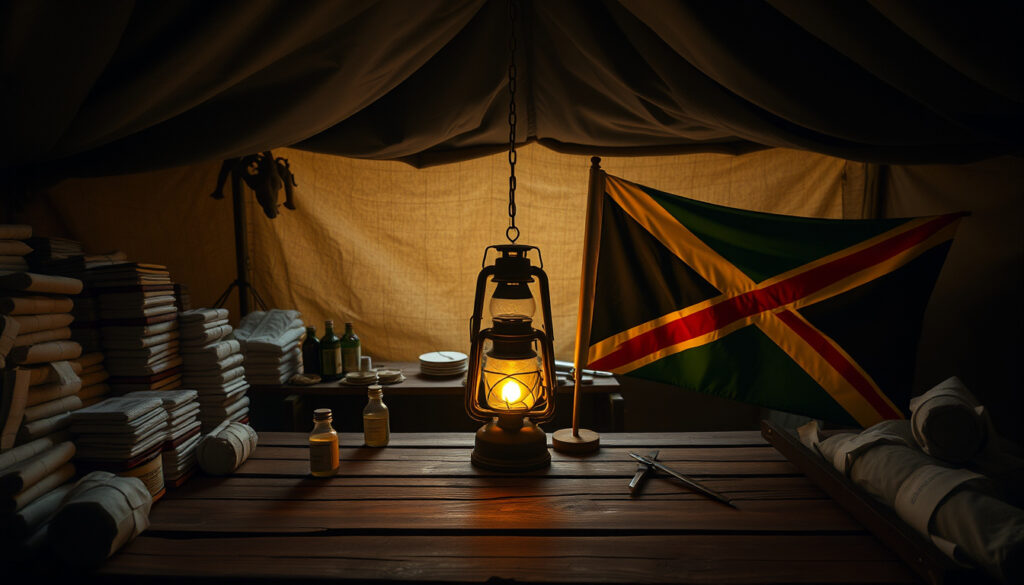
Mary Seacole Biography: Life, Crimean War Nursing, and Legacy
If you know one name from the Crimean War, it is likely Florence Nightingale, but just a few miles from the official hospitals, another woman was providing essential battlefield care: Mary Seacole. A Jamaican-born businesswoman and healer, Seacole funded her own passage to the front lines after the British War Office refused her services.
Born: 1805 in Kingston, Jamaica ·
Died: 1881 in London, England ·
Known for: Nursing during the Crimean War ·
Autobiography: Wonderful Adventures of Mrs. Seacole in Many Lands (1857)
Quick snapshot
- Born free in Jamaica in 1805 (Britannica)
- Served in the Crimean War (University of Virginia School of Nursing)
- Wrote an autobiography (Britannica)
- Exact motivations for War Office rejection
- Full nature of her relationship with Nightingale
- Whether her autobiography was the first by a Black woman in Britain
- 1805: Born in Jamaica
- 1855: Arrived in Crimea
- 1857: Autobiography published
- Statue at St Thomas’ Hospital, London
- Growing curriculum inclusion
- Continued historical research
Six key details tell the story of a life marked by independence and extraordinary achievement.
| Attribute | Detail |
|---|---|
| Full Name | Mary Jane Seacole |
| Born | 23 November 1805, Kingston, Jamaica |
| Died | 14 May 1881, London, England |
| Occupation | Nurse, Businesswoman, Author |
| Notable Work | British Hotel in Crimea |
| Autobiography | Wonderful Adventures of Mrs. Seacole in Many Lands (1857) |
What is Mary Seacole most famous for?
What did Mary Seacole do during the Crimean War?
- Established the British Hotel near Balaclava to provide care for soldiers (University of Virginia School of Nursing).
- Known for her nurturing presence and medical skills (BBC History).
- Authored an autobiography detailing her experiences (Britannica).
The British Hotel was not just a lodging house. Seacole and her business partner provided food, medicine, and a hot meal to soldiers, many of whom were sick or wounded. She also took her supplies directly to the battlefield, treating injured men under fire (University of Virginia School of Nursing). Soldiers affectionately called her “Mother Seacole” for her nurturing presence.
Seacole’s autobiography, *Wonderful Adventures of Mrs. Seacole in Many Lands*, published in 1857, detailed these experiences. It is frequently cited as one of the earliest autobiographies written by a woman of African descent in Britain (Wikipedia).
Seacole’s fame today rests not on official appointment but on her independent enterprise. Where the government saw a problem, she saw a way to help — and she paid for it herself.
The implication: Seacole’s independent path was not a second-best option; it was the only route available to someone outside the establishment, and she turned it into an advantage.
Did Florence Nightingale and Mary Seacole ever meet?
What was the relationship between Mary Seacole and Florence Nightingale?
- They met once briefly in the spring of 1855 (The Victorian Web).
- Nightingale mentioned Seacole in her letters.
- Their relationship was cordial but not close.
The two pioneering nurses met once, briefly, in the spring of 1855. Historical accounts suggest the meeting was cordial but not a close friendship (The Victorian Web). Nightingale mentioned Seacole in her private letters, acknowledging her hard work among the soldiers.
Later historical writing often framed them as rivals, but modern scholarship suggests their roles were complementary rather than competitive. Nightingale ran the official military hospital at Scutari; Seacole ran a private enterprise closer to the front lines (Nursology).
Side-by-side comparison
Comparing their paths reveals a sharp contrast in how the Victorian establishment viewed formal versus informal care.
Below is a direct comparison of their backgrounds and roles.
| Aspect | Mary Seacole | Florence Nightingale |
|---|---|---|
| Background | Jamaican healer, self-taught via her mother | English upper-class, trained in Germany |
| Path to Crimea | Self-funded after War Office rejection | Government-appointed superintendent of nurses |
| Role in Crimea | Ran British Hotel, treated soldiers on battlefield | Managed Scutari hospital, reformed hygiene |
| Post-War Recognition | Largely forgotten; fundraising appeal saved her from poverty | National heroine; founded Nightingale Training School |
| Modern Legacy | Revived from 1980s; statue at St Thomas’ Hospital | Founder of modern nursing; global recognition |
Nightingale had the official machinery, while Seacole had operational freedom. One transformed institutional nursing, while the other delivered hands-on care precisely where the fighting was worst.
The pattern: the very factors that excluded Seacole from the official record also freed her to reach the soldiers no one else could.
What was Mary Seacole’s famous quote?
What are some other notable quotes from Mary Seacole?
“I have never been ashamed of my colour — it is my pride.”
Mary Seacole, Wonderful Adventures of Mrs. Seacole in Many Lands
Seacole’s most celebrated words come from her 1857 autobiography. Another passage captures her unbreakable spirit: “I have always been a woman of enterprise.”
The book is filled with candid observations about the challenges she faced — racial prejudice, bureaucratic indifference, and the physical dangers of war.
“The world is a large and varied place, and I have always found that there is room for all who are willing to make the best of their opportunities.”
Mary Seacole, Wonderful Adventures of Mrs. Seacole in Many Lands
The implication: each of these lines reflects a woman who refused to let Victorian society define her limits. Her autobiography remains the single best source for understanding her voice and her worldview.
Why was Mary Seacole rejected?
Why was Mary Seacole not allowed to join Florence Nightingale’s team?
The reasons for the War Office’s refusal are summarised below.
| Reason | Detail |
|---|---|
| Official Explanation | No vacancies available |
| Structural Barriers | Lack of formal training, older age (~50) |
| Social Context | Racial prejudice in Victorian England |
In 1854, Seacole applied to the British War Office to be sent to the Crimea as an army nurse. She was refused (BBC History). The official explanation was that there were no vacancies, but historians point to several likely factors. She was a woman of colour in a deeply stratified society, she was around 50 years old, and she lacked formal nursing credentials. She had learned her skills practically, from her mother and through her work during cholera and yellow fever outbreaks (University of Virginia School of Nursing).
Rather than give up, Seacole resolved to go independently. She funded the journey herself, which is why her story is so distinct from the official nursing corps led by Florence Nightingale.
The War Office’s narrow definition of a “nurse” excluded Seacole, but it could not stop her. Her rejection by the establishment forced her into an independent role that arguably brought her closer to the action than any official nurse ever got.
What this means: the rejection was a reflection of the system’s limits, not her own.
Why is Florence Nightingale more famous than Mary Seacole?
What factors contributed to Nightingale’s greater fame?
- Official government backing and a formal nursing corps.
- Established nursing school and professional legacy.
- Seacole worked independently with less institutional support.
The difference in fame between Florence Nightingale and Mary Seacole has deep roots in how their stories were preserved and promoted. Nightingale was an official figure. She returned from Crimea with extensive government backing, royal attention, and a deliberate public relations campaign. She founded the Nightingale Training School at St Thomas’ Hospital, cementing her role as the founder of modern nursing (AORN).
Seacole, in contrast, returned to England in 1856 nearly bankrupt. A benefit festival was held for her at the Royal Surrey Gardens to raise funds. Her story faded from mainstream history for over a century. Interest in Seacole revived in the 1980s and 1990s as historians began investigating hidden narratives. Today, her legacy is actively recognized by the Mary Seacole Trust and through educational curricula, but she has not yet reached the same level of global recognition as Nightingale (Wikipedia).
The fame gap between Seacole and Nightingale is not about who did more, but about who had the institutional machinery to record and canonize their work. History, it turns out, has a built-in bias toward the official record.
The consequence: for every story like Nightingale’s, there are others like Seacole’s that require active recovery.
Timeline: The Life of Mary Seacole
- 1805: Mary Jane Seacole born in Kingston, Jamaica (Britannica).
- 1853: Opened a hotel in Panama and began nursing during a yellow fever outbreak (The Victorian Web).
- 1855: Arrived in Crimea and established the British Hotel (BBC History).
- 1856: End of Crimean War; Seacole returns to England (Wikipedia).
- 1857: Published *Wonderful Adventures of Mrs. Seacole in Many Lands*.
- 1881: Died in London, England (Britannica).
The pattern is unmistakable: every major advance in Seacole’s life happened because she was willing to act where institutions failed to support her.
What we know and what remains unclear about Mary Seacole
Confirmed Facts
- Seacole was born free in Jamaica in 1805 (Britannica).
- She served in Crimea and was known as “Mother Seacole” (BBC History).
- She wrote an autobiography detailing her experiences (Britannica).
- She was rejected by the British War Office (BBC History).
What’s Unclear
- The exact motivations for the War Office’s rejection — the lack of a clear written record means historians can only infer.
- Her precise financial situation after the war, beyond the fact that she needed a public benefit appeal.
- The full nature of her relationship with Florence Nightingale beyond one documented meeting.
- Whether her autobiography is definitively the first by a woman of African descent in Britain, as some claims lack rigorous provenance (Wikipedia).
The implication: the gaps in Seacole’s biography highlight the limitations of historical records when it comes to marginalized figures.
Voices from history: What they said about Mary Seacole
“I have always been a woman of enterprise.”
Mary Seacole, Wonderful Adventures of Mrs. Seacole in Many Lands
“She is a wonderful woman and has done a great deal for the soldiers.”
Florence Nightingale, in a private letter, 1856
“That good old Mother Seacole — she was always there with a cup of tea and a kind word.”
Contemporary soldier’s account, cited by Britannica
The implication: Seacole’s story is not a footnote to the Nightingale legend; it is a parallel history of how one woman’s independent spirit filled a gap that official systems left open. For educators and historians, the work of recovering her full story is not just a matter of fairness — it is a necessary correction to a record that has, for too long, equated institutional approval with historical significance. For anyone studying the Crimean War, the message is clear: read Seacole’s own words, and you will find a perspective that the official dispatches left out.
reddit.com, natgeokids.com, willerbycarrlaneprimary.org.uk, youtube.com, nightingalesociety.com, londonwire.uk
Her remarkable story is detailed in a comprehensive account of Mary Seacoles Crimean War service, which highlights her contributions alongside Florence Nightingale.
Frequently asked questions
How did Mary Seacole travel to Crimea?
After being rejected by the War Office, Seacole funded her own passage. She sailed from London to Constantinople and then to Balaclava, bringing supplies to set up her business.
What was the British Hotel in Crimea?
The British Hotel was a combination of a general store, a mess hall, and a medical aid station near the front lines. It provided soldiers with food, lodging, and basic medical care (The Victorian Web).
Did Mary Seacole receive any awards?
Seacole did not receive official British medals during her lifetime, but she was posthumously awarded the Jamaican Order of Merit in 1991. In 2016, a statue of her was unveiled at St Thomas’ Hospital in London (Wikipedia).
What is the Mary Seacole Trust?
The Mary Seacole Trust is a UK-based charity that works to preserve Seacole’s legacy, promote diversity in healthcare, and support educational initiatives about her life.
How is Mary Seacole depicted in popular culture?
Seacole has been the subject of books, plays, and a BBC documentary. Her life appears on the UK national curriculum and was featured in a Google Doodle in 2021 (Wikipedia).
What are the main sources for Mary Seacole’s life?
Her own autobiography is the primary source. Other important records include letters from Florence Nightingale, British Army records, and contemporary newspaper reports (The Victorian Web).
Related reading:
Ernest Hemingway: Life, Works, and Death Profile ·
James Joyce: Biography, Life, Exile, and Ulysses Explained
More related posts
 What Is a Prenup? Irish Guide to Prenuptial Agreements
 Ar enal Away Kit 25/26: De ign, Relea e, Price & Where to Buy
 Mrunal Thakur: Biography, Rumors, Age, and Career Facts
 Charlie McDermott Now: Wife, Net Worth, and Life After The Middle
 Matthew Goodwin: Biography, Politics, and Controversy
 Ashley Olsen: From Full House Star to Fashion Mogul
 John Fogerty: Life, CCR Tragedy, and Political Views
 Holger Rune: Ranking Slump, Injury Comeback & 2026 Plans