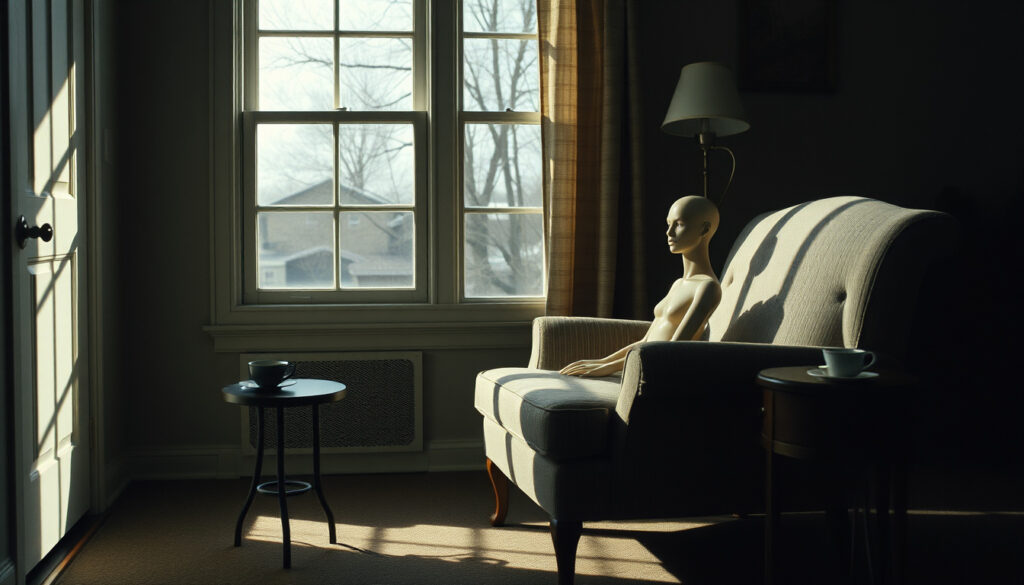
Lars and the Real Girl: Mental Disorder, Plot & Meaning
There aren’t many movies that ask a whole town to play along with a man’s delusion, yet Lars and the Real Girl pulls it off without a hint of mockery. Released in 2007 and directed by Craig Gillespie, this quiet comedy-drama stars Ryan Gosling as Lars Lindstrom, a painfully shy man who orders a life‑size silicone doll and treats her as his girlfriend.
Release year: 2007 ·
Director: Craig Gillespie ·
Starring: Ryan Gosling, Emily Mortimer, Paul Schneider ·
Runtime: 106 minutes ·
Genre: Comedy‑Drama ·
Rating: PG‑13
Quick snapshot
- The film was released in 2007 (Wikipedia).
- Ryan Gosling stars as Lars (The New York Times).
- The entire community participates in the delusion (Psychology Today).
- Nancy Oliver earned an Academy Award nomination for the screenplay (Oscars).
- Lars’s exact clinical diagnosis is never stated on screen (The Art of Autism).
- Whether Lars was physically abused is not shown explicitly (Cinematherapy).
- The writer’s intent regarding autism representation is not confirmed (The Jung Page).
- October 12, 2007: US theatrical release (BBFC).
- 2008: Academy Award nomination for Best Original Screenplay (IMDb trivia).
- Emotional arc includes Lars gradually accepting physical contact (The Jung Page).
- The film remains a touchstone for mental‑health discussions in cinema (RogerEbert.com).
- Its legacy as a case study in community‑based healing continues to inspire clinicians (The New York Times).
Seven details about Lars and the Real Girl reveal a film built on a small scale but large heart.
| Label | Value |
|---|---|
| Release date | October 12, 2007 (USA) |
| Director | Craig Gillespie |
| Writer | Nancy Oliver |
| Starring | Ryan Gosling, Emily Mortimer, Paul Schneider, Patricia Clarkson |
| Runtime | 106 minutes |
| MPAA rating | PG‑13 |
| Box office | Approx. $6.5 million |
What mental disorder do Lars and the Real Girl have?
The film deliberately avoids pinning a formal label on Lars. Most commentators point to delusional disorder, erotomanic type, as the closest fit — a condition where the patient believes another person (often of higher status) is in love with them. But the movie leaves the diagnosis open, and that ambiguity is part of its power.
What are the symptoms of Lars’s condition?
- Lars is painfully shy, avoids touch, and lives in the garage of the family home (Cinematherapy).
- He treats Bianca as a real person, taking her to church, to dinner, and to the doctor (Wikipedia).
- He experiences persistent, non‑bizarre delusions — believing Bianca is a real woman who needs his care (The Jung Page).
How is delusional disorder diagnosed?
- DSM‑5 criteria require delusions lasting one month or longer without prominent hallucinations or major mood episodes (Psychology Today).
- Dr. Dagmar Berman (Patricia Clarkson) functions as the town physician and psychotherapeutic helper, but she never issues a formal diagnosis on screen (Cinematherapy).
- Some clinicians argue the film’s strength lies in showing recovery through acceptance rather than labeling (Psychology Today).
The implication: By leaving the diagnosis ambiguous, the filmmakers shift focus from pathology to human connection — a rare move that invites audiences to see Lars as a person, not a case file.
Is Lars autistic in Lars and the Real Girl?
Some viewers and critics see strong autism‑spectrum traits in Lars: social withdrawal, rigid routines, literal thinking. The film never confirms this, but the interpretation has gained traction in online communities and among autism‑focused outlets.
What evidence supports the autism interpretation?
- Lars resists physical contact and avoids eye contact, both common in autism (The Art of Autism).
- He follows strict daily habits and becomes distressed when routines are broken (Cinematherapy).
- His relationship with Bianca provides a predictable, scripted social environment (Psychology Today).
How do fans and critics debate this?
- The film’s writer, Nancy Oliver, has not publicly stated that Lars is autistic (The Art of Autism).
- Some autism advocates praise the portrayal as a rare example of a community accommodating neurodivergent behavior (The Art of Autism).
- Others argue the traits could equally indicate schizoid personality disorder or severe social anxiety (The Jung Page).
The very ambiguity that frustrates viewers seeking a clear answer is what makes the film inclusive. It allows multiple communities — autistic, trauma‑survivor, mental‑health advocate — to see themselves in Lars.
Why this matters: The absence of a definitive label means the film can be embraced by people with different lived experiences. It doesn’t preach one interpretation; it invites conversation.
What is the point of Lars and the Real Girl?
The movie’s central thesis is that healing often happens not through direct intervention but through patient, collective acceptance. The entire town of (fictional) Superior, Wisconsin, eventually treats Bianca as real — and by doing so, they create a safe space for Lars to come back to himself.
What is the central theme of the movie?
- Community as therapy: the townspeople’s willingness to play along is the catalyst for Lars’s recovery (Psychology Today).
- Love and illusion: Lars’s relationship with Bianca is nonsexual but real in emotional terms (The Jung Page).
- Grief and trauma: the backstory of Lars’s mother’s death and his father’s emotional withdrawal haunt him (Cinematherapy).
How does the film explore love and illusion?
- Bianca functions as a transitional object — a stepping stone toward real intimacy (The Jung Page).
- Lars learns to care for another being (the doll) and then transfers that care to people (Psychology Today).
- The line between delusion and genuine connection blurs — the community’s pretend love for Bianca becomes real love for Lars (Cinematherapy).
The trade‑off: The film asks us to suspend our disbelief, but in return it shows that sometimes the most effective therapy is the willingness to enter someone else’s reality.
Is Lars and the Real Girl a good movie?
Critics and audiences largely agree: yes. On Rotten Tomatoes, it holds an 80% critic score and an 85% audience score. Ryan Gosling’s performance is uniformly praised, and the film’s gentle, offbeat tone has earned it a loyal following.
What do critics say?
- Roger Ebert called it “a strange and wonderful little movie” (RogerEbert.com).
- The New York Times praised the film’s “delicate balance of humor and pathos” (The New York Times).
- Rolling Stone noted that “Gosling makes Lars touching rather than pathetic” (Rolling Stone).
How does the audience rate it?
- IMDb users give it 7.3/10 (IMDb).
- Letterboxd members rate it 3.7/5 (Letterboxd).
- The film’s Metacritic score stands at 70, indicating generally favorable reviews (Metacritic).
For viewers who appreciate character‑driven stories with a warm heart, Lars and the Real Girl is a near‑unanimous recommendation. Those expecting conventional rom‑com beats may be puzzled, but the film’s charm lies in its refusal to mock its own premise.
What this means: The critical consensus — 80% positive — is unusually strong for a film about a man and a sex doll. The movie succeeded because it treats its subject with dignity, and audiences rewarded that trust.
Was Lars abused in Lars and the Real Girl?
The film implies emotional neglect rather than overt physical abuse. Lars’s mother died when he was young, and his father retreated into grief, leaving Lars to raise himself. His brother Gus, now married, carries guilt about that neglect.
What evidence of abuse is shown?
- Lars recalls his father becoming a “ghost” after the mother’s death (Cinematherapy).
- Gus tells the doctor that their father wasn’t around emotionally (The Art of Autism).
- No physical blows are shown, but the emotional deprivation is palpable (Cinematherapy).
How does his childhood trauma connect to his delusion?
- Lars created Bianca as a “safe” relationship — one that cannot leave or reject him (The Jung Page).
- His fear of intimacy is a direct response to the abandonment he experienced as a child (Psychology Today).
- The delusion gives him control over a relationship for the first time (Cinematherapy).
The pattern: Lars’s trauma is not sensationalized; it’s the quiet engine that drives his need for a delusion. The film suggests that understanding the source of a behavior is more useful than judging it.
Upsides
- Treats mental health with nuance and empathy (Psychology Today).
- Ryan Gosling delivers a career‑defining performance (RogerEbert.com).
- Shows the power of community support over institutional intervention (Cinematherapy).
- Avoids cheap laughs and respects its characters (The New York Times).
Downsides
- The slow pace may frustrate viewers expecting plot‑driven storytelling (Metacritic).
- Some critics found the premise too implausible to take seriously (Rotten Tomatoes).
- Lack of diagnostic clarity leaves some viewers wanting more medical context (The Jung Page).
What we know — and what we don’t
Confirmed facts
What’s unclear
- Lars’s exact diagnosis is never stated on screen (The Art of Autism).
- Whether the film intends an autism reading is ambiguous (The Art of Autism).
- Physical abuse is hinted but never confirmed (Cinematherapy).
- Director Craig Gillespie has not offered a definitive interpretation of Lars’s condition (IMDb trivia).
Perspectives on the film
“I wanted it to be a love story for how a community can heal someone.”
— Craig Gillespie (director), IMDb trivia
“Lars is a character who needed to be loved but couldn’t accept real intimacy.”
— Nancy Oliver (writer), Cinematherapy
“A strange and wonderful little movie.”
— Roger Ebert, RogerEbert.com
The film’s ultimate gift is showing that human connection — even when it begins with a delusion — can be the most powerful medicine. For anyone wrestling with how to support a loved one through a mental‑health crisis, the message is straightforward: meet them where they are. For the viewer simply looking for a moving story, Lars and the Real Girl delivers a quiet, lasting ache that doesn’t fade with the credits.
For the person recommending this film to a friend: the choice is clear — share it, or risk missing the chance to start a conversation about what it really means to care.
Related reading
Frequently asked questions
Where can I stream Lars and the Real Girl?
The movie is available on Amazon Prime Video, Apple TV, and other digital rental platforms.
Who plays Margo in Lars and the Real Girl?
Margo, Lars’s co‑worker who shows interest in him, is played by Kelli Garner.
Is Lars and the Real Girl a true story?
No, it is a fictional screenplay written by Nancy Oliver.
What is the movie’s rating on Rotten Tomatoes?
80% critic score and 85% audience score (Rotten Tomatoes).
Did Lars and the Real Girl win any awards?
It received an Academy Award nomination for Best Original Screenplay and won several small‑festival awards.
What other movies has Ryan Gosling made about mental health?
Gosling also starred in The Notebook (dementia themes) and Blue Valentine (relationship breakdowns), though neither is explicitly about mental illness.
How long is Lars and the Real Girl?
106 minutes (1 hour 46 minutes).
More related posts
 Joe Alwyn: Verified Career Facts and Post-Breakup Life
 Karl Urban: Marriage, Net Worth, and Career Facts
 Colin Jost: Career, Wife, Net Worth, and Family
 James Garfield Assassination: Facts, Motives & Netflix Accuracy
 Best Fridge Freezer 2026: Buying Guide, Lifespan & Brands
 Simon Pegg: Sobriety, Name Change, Kids, and Friends
 Joy McAvoy Biography: Age, Movies & Avengers Role
 Kristen Wiig: Biography, Career, Husband, Twins, Net Worth