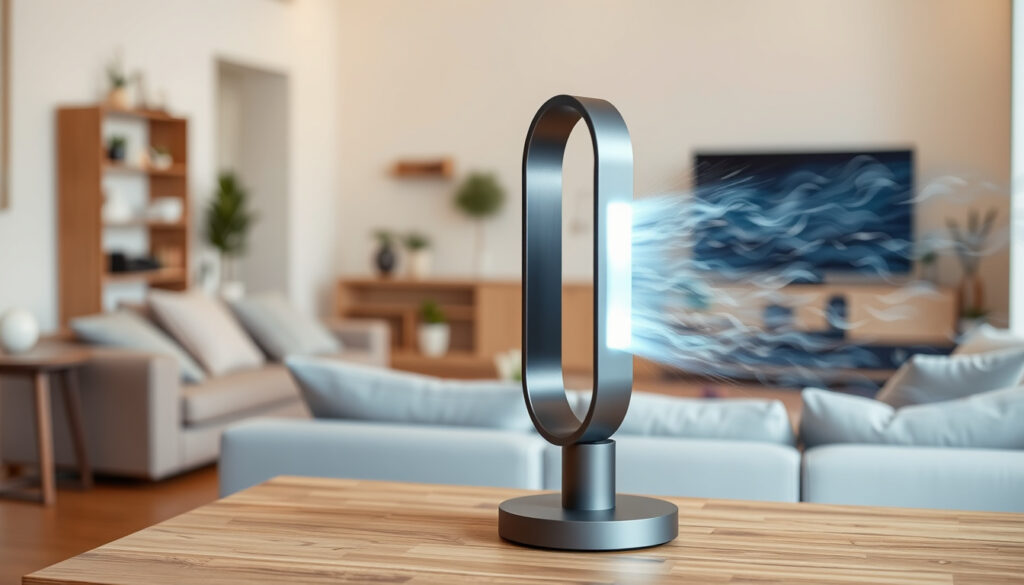
Dyson Hot and Cool Fan Review: Is It Worth Buying?
When summer heat arrives and you’re looking for relief, the Dyson Hot+Cool fan promises both cooling breezes and winter warmth in one sleek machine. But does it actually cool a room? And is it worth the premium price tag compared to a portable air conditioner?
Heating power: 2000 W ·
Heat settings: 10 ·
Timer range: 9 hours ·
Safety features: Tip-over cut-out, no visible heating elements
Quick snapshot
- Dyson fans do not actually cool air — they circulate it (She Might Be Loved (lifestyle blog))
- Air conditioners use more electricity than fans (Dyson Official (manufacturer))
- Dyson Hot+Cool fan on cool setting at speed 10 draws 22 Watts (YouTube: What Does The Dyson Cost To Run?)
- Fans cost average 1p per hour to run (Be Clever With Your Cash (personal finance blog))
- Portable aircon running cost in 2026: reportedly 25p to 35p per hour (She Might Be Loved (lifestyle blog))
- Standard box fan reportedly draws about twice the power of a Dyson Hot+Cool in cool mode (YouTube: What Does The Dyson Cost To Run?)
- Dyson continues to promote fans as the cheapest, most energy-efficient cooling option for well-ventilated rooms (Dyson Official (manufacturer))
- Portable aircon upfront cost starts at £200 (Be Clever With Your Cash (personal finance blog))
- Running a fan 8 hours/day for summer costs just £8.41 (Be Clever With Your Cash (personal finance blog))
Six key specs, one pattern: the Dyson Hot+Cool packs heating power in a compact body but keeps cooling simple — no refrigeration involved.
| Spec | Value | Source |
|---|---|---|
| Heating power | 2000 W | Dyson (official source) |
| Heat settings | 10 | Dyson (official source) |
| Timer range | 9 hours | Dyson (official source) |
| Safety features | Tip-over cut-out, no visible heating elements | Dyson (official source) |
| Weight | Approx 2.5 kg | Dyson (official source) |
| Noise level | 60 dB (max) | Dyson (official source) |
Is a Dyson hot and cold fan worth it?
“Fans are the cheapest, most energy-efficient option for cooling sensation in well-ventilated rooms.”
“Portable air conditioners are best for heatwaves in poorly insulated homes.”
What do experts say about Dyson fans?
- Dyson fans do not actually cool air – they circulate it to create a wind-chill effect (She Might Be Loved (lifestyle blog)).
- According to Dyson, fans are the cheapest, most energy-efficient option for cooling sensation in well-ventilated rooms (Dyson Official).
- Portable air conditioners are best for heatwaves in poorly insulated homes (Dyson Official).
How does it compare to portable air conditioners?
The Dyson Hot+Cool fan creates a wind-chill effect but does not lower room temperature. A portable air conditioner uses refrigeration to actively cool the air. The key trade‑off: upfront cost and running expenses.
Dyson Hot+Cool vs Portable Air Conditioner
| Aspect | Dyson Hot+Cool Fan | Portable Air Conditioner |
|---|---|---|
| Cooling method | Air circulation (wind‑chill) | Refrigeration (actual cooling) |
| Running cost (per hour) | ~2–5p (estimate) | ~25–35p (estimate) |
| Upfront cost | Around £300–500 | From £200 |
| Installation | Plug‑and‑play | Window hose required |
| Year‑round use | Heating + cooling | Cooling only |
The pattern: a Dyson fan suits well‑ventilated rooms and moderate heat; portable aircon is necessary for heatwaves in poorly insulated homes.
Upsides
- Lower running cost (pennies per hour)
- Year‑round heating and cooling
- No installation or window kit
Downsides
- Does not actually lower room temperature
- Higher upfront price than basic fans
- Less effective in extreme heat
Bottom line: If your main concern is electricity cost and you have good airflow, the Dyson Hot+Cool offers a cheap cooling sensation plus winter heating. For actual room cooling during heatwaves, a portable air conditioner is the more effective choice.
Which is the best Dyson hot and cold fan?
Key differences between AM09 and AM07
The AM09 is the newer model with Jet Focus technology, which allows you to direct airflow for personal or whole‑room heating/cooling. The AM07 is an older tower fan that provides cooling only. The AM09 also includes a remote with thermostat, while the AM07 uses a simpler control.
Dyson Hot+Cool Jet Focus vs Tower
Jet Focus (AM09) lets you switch between focused or diffused airflow. The Tower (AM07) delivers a steady stream but lacks directional control. Both are quiet, but the AM09 offers heater functionality.
Model comparison:
| Feature | Dyson AM09 (Hot+Cool) | Dyson AM07 (Tower) |
|---|---|---|
| Heating | Yes, 2000W | No |
| Cooling | Yes (air multiplier) | Yes (air multiplier) |
| Jet Focus | Yes | No |
| Remote | Yes, with thermostat | Yes |
| Typical price | Higher | Lower |
The implication: the AM09 is the best all‑in‑one for those who need both heating and cooling in one unit; the AM07 is adequate for purely cooling on a budget.
Does the Dyson hot cold really cool down?
How does the cooling mechanism work?
The Dyson Hot+Cool does not use a compressor or refrigerant. It draws in ambient air and accelerates it through Air Multiplier technology, creating a stream of moving air. The wind‑chill effect makes you feel cooler, but the room temperature stays the same.
Fan speed and airflow measurement
On cool setting at speed 10, the Dyson Hot+Cool draws 22 Watts. For comparison, a standard box fan draws about 44 Watts. The airflow volume is high but does not reduce the actual room temperature.
The catch: if the room air is already hot and stagnant, a fan will only circulate warm air. In such cases, a portable air conditioner is the only way to achieve a measurable temperature drop.
Does a Dyson heater use a lot of electricity?
Wattage and running costs
In heating mode, the Dyson Hot+Cool uses up to 2000W. At UK electricity rates (roughly 28p per kWh as of 2025), running on full heat costs about 56p per hour. On the lowest heat setting, the thermostat cycles, reducing actual consumption.
Energy efficiency compared to space heaters
Like all resistive heaters, the Dyson converts nearly 100% of electricity to heat, so its efficiency is similar to other electric space heaters. The advantage is the fan’s ability to distribute heat more evenly, potentially allowing a lower thermostat setting.
What this means: the Dyson heater is not more efficient than a standard oil‑filled radiator, but its integrated fan can warm a room faster and more evenly. The cost per hour is the same for any 2000W heater turned on full.
Editorial note: The low‑power cooling mode (22W) is where the Dyson saves money against air conditioners. In heating, it’s a conventional space heater with a premium price tag.
What is the difference between Dyson AM09 and AM07?
The AM09 has a heater, Jet Focus technology, and a thermostat. The AM07 is cooling‑only and lacks directional airflow control. Both use the same Air Multiplier fan mechanism. The AM09 is generally £100–200 more expensive.
Repeating the table from above would be redundant, so a concise summary: the AM09 is the hot‑and‑cold version, the AM07 is the cool‑only tower.
Related reading: **Sony WF-C710N – Specs ANC Battery vs C700N Review**
For those weighing the Dyson Hot and Cool against other bladeless options, our Dyson fan and heater reviews provides a comprehensive overview of the lineup.
Frequently Asked Questions
How do I use my Dyson hot and cool fan without the remote?
You can use the power button on the base of the unit to turn it on. Without the remote, you cannot adjust heat settings or timer. Alternatively, the Dyson Link app (supported on newer models) can control the fan.
What is the warranty on Dyson hot and cool fans?
Dyson typically offers a 2‑year warranty on their fans when purchased from an authorised retailer. Register the product online to activate warranty.
Can I use the Dyson hot and cool fan outdoors?
No. The fan is designed for indoor use only. Using it outdoors can damage the electronics or create a safety hazard.
Is the Dyson hot and cool fan safe for pets?
Yes. The fan has no exposed heating elements and a tip‑over cut‑out, making it safe around pets. However, keep the fan away from water bowls.
How do I clean my Dyson fan?
Unplug the fan and use a soft brush or microfibre cloth to dust the grille. Dyson recommends using a vacuum with a brush attachment for the air multiplier loop. Do not use water or cleaning fluids.
Where to buy Dyson hot and cool fan in Ireland?
Authorised retailers include Currys, DID, Power City, and Dyson’s own website. Prices vary, so compare offers.
Summary: The Dyson Hot+Cool fan offers a versatile cooling and heating solution with low electricity cost on cool mode, but it does not lower room temperature. For households needing actual cooling during heatwaves, a portable air conditioner is more effective despite higher running costs. The choice depends on your local climate, home insulation, and budget.
More related posts
 Edward Twilight: Age, Transformation, and Relationship with Bella
 Delivery Pizza Near Me – Top UK Chains Open Now
 Kim Possible: Cancellation, LGBTQ Characters & IDF
 Do You Need a Visa for Turkey – 2025 Rules by Nationality
 Chrisean Rock: Biography, Blueface Relationship & News
 Why Do Yoga Classes End With Namaste
 Son Ye-jin: Biography, Hyun Bin Marriage, and English Skills
 Pat Cummins Out of T20 World Cup 2026: Injury, Family, IPL