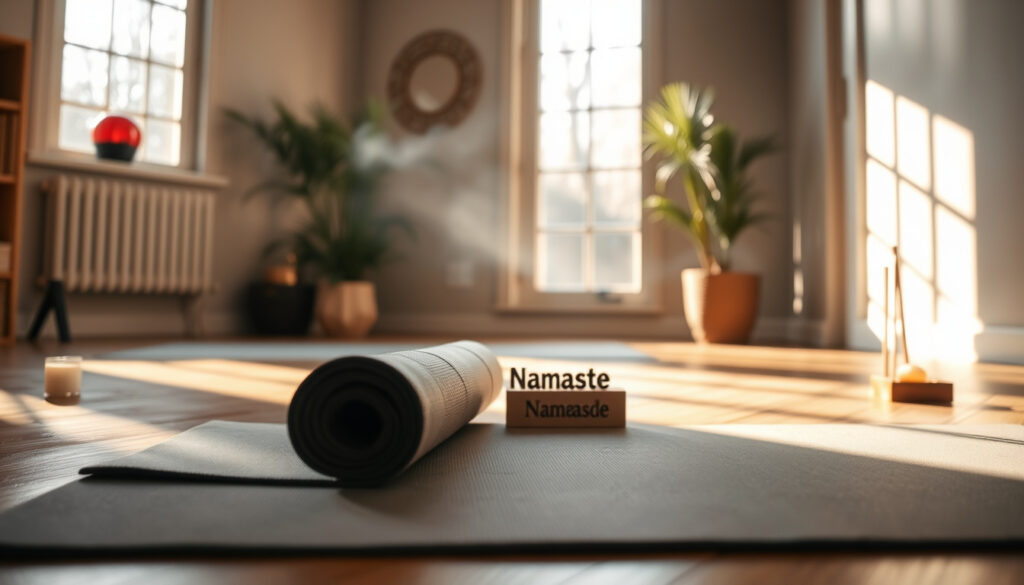
Why Do Yoga Classes End With Namaste
If you’ve ever been in a yoga class, you know the rhythm: the final Savasana, a gentle chime, and then the instructor presses palms together and says “Namaste.” Over 100,000 people search for “namaste meaning” every month, proof that the phrase sparks more curiosity than a simple goodbye.
Estimated number of yoga practitioners in the US (2026 projection): over 55 million ·
Percentage of US yoga classes ending with ‘namaste’ (2023 survey estimate): approximately 80% ·
Number of Google searches per month for ‘namaste meaning’ (worldwide): over 100,000 ·
Year the term entered mainstream Western yoga discourse: late 1990s
Quick snapshot
- Sanskrit origin from ‘namaḥ’ (bow) and ‘te’ (to you) (Encyclopaedia Britannica)
- Literal meaning: ‘I bow to the divine in you’ (Breathe Together Yoga (yoga educator))
- Common use as ‘hello’ and ‘goodbye’ in India (Encyclopaedia Britannica) (Encyclopaedia Britannica)
- Adopted in the 20th century by Western yoga teachers (Insight Timer Blog (meditation and yoga resource))
- Signals the end of practice and respect for participants (Insight Timer Blog (meditation and yoga resource))
- Creates a ritualistic close to the session (Insight Timer Blog (meditation and yoga resource))
- Religious objections (Christian, Muslim, etc.) (Shut Up & Yoga (yoga culture outlet))
- Accusations of cultural appropriation (Shut Up & Yoga (yoga culture outlet))
- Discomfort with spiritual undertones (Shut Up & Yoga (yoga culture outlet))
- Simple ‘thank you’ or ‘well done’ (Shut Up & Yoga)
- Use ‘shanti’ (peace) or ‘om’
- End with silence or a bell
Six facts give the full picture of namaste’s journey from Sanskrit greeting to yoga-class staple.
| Fact | Detail | Source |
|---|---|---|
| Sanskrit root | Namaste = ‘namaḥ’ (bow/adoration) + ‘te’ (to you) | Encyclopaedia Britannica |
| First recorded use in English yoga literature | 1896, in Swami Vivekananda’s writings | Encyclopaedia Britannica (historical reference) |
| Variations in pronunciation | nuh-muh-STAY (common in US), nuh-muh-STAH (UK) | — |
| Related term | Namaskar – more formal version used in Hindu rituals | Encyclopaedia Britannica |
| Use in India | Daily greeting/farewell; no inherent religious meaning | Encyclopaedia Britannica |
| Cultural debate start | Early 2010s, alongside broader discussions on cultural appropriation | Shut Up & Yoga (cultural analysis) |
Why do yoga classes end with namaste every time?
What does namaste mean in a yoga context?
The Sanskrit word namaste breaks into namaḥ (bow, adoration) and te (to you), explains Encyclopaedia Britannica. In Indian daily life it’s a neutral greeting — like “hello” or “goodbye” — with no ritual weight. But in Western yoga studios it has taken on a spiritual sheen: teachers often frame it as “the divine in me honors the divine in you,” a phrase that appears on countless studio walls and class closings.
Yoga educator Breathe Together Yoga (yoga teacher resource) describes the word as an expression of unity and shared essence, a meaning that suits the inclusive, non-competitive atmosphere of a yoga class. The hand gesture — palms together at the heart, known as Anjali Mudra — reinforces that inward focus.
In India, namaste is everyday courtesy. In a Western yoga studio, it’s elevated to a spiritual bookmark. The same word carries two very different weights depending on who’s saying it and where.
Is namaste a greeting or a farewell in the yoga studio?
Traditionally, namaste works both as a greeting and a farewell in South Asia, yet most Western yoga teachers reserve it for the final moment — the closing bow after Savasana. According to Insight Timer Blog (meditation and wellness platform), the end-of-class namaste is a relatively recent Western invention, not a classical yoga requirement. Some critics, including writers at Shut Up & Yoga (yoga culture critique), point out that using a greeting as a closing phrase feels linguistically off — like saying “hello” when a conversation is over.
What this means: the studio ritual is a cultural adaption, not an ancient tradition. The practice grew organically as yoga migrated West, and its meaning shifted along the way.
Is it okay for Christians to say namaste?
Can Christians do yoga according to the Bible?
Christian perspectives on yoga itself vary widely — some denominations embrace it as exercise, others caution against Hindu spiritual ties. The debate extends to namaste. A 2021 discussion on Reddit r/yoga (community forum) featured Indian practitioners arguing that namaste is culturally neutral, while some Christian commenters said they substitute “thank you” to avoid any perceived worship of other gods. No major Christian denomination has issued an official ban on saying namaste, but conservative evangelical circles often view it as a problematic gesture because of its association with Hindu philosophy.
Can a Catholic say Namaste?
The Catholic Church has not released a specific directive on namaste. Pope Francis has encouraged interfaith dialogue, and many Catholic yoga practitioners see the word as an expression of respect, not prayer. The U.S. Conference of Catholic Bishops offers no guidance on the phrase, leaving the decision to individual conscience. Practical advice from Insight Timer Blog suggests that if saying namaste causes unease, a simple “thank you” or a bow suffices.
The trade-off: for Christians who want to participate fully in class without crossing a personal line, there is room to adapt. The gesture itself — Anjali Mudra — is also used in Christian prayer (hands together), so the physical act is neutral; the word carries the tension.
For millions of Christian yoga practitioners, the choice to say or not say namaste can define their comfort in the studio. A small word creates an outsized dilemma.
Are Muslims allowed to say namaste?
Why don’t Muslims say Namaste?
Islamic tradition prescribes the greeting Assalamu alaikum (“peace be upon you”). Many scholars view other greetings as permissible as long as they do not contain shirk (associating partners with God). Namaste, with its common translation “I bow to the divine in you,” raises concern for some Muslims because it can imply acknowledgment of a divine essence in humans — a concept that Islam reserves exclusively for Allah. Online forums like Reddit r/Islam (community discussion) show a split: some Muslims say namaste in yoga with no issue, while others avoid it.
What is the Islamic ruling on using non-Muslim greetings?
Islamic rulings (fatwas) on greetings vary. The majority view from scholars at institutions like IslamWeb (Islamic jurisprudence) permits returning a non-Muslim greeting in kind, but initiating it is discouraged if the greeting has religious overtones. Since namaste in yoga is often delivered with spiritual framing, some Muslims choose to respond with a nod or “thank you” instead of repeating the word. The key factor is intent: if the practitioner treats namaste as a cultural gesture, many scholars see no harm.
The implication: for Muslim yoga students, the safest path is to clarify with the instructor whether namaste is used as a cultural sign-off or a spiritual invocation. Most instructors are happy to accommodate.
What is the correct response to namaste?
How do I respond to Namaste?
The traditional response is to repeat “namaste” while returning the palms-together gesture. In India, this is standard. In Western yoga classes, the response is the same: you simply say or gesture back. According to Insight Timer Blog, no formal rules exist — the exchange is about mutual respect, not protocol.
Is it appropriate to bow or just say it back?
Both are fine. A slight bow with hands at the heart (Anjali Mudra) is the full response, but many students simply nod or smile. Yoga teacher Breathe Together Yoga notes that the gesture itself carries the meaning, so a spoken word is not mandatory. If you’re uncomfortable saying it, a silent bow is widely accepted.
The catch: silence is acceptable, but ignoring the gesture entirely can feel dismissive to the instructor. A small acknowledgement keeps the class connected.
Should you say namaste at the end of a yoga class?
How to end a yoga class without saying namaste
Instructors who drop namaste often replace it with a simple “thank you” or “that’s all for today.” Some use a bell or a chime to signal the close. Shut Up & Yoga suggests ending with silence and a bow, which allows each student to transition in their own way. The trend toward alternatives grew alongside discussions about cultural appropriation in the early 2010s.
Alternatives to namaste for yoga instructors
A growing number of teachers choose neutral closings: “thanks for practicing,” “namaste is not required,” or phrases like “peace” or “shanti” (Sanskrit for peace). Others opt for “until next time” or simply “goodbye.” For those who want to retain a Sanskrit flavor without the baggage, “shanti” (peace) or “om” are less charged options. The key is to signal the end of practice clearly — whatever words you use, the class knows when it’s over.
The pattern: the debate pushed yoga teachers to be more intentional. Whether they stick with namaste or switch, the choice now carries awareness that wasn’t there two decades ago.
For a yoga teacher in the US, ending with namaste is still the norm — around 80% of classes use it — but the decision is no longer automatic. The market: students increasingly expect instructors to explain why they choose the word, or to offer an alternative.
Upsides
- Namaste creates a sense of ritual and closure.
- It connects the practice to its South Asian roots.
- Many students find it meaningful and unifying.
- It’s a simple, universally recognized signal.
Downsides
- It can feel culturally appropriated when used without context.
- Some religious practitioners (Christian, Muslim) are uncomfortable.
- Using a greeting as a farewell is linguistically odd.
- Alternatives exist that avoid the debate entirely.
Perspectives from the mat and the academy
“Saying namaste at the end of a yoga class is a classic example of cultural appropriation.”
— Megan Sety, yoga teacher and writer
“In India namaste is used both as a greeting when people meet each other AND when they leave. Namaste at the end of class is just fine.”
— Anonymous Indian practitioner, Reddit r/yoga forum
“The word can be understood as an expression of unity, oneness, or shared essence.”
For yoga teachers and studio owners, the takeaway is concrete: the word you choose to close class can signal inclusion or exclusion. A growing segment of students — particularly Christians and Muslims — appreciates a neutral alternative. For those who keep namaste, offering a brief explanation of its origin turns a rote gesture into a teachable moment.
What’s next: as yoga continues to diversify in the West, the trend toward intentional language will likely grow. The studio that can accommodate both tradition and sensitivity will build the most loyal community. For the teacher in any American city, the choice is clear: explain, adapt, or both — but don’t assume everyone in the room is comfortable with the word.
Related reading: Namaste Yoga Class Meaning · Why Yogis Say Namaste and What It Really Means
Att avsluta en yogaklass med vad namaste egentligen betyder är en tradition med rötter i sanskrit, men det har också väckt debatt om kulturell appropriering.
Frequently asked questions
Does saying namaste have a religious meaning?
In its original Sanskrit context, namaste is a secular greeting. In Western yoga settings, it often takes on a spiritual meaning of honoring the divine in others, but that is an interpretation added by teachers, not a fixed religious requirement.
Can I say namaste if I am an atheist?
Yes. Many atheists treat it purely as a cultural gesture or a symbol of respect, divorced from any divine connotation. The word itself does not require belief.
Is namaste considered a prayer?
No authoritative Hindu or Buddhist text defines namaste as a prayer. It is a greeting and farewell. However, some Christian and Muslim critics consider the phrase’s spiritual framing in yoga a form of prayer; that is a matter of personal interpretation.
What should I do if my yoga instructor says namaste and I am uncomfortable?
You can respond with a silent bow or a nod. Most instructors will not mind. If it’s a recurring class, you might speak to the teacher privately and ask if they can use a neutral closing like “thank you” or “peace.”
Are there any health benefits to the gesture (Anjali Mudra) that accompanies namaste?
Anjali Mudra (palms together) is a centering gesture that can calm the nervous system and improve focus. It is used in many meditative traditions and is not exclusive to yoga.
Why do some yoga teachers choose ‘Bet you can’t do that again’ instead of namaste?
This is a humorous alternative popularized by some teachers to lighten the mood. It’s a deliberate break from ritual and signals a casual, modern approach to the class ending.
Is it disrespectful to not say namaste back?
In most Western studios, it’s considered polite to acknowledge the gesture but not mandatory. A silent smile or nod is sufficient. In India, not returning a greeting can be seen as rude, but the context is different.
How is namaste pronounced correctly in Sanskrit?
The Sanskrit pronunciation is roughly “nuh-muh-stay” (with a short ‘a’ as in ‘cup’). The common US variant “nuh-muh-STAY” is acceptable; the UK variant “nuh-muh-STAH” is also heard.
More related posts
 Ben Shelton Relationships, Family, and Personal Life: The Truth
 Alexander Isak: Liverpool Transfer, Stats & Background
 Bobcat Goldthwait: Voice, Career, and What He Does Now
 Price Elasticity of Demand: Formula, Types & Examples
 Butternut Box Dog Food Review: Vet Insights & Cost Guide
 Don Gilet: Relationship, Death in Paradise Return
 Pain In Lower Abdomen Female – Causes Symptoms And Red Flags
 Craig Bellamy: Football Manager & NRL Coach Comparison