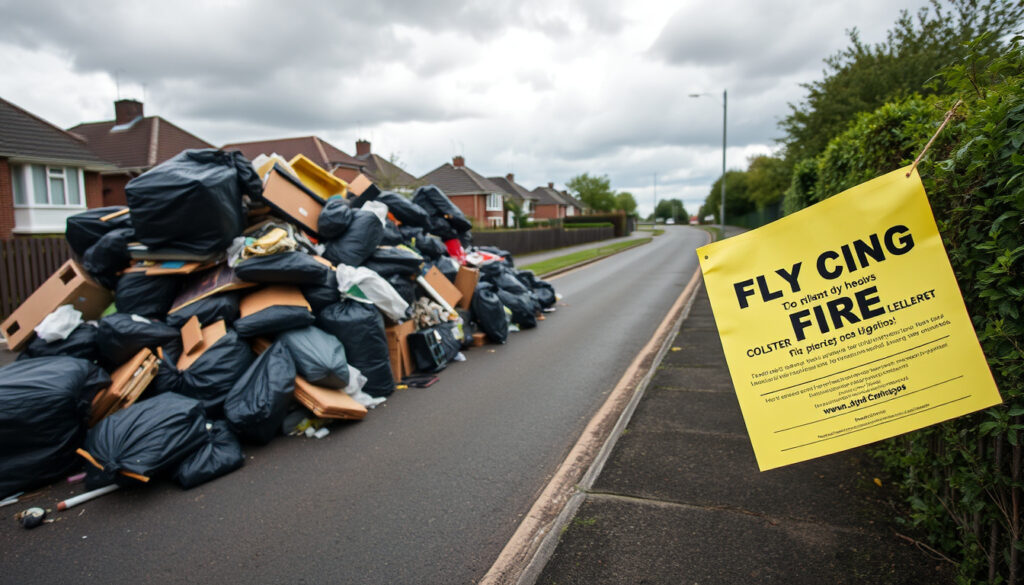
Carole Wright Fly Tipping Fine: 83-Year-Old Gran Fined £600
Eighty-three-year-old Carole Wright says she was disposing of a cardboard box near a recycling container when she received a £600 fine from Reading Borough Council. The case, reported in January 2026, has sparked debate about the fairness of enforcement tactics targeting householders at recycling sites.
Fine amount: £600 · Carole Wright’s age: 83 · Maximum fly-tipping penalty: £50,000 or 5 years imprisonment
Quick snapshot
- Whether Carole Wright has formally appealed the fine (Izvestia)
- Whether council officers witnessed the alleged disposal directly (Izvestia)
- How many similar fines have been issued since September 2025 (Reading Green Party)
- April 2025: New fine levels take effect in Reading (Reading Borough Council)
- 15 September 2025: Kingdom enforcement officers begin patrolling Reading (Reading Borough Council)
- October 2025: Alleged incident occurs (Izvestia)
- 22 January 2026: Story reported by Metro and The Telegraph (Izvestia)
- If unpaid within 14 days, the case may be escalated to court (Reading Borough Council)
- The 12-month Kingdom partnership continues until September 2026 (Reading Borough Council)
| Field | Value |
|---|---|
| Person fined | Carole Wright |
| Age | 83 |
| Location | Reading, UK |
| Fine amount | £600 |
| Item | Cardboard box |
| Issuing authority | Reading Borough Council via Kingdom Local Authority Support |
What happens if you don’t pay a fly-tipping fine?
Reading Borough Council sets a 14-day window to pay a Fixed Penalty Notice. If you miss that deadline, the council can escalate the matter to magistrates court, where penalties become significantly harsher. The council’s own guidance states that prosecution for fly-tipping carries an unlimited fine or up to five years custody.
Court proceedings risk
Once a case reaches court, the original £600 penalty is superseded by whatever sentence the magistrates impose. This could mean a larger fine based on your income or assets, or in serious cases, a criminal record that follows you indefinitely.
Escalation to magistrates
Magistrates handle environmental offences like fly-tipping when the council opts to prosecute rather than accept the fixed penalty. According to Reading Borough Council’s published guidance, the council can pursue this route if the fixed penalty route fails or is declined.
How do fly tippers get caught?
The enforcement mechanism in Reading relies on a combination of physical evidence and witness testimony. Kingdom officers patrol public spaces and recycling sites equipped with body-worn cameras, documenting any instances of alleged waste offences.
CCTV and witnesses
Reading’s enforcement strategy includes CCTV monitoring in town centre hotspots, according to Reading Borough Council’s announcement of the Kingdom partnership. Officers also rely on evidence gathered by members of the public, some of whom use the Love Clean Streets app to report suspected incidents.
Traceable waste evidence
Waste that bears an address label or can be linked to a specific household provides direct evidence for enforcement action. In Carole Wright’s case, a cardboard box with identifying details reportedly led officers to issue the fine, though the family’s account disputes how the box came to be beside the recycling container.
How do you appeal a fly-tipping fine?
If you receive a Fixed Penalty Notice you believe is unjust, Reading Borough Council allows you to contest it. The process involves submitting evidence and requesting a review before the deadline expires. Here is how the appeal process works in practice.
Gather evidence steps
Before contacting the council, collect any evidence supporting your version of events. This could include photographs of the bin location, receipts showing legitimate disposal, or witness statements from anyone present. In Carole Wright’s case, her family insists the box fell from a full bin, which the council has the opportunity to investigate during a review.
Contact council process
Reach out to Reading Borough Council’s waste and recycling team within the 14-day payment window to formally request a review. Council guidance confirms that officers can consider individual circumstances and may adjust or cancel a notice if evidence warrants it. The council has stated publicly that it remains open to dialogue in Carole Wright’s case.
What to do if someone has fly-tipped in my garden?
Finding dumped waste on your property is frustrating, but the council has a clear process for reporting it. Reading Borough Council investigates reports of fly-tipping on private land within five working days, and in many cases will remove the waste at no cost to you.
Report immediately
Use the Love Clean Streets app to report fly-tipped waste as soon as you discover it. Include photographs, the location, and any visible details on the waste that might help identify the perpetrator. The app feeds directly into the council’s enforcement system.
Council removal process
Once reported, council officers assess the waste and arrange collection. You do not typically need to pay for this service if the waste was fly-tipped on your property. The council also uses these reports to build intelligence on fly-tipping hotspots and deploy enforcement resources accordingly.
What percentage of fly tippers are caught?
National conviction rates for fly-tipping are notoriously low, making enforcement statistics a recurring point of criticism for environmental campaigns. The Reading Green Party has noted that despite rising incidents, fines in the borough have fallen recently.
England stats overview
GOV.UK publishes annual data on fly-tipping incidents and enforcement outcomes across England. According to the latest available figures, councils recorded hundreds of thousands of incidents annually, but prosecution rates remain a small fraction of total cases. Most enforcement happens through fixed penalty notices rather than court action.
Enforcement trends
The Reading Green Party has reported that while fly-tipping incidents are up in Reading, the number of fines issued has dropped by 37 percent compared to previous years. This discrepancy between incident volume and enforcement output has drawn scrutiny from local political groups monitoring the Kingdom partnership.
Reading’s fly-tipping enforcement in practice
Beyond individual cases like Carole Wright’s, the broader enforcement landscape in Reading reveals tensions between aggressive fine-setting and actual prosecution rates. The one-year Kingdom partnership, which began on 15 September 2025, represents a significant shift in how the council approaches environmental offences.
The table below shows how Reading’s current fine levels compare with pre-April 2025 amounts for common environmental offences.
| Offence type | Current fine | Pre-April 2025 | Authority |
|---|---|---|---|
| Littering / graffiti | £500 | £80 | Reading Borough Council |
| Incorrect household waste | £600 | £400 | Reading Borough Council |
| Fly-tipping | £1,000 | £400 | Reading Borough Council |
April 2025 brought sharp increases to every environmental fine category in Reading. The £600 fine Carole Wright received sits between littering and full fly-tipping penalties, reflecting how the council classifies box placement near recycling containers.
The Kingdom partnership is funded entirely through fine revenue, meaning officers have a financial incentive to identify violations. Reading Borough Council’s own announcement described the arrangement as costing the council nothing, with Kingdom recouping expenses through its share of collected penalties.
The 83-year-old grandmother says she cannot afford the £600 fine. If she loses an appeal or fails to pay within 14 days, the case moves to court where a magistrate could impose a larger penalty or, theoretically, a custodial sentence for continued non-payment.
How to report fly-tipping in Reading
Residents who witness suspected fly-tipping can report it through the Love Clean Streets app, available on both iOS and Android. The council encourages reports with photographic evidence where safe to collect it. Reports on public land are investigated within five working days.
- Download the Love Clean Streets app from your device’s app store
- Submit a report with location, date, time, and photographs
- Include any identifying details visible on dumped waste
- Keep a copy of your report reference number for follow-up
Hiring an unlicensed waste removal company can land you in trouble even if you did not dump the waste yourself. Under the Environmental Protection Act, householders can be held responsible for waste disposed of through third parties unless they verify the carrier holds a valid waste carrier licence.
Steps to take if you receive a fly-tipping fine
Receiving a Fixed Penalty Notice can be alarming, especially if you believe the accusation is unfair. Here is a practical sequence to follow, based on Reading Borough Council’s published guidance and the appeal process other residents have used.
- Check the notice carefully: Verify the date, location, and alleged item. Note the 14-day payment deadline.
- Gather your evidence immediately: Photographs, receipts, witness details. Do this before the deadline.
- Contact the council within 14 days: Request a formal review. State your grounds for contesting the fine.
- Submit evidence in writing: Email or post supporting material. Keep copies of everything.
- Wait for the council’s response: If they uphold the fine, you can still decline to pay and let it go to court.
- Consider legal advice if escalating: Once in magistrates court, a solicitor can represent you.
A comparable case saw an 86-year-old fined £250 for dropping a piece of paper. That fine was reduced to £150 on appeal. The outcome suggests councils sometimes reconsider penalties when residents actively contest them with supporting evidence.
Timeline of the Carole Wright case
| Date | Event |
|---|---|
| April 2025 | New fine levels take effect in Reading |
| 15 September 2025 | Kingdom Local Authority Support officers begin patrolling |
| October 2025 | Alleged cardboard box incident at recycling site |
| January 2026 | Carole Wright receives £600 fine notice |
| 22 January 2026 | Story reported by Metro and The Telegraph |
| September 2026 | 12-month Kingdom partnership trial ends |
What we know versus what remains unclear
Confirmed
- Carole Wright, 83, received a £600 fine
- The fine relates to a cardboard box found beside a recycling container
- Kingdom Local Authority Support issued the notice
- Reading Borough Council has acknowledged the case and says it is open to dialogue
- The Kingdom enforcement partnership began on 15 September 2025
Unclear
- Whether Carole Wright has formally lodged an appeal
- Whether officers witnessed the alleged disposal directly
- How Kingdom identified Wright as the individual responsible
- Whether the council will reduce or cancel the fine
- How many other residents have received similar fines since September 2025
What people are saying
A British pensioner was fined £600 for a box that fell out of a trash can. The family says she cannot pay the amount.
— Izvestia, reporting on the Carole Wright case
The authorities said they remain open to dialogue and hope to resolve the case without further action.
— Reading Borough Council spokesperson
Fly-tipping is up, but the anti-fly tipping team is issuing significantly fewer fines for dumping waste this year.
— Reading Green Party
No one likes to see rubbish on the streets. It makes our town look messy and dirty.
— Reading Borough Council
This article will be updated if Reading Borough Council confirms whether Carole Wright’s fine has been paid, reduced, or appealed.
Related reading: Cost of Living Payments 2025 UK Guide · Cost of Living Payment UK Guide
The £600 fixed penalty notice to 83-year-old Carole Wright stemmed from a cardboard box bearing her address found beside an overflowing recycling bin.
Frequently asked questions
Is fly-tipping taken seriously?
Yes. Courts can impose unlimited fines for fly-tipping and up to five years imprisonment in serious cases. The maximum penalty under UK environmental law reflects how regulators view illegal waste disposal as a significant public nuisance and environmental hazard.
Can I walk away from an environmental enforcement officer?
You are not legally obligated to answer questions, but walking away does not prevent the officer from issuing a fine if they have evidence linking you to the waste. Body-worn cameras typically document these encounters.
Is putting a cigarette down a drain littering?
Yes. Dropping a cigarette butt on the ground or into a drain constitutes littering. In Reading, the fixed penalty for littering and graffiti rose to £500 from April 2025.
Can you put old clothes in a clothes bank?
Clothing banks are designed for reusable textiles, but depositing items outside a full bank can count as fly-tipping. If the bank is overflowing, contact the council to report it rather than leaving bags beside it.
What is a fixed penalty notice for fly-tipping?
A Fixed Penalty Notice is an out-of-court settlement option allowing councils to fine offenders without prosecution. In Reading, the current FPN for fly-tipping is £1,000, reduced to £600 for early payment within 14 days.
More related posts
 Liverpool FC vs Athletic Bilbao Stats – Full H2H Record and Goals
 Rashid Khan: Wives, Net Worth, Height, Career Facts
 Michelle Keegan: Baby, Transformation, Surgery & Net Worth 2025
 Evri Customer Service Number – UK Phone, Chat & Hours Guide
 The Snail and the Whale – Plot Summary, Moral and Film Guide
 Ayra Starr: Relationship Status, Net Worth, and Facts
 Best Life Insurance UK – Top Providers and Cheapest Quotes
 Maro Itoje: Biography, Wife, Salary, Religion, Career Highlights