Yoga Poses: Basics to Advanced Guide
Ask anyone who’s ever unrolled a yoga mat and they’ll tell you the same thing: the hardest part isn’t the pose, it’s figuring out where to begin. Whether you’re after the 12 foundational postures of Hatha yoga, curious about the most difficult asanas, or wondering whether a regular practice can actually trim your waistline, this guide lays out what the evidence says — and what it doesn’t.
Basic yoga postures (Hatha): 12 ·
Basic yoga poses (Vinyasa): 5 ·
Most difficult poses listed by Géopélie: 19 ·
Most popular yoga poses: 10
Quick snapshot
- 12 basic postures from Hatha yoga tradition (Yoga.in)
- Downward-Facing Dog is a universally recognized pose (Yoga Journal)
- Yoga alone cannot target belly fat specifically (NCCIH)
- Which single pose is the absolute hardest (subjective)
- Exact list of the 19 most difficult poses from Géopélie (only title available)
- The exact list of 5 basic Vinyasa poses varies by source
- No timeline applicable for this topic
- Build from basic to advanced with proper progression
Here are the key numbers from authoritative sources.
| Attribute | Value | Source |
|---|---|---|
| Number of basic Hatha postures | 12 | Yoga.in (yoga education platform) |
| Number of basic Vinyasa poses | 5 | YogaBasics (yoga practice guide) |
| Number of most difficult poses (Géopélie) | 19 | Géopélie (fitness resource) |
| Most popular yoga pose | Downward-Facing Dog | Yoga Journal (yoga authority) |
| Belly fat reduction via yoga | Not possible through spot reduction | NCCIH (federal health agency) |
What are the 12 basic yoga postures?
The 12 basic postures come from Hatha yoga, the branch that emphasizes physical poses and breath control. These aren’t just any poses — they’re a complete sequence designed to work every part of the body in a logical order.
The takeaway: You don’t need to master all 12 at once. Start with standing poses and forward bends, then gradually introduce inversions. The sequence builds full-body strength and flexibility when practiced consistently.
What are the names of these postures?
The classic set includes Headstand (Sirsasana), Shoulderstand (Sarvangasana), Plow (Halasana), Fish (Matsyasana), Sitting Forward Bend (Paschimottanasana), Cobra (Bhujangasana), Locust (Shalabhasana), Bow (Dhanurasana), Spinal Twist (Ardha Matsyendrasana), Crow (Bakasana), Standing Forward Bend (Uttanasana), and Triangle (Trikonasana). This sequence was compiled by B.K.S. Iyengar in his seminal work, Light on Yoga.
How to perform each posture?
Each pose in the sequence requires specific alignment cues. Take Headstand, for example: you need to interlace your fingers, place the crown of your head on the mat, and walk your feet in while engaging your core to lift the legs. Yoga Journal (comprehensive pose library) emphasizes keeping your elbows shoulder-width apart to avoid neck strain.
Strength from inversions like Headstand builds shoulder stability, but beginners risk cervical compression. Start against a wall and build up to 30 seconds over several weeks.
The sequence folds in forward bends and backbends to balance the spine. YogaBasics (practice guide) notes that many modern classes swap the original order to match what students can actually handle.
The implication: the classic 12 are a template, not a rigid rule. Teachers adapt them constantly for ability levels and class focus.
What are the 10 most popular yoga poses?
Some poses appear in nearly every class. These are the ones that teachers use to build a session that works for beginners and veterans alike.
The takeaway: These 10 poses are your foundational toolkit. Master them before moving to advanced variations. If you can’t hold them comfortably, you’re not ready for the hard stuff.
What is Downward-Facing Dog?
Arguably the most recognizable pose in modern yoga, Downward-Facing Dog (Adho Mukha Svanasana) serves as a transition, a resting pose, and a strength builder all in one. The body forms an inverted V with hands and feet on the floor, hips lifted high. Verywell Fit (fitness reference) says it engages the shoulders, hamstrings, and core while decompressing the spine.
What is Child’s Pose?
Child’s Pose (Balasana) is the go-to resting position. Knees apart or together, torso draped over the thighs, arms extended or folded. Yoga.in (wellness platform) places it in both forward bend and restorative categories because it calms the nervous system. It’s the pose teachers default to when students need a reset.
Other chart-toppers include Warrior I, Warrior II, Tree Pose, Triangle, Cat-Cow, Bridge, Cobra, and Corpse Pose. World Yoga Forum (community resource) calls these the “starter kit” because they teach alignment, balance, and breath across multiple planes of movement.
Why this matters: If you can’t hold these 10 comfortably, you’re not ready for the advanced stuff yet. Stick with them until they feel natural.
What is the hardest yoga pose?
Difficulty in yoga is partly strength, partly flexibility, partly balance — and partly ego. But some poses are objectively brutal.
What are the most difficult yoga poses?
Most lists put Headstand (Sirsasana), Scorpion (Vrischikasana), and Peacock (Mayurasana) near the top. The Géopélie list of 19 most difficult poses includes these plus One-Legged King Pigeon (Eka Pada Rajakapotasana) and Star (Tadasana variations). Yoga Journal (advanced pose directory) warns that Scorpion requires both shoulder flexibility and core strength to balance on the forearms while the spine arches backward and feet point toward the head.
How to approach advanced poses?
You don’t just try Scorpion one day. Build up with Dolphin for shoulder prep, Camel for backbend range, and Forearm Stand for balance. YogaBasics (sequencing guide) advises a progressive approach: master 5 basic poses before attempting one intermediate, and master 5 intermediate before one advanced.
Advanced poses carry higher injury risk — shoulder tears from inversions, hamstring strains from deep forward folds. Even experienced practitioners benefit from props and spotters.
The pattern: the hardest poses combine extreme flexibility with strength under load. That takes most students 1–3 years of consistent practice.
Can I lose belly fat by yoga?
This is one of the most common questions people search, and the answer is more nuanced than a simple yes or no.
How does yoga affect weight loss?
Yoga can contribute to weight loss, but the effect is modest. NCCIH (federal health research agency) reports that some small studies show yoga may improve risk factors for metabolic syndrome, including waist circumference. However, the same source states clearly that there is no credible evidence any yoga pose can spot-reduce belly fat.
Which yoga poses target the belly?
No pose targets belly fat specifically. What poses like Boat, Plank, and Dolphin do is strengthen the underlying core muscles. NCCIH (complementary health research arm) says weight-loss effects when present depend on broader activity, diet, and consistency — not any single pose.
For someone doing 45 minutes of Vinyasa three times a week, the calorie burn is roughly 200–300 per session — equivalent to a moderate walk. Combine it with a caloric deficit, and yoga becomes part of the equation, not the answer.
The implication: yoga is a supporting player for weight loss, not the headliner. Core strength improves posture and appearance, but the scale moves from the kitchen, not the mat.
What are the benefits of yoga poses?
The benefits extend far beyond flexibility. The evidence base from public-health authorities is surprisingly robust.
Physical benefits
National Institute on Aging (U.S. government health body) states that yoga can help improve balance and flexibility in older adults — a critical benefit because falls are a leading cause of injury. NCCIH (complementary health research arm) adds that yoga may help people with chronic low back pain, especially as part of a broader treatment plan.
Amrita Yoga Wellness (wellness education) breaks poses into categories — standing for leg strength, seated for hip mobility, backbends for spinal extension, inversions for circulation. A balanced practice hits all categories across a week.
Want to explore another physical activity? Check out our Conic Hill Walk Guide for a beginner-friendly outdoor workout.
Mental health benefits
The same NCCIH review says yoga may improve anxiety, depression, and quality of life in some people. The mechanism isn’t fully understood, but the combination of breath regulation, physical movement, and mindfulness appears to modulate the stress response.
Yoga Breeze Bali (practice resource) notes that breathing-focused styles like Restorative Yoga are more relaxation-oriented than cardiovascular, making them useful for stress management but not calorie-heavy exercise.
The stress-reduction benefit of yoga may indirectly support weight management — lower cortisol levels reduce abdominal fat storage. The paradox: the most calming styles burn the fewest calories.
The trade-off: you can’t maximize both relaxation and calorie expenditure in the same class. Choose your priority.
For more on emotional wellness, read our article on Narcissistic Traits: Signs, Symptoms & How to Deal With Them.
“Yoga is the practice of quieting the mind.” Indeed, the physical postures are only one limb of an eight-limbed path — but they’re the limb most people interact with daily.
— Yoga Journal (editorial authority)
“I tell beginners: don’t worry about touching your toes. Worry about breathing steadily and keeping your knees soft. The flexibility comes later.”
internationalworldyogaalliance.org, yogapoint.com, yogarenewteachertraining.com, blog.alomoves.com, amritayogawellness.com, yogajournal.com, yogajala.com, worldyogaforum.com, yoga15.com
Frequently asked questions
What is the best yoga pose for back pain?
Child’s Pose and Cat-Cow are frequently recommended by physical therapists for mild back pain. NCCIH (federal health research) says yoga may help chronic low back pain as part of a treatment plan.
How many calories does yoga burn?
A 150-pound person burns roughly 200–300 calories per hour of Hatha yoga and 400–500 per hour of Power Yoga. Verywell Fit (fitness data) notes results vary by intensity and body weight.
Is yoga considered strength training?
Yes, but it depends on the style. Vinyasa and Ashtanga provide moderate resistance through bodyweight, while Iyengar uses holds that build endurance. YogaBasics (practice resource) says it’s not a replacement for heavy lifting if your goal is maximal muscle gain.
What are the different types of yoga?
Major styles include Hatha (gentle, foundational), Vinyasa (flow-based), Ashtanga (structured sequence), Iyengar (alignment-focused, uses props), Bikram (hot yoga), and Restorative (relaxation). Yoga.in (yoga education) offers a useful breakdown of each.
Can yoga help with stress relief?
Evidence supports this. NCCIH (complementary health research) cites studies showing yoga reduces anxiety and improves quality of life. Breathing-focused styles are particularly effective.
How often should I practice yoga to see results?
Consistency matters more than session length. Three times a week for 30 minutes shows measurable improvement in flexibility and strength within six weeks. Yoga Journal (practice guidance) suggests daily practice for mental health benefits.
What equipment do I need for yoga?
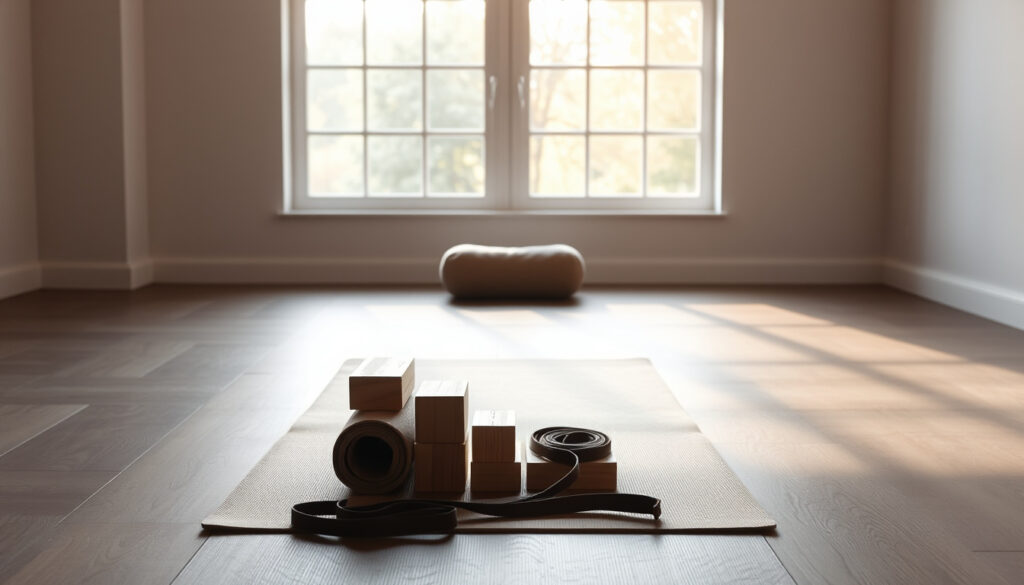
A non-slip mat is essential. Blocks and a strap help with alignment in tight bodies. Comfortable clothing that allows movement. National Institute on Aging (federal health body) recommends props for older adults to ensure safety.
Whether you’re mastering your first Downward Dog or chasing Scorpion pose, the arc is the same: start with the basics, respect the difficulty curve, and keep your expectations grounded in what the evidence says. For anyone in the U.S. looking to start or deepen a practice, the choice is clear: pick a style that matches your goals — strength, flexibility, or calm — and show up three times a week. The rest follows.
More related posts
 Vernon Kay: Tess Daly Split, Health & Noel Edmonds
 Archie Lyndhurst: Cause of Death, Family, and Career
 Hardik Pandya: Age, Height, Net Worth, Marriage & Smoking Facts
 Steph Curry: Net Worth, Height & Myths Debunked
 Evri Customer Service Number – UK Phone, Chat & Hours Guide
 Thomas Doherty: Age, Net Worth, Relationships & Career
 Humphrey Ker: Eton Classmate, Comedian, Wrexham Executive
 Wes Streeting Resigns: His Career, Health, Politics