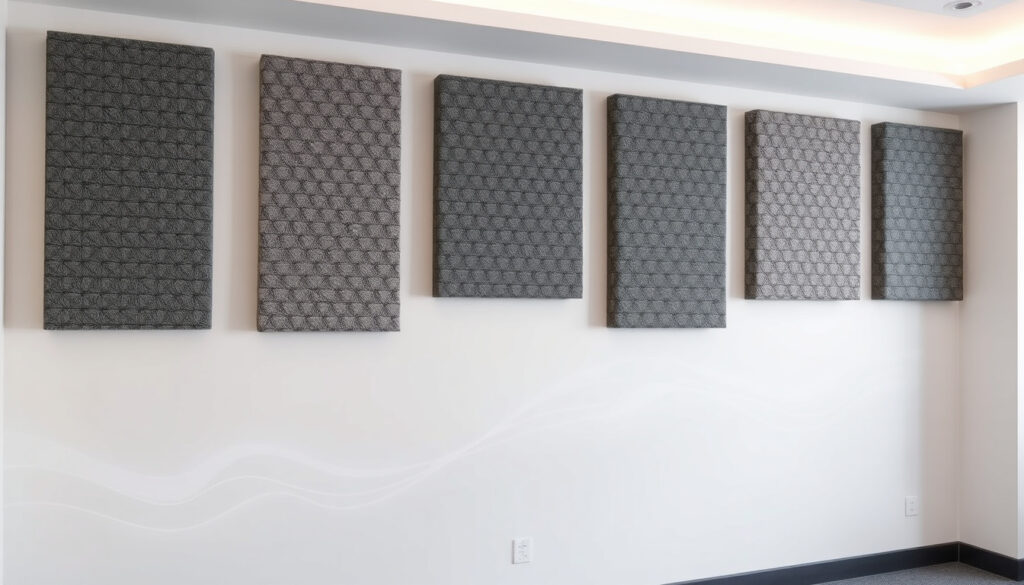
Acoustic Panels for Walls: Do They Work, Pros & Cons Guide
Ever walked into a room and felt the sound slap back at you — like shouting into a barrel? That’s echo, and it’s the reason acoustic wall panels have become a go‑to fix in Irish homes.
Common panel dimensions: 2400 mm x 600 mm · Noise Reduction Coefficient (NRC): 0.8 (high‑performance) · Screws recommended per panel: 15 · Screw rows per panel: 5
Quick snapshot
- Acoustic panels absorb sound waves, reducing echo (Panelling Centre Ireland, specialist retailer).
- NRC rating measures absorption; common values range 0.5–0.9. (Panelling Centre Ireland, specialist retailer)
- Installation requires 15 screws per panel in 5 rows of 3 (Woodie’s, DIY retailer).
- Whether panels cause damp depends on room humidity and ventilation.
- Whether panelling is outdated in 2026 is a matter of design trends and personal taste.
- Acoustic wall panelling is a 2025 interior‑design trend in Ireland (Panelling Centre Ireland).
- Slatted wood and fabric panels remain popular through 2026. (Panelling Centre Ireland)
- Expect more integrated acoustic solutions for open‑plan living.
- DIY installation guides and kits will grow as demand rises.
The pattern: four specifications define the standard acoustic panel on the Irish market – here’s how they stack up.
| Label | Value |
|---|---|
| Common Panel Size | 2400 mm x 600 mm |
| NRC Rating (example) | 0.8 |
| Screws per Panel | 15 |
| Screw Rows | 5 |
Do Acoustic Wall Panels Really Work?
Yes, but only for what they’re designed to do. Acoustic panels absorb sound waves, which cuts down echo and improves clarity in a room. According to the Panelling Centre Ireland (specialist retailer), they “combine decorative wall cladding with sound‑absorbing layers to reduce echo and soften noise.” They will not, however, make a room soundproof.
Do acoustic panels help with echo?
- Yes, by absorbing sound energy that would otherwise bounce off hard surfaces.
- Effectiveness is measured by the Noise Reduction Coefficient (NRC) – a rating of 0.8 means 80% of sound energy is absorbed.
- For a typical Irish living room, panels with NRC ≥ 0.7 noticeably reduce slap echo.
Why does my house echo?
- Hard floors, bare walls, and large windows reflect sound.
- Furniture and soft furnishings absorb some sound, but open‑plan layouts leave few surfaces to catch reflections.
- Acoustic panels address the root cause: too much reflective surface and not enough absorption.
What are acoustic panels and why do we use them?
- Wall‑mounted panels with a porous or fibrous core (foam, polyester, or mineral wool).
- Used in homes, offices, recording studios, and gyms to control reverberation.
- In Ireland, they are popular in open‑plan kitchens and home cinemas (Panelling Centre Ireland).
The difference between a room that sounds dead and one that sounds lively is about 0.2 on the NRC scale. Investing in panels with NRC 0.8 instead of 0.6 can cut reverberation time by nearly half.
What Are the Disadvantages of Acoustic Wall Panels?
They solve echo, but they’re not a cure‑all. Three limitations every Irish buyer should weigh before buying.
Do acoustic panels cause damp?
- If the room lacks ventilation, moisture can get trapped behind panels.
- Fabric‑wrapped panels are more absorbent and can hold humidity.
- Slatted wood panels with an air gap are less risky – but still need airflow (Isover Ireland, insulation manufacturer recommends cavities > 60 mm for masonry walls).
What is the cheapest way to reduce noise through walls?
- Acoustic panels are not designed to block sound transmission; they treat sound within a room.
- For blocking noise from neighbours or traffic, heavy mass barriers (e.g., double plasterboard, mass‑loaded vinyl) are needed.
- Isover Ireland notes that “double layers of plasterboard should be used to optimise acoustic performance of walls.”
How to soundproof a room cheaply from traffic and neighbours?
- Seal gaps around doors and windows with weatherstripping.
- Add heavy curtains and rugs – they add mass and absorb sound.
- Use bookshelves against shared walls as a makeshift barrier.
- These cost far less than professional soundproofing but offer moderate improvement.
Better acoustics versus risk of damp: in a well‑ventilated room the risk is negligible; in a damp basement or kitchen without an extractor, skip fabric panels entirely.
Acoustic vs. Non‑Acoustic Wall Panels: Which Should You Choose?
The choice comes down to a single question: do you want better sound or just a new look? Here’s how the two compare across four key criteria.
| Criterion | Acoustic Panels | Non‑Acoustic Panels |
|---|---|---|
| Sound absorption | Yes (NRC 0.5–0.9) | No (decorative only) |
| Cost per panel (€) | €50–€150 | €20–€80 |
| Installation complexity | Moderate (screw pattern matters) | Simple (adhesive or basic screws) |
| Design flexibility | Wide range (slatted, fabric, foam) | Very wide (MDF, PVC, wood veneers) |
| Longevity | 10–15 years with care | 15–20 years |
| Ventilation requirement | Important (moisture risk) | Less critical |
The pattern: acoustic panels earn their premium only if you actually need echo reduction. For a purely decorative update, non‑acoustic panels save money and avoid the installation headaches.
Is Panelling Outdated in 2026?
No – but only if the style and placement are thoughtful. Slatted wood and fabric‑wrapped panels are still trending in Irish interiors.
What makes a home look outdated?
- Dark, heavy panelling from the 1990s (especially in small rooms).
- Mismatched panel colours or cheap MDF that warps.
- The absence of any texture or acoustic function – bare walls feel cold.
Does panelling make a room look smaller or bigger?
- Horizontal slats can make a room feel wider.
- Light‑coloured panels reflect light and create depth.
- Full‑wall panelling in a small room can feel claustrophobic – half‑height (wainscoting style) is a safer bet (Panelling Centre Ireland advises using panels in “open‑plan living, busy family homes, and multi‑use spaces”).
What Are the Top Mistakes When Installing Acoustic Panels and How to Avoid Them?
Five common errors, each with a clear fix from real‑world installation guides.
- Using too few screws: Woodie’s specifies “15 off 3.5mm x 35mm black drywall screws set in 5 rows of 3” for secure fixing. Fewer screws lead to warping over time (Woodie’s, DIY retailer).
- Not checking for wall studs: Panels must be anchored into studs or use quality wall plugs. Failure causes panels to pull away.
- Ignoring room acoustics: Placing panels on one wall only may not reduce echo – a distributed arrangement (covering 20–40% of wall area) works better.
- Using adhesive alone: Many panel adhesives fail under the weight of MDF or wood slats. Always combine adhesive with mechanical fixings.
- Blocking ventilation: Panels flush against exterior walls without an air gap can trap moisture. Isover recommends a cavity depth of at least 85 mm for optimal acoustic performance on masonry walls (Isover Ireland).
Screwing 15 fasteners into a 2400 mm panel sounds tedious, but skipping them is the number‑one reason panels warp, sag, or rattle. An hour of extra drilling saves a replacement panel later.
Upsides & Downsides
Upsides
- Reduces echo and improves speech clarity.
- Adds a modern, textured look to walls.
- Low maintenance – dust with a soft cloth or vacuum brush (Panelling Centre Ireland).
- Can be fitted in one weekend by a competent DIYer.
Downsides
- Does not block sound transmission through walls.
- Can absorb moisture if room ventilation is poor.
- Higher cost than non‑acoustic decorative panels.
- Installation requires careful screw pattern and stud location.
Confirmed vs. Unclear
Confirmed facts
- Acoustic panels absorb sound waves – verified by Panelling Centre Ireland.
- NRC rating quantifies absorption efficiency.
- Proper installation requires 15 screws in 5 rows of 3 (Woodie’s).
- Double plasterboard layers improve wall transmission loss (Isover Ireland).
What’s unclear
- Whether panels cause damp in standard Irish homes – depends on humidity and ventilation.
- Whether panelling is outdated in 2026 – design trends vary by region and taste.
Expert Perspectives
“To secure the panel to a wall using screws, you’ll need 15 off, 3.5mm x 35mm black drywall screws set in 5 rows of 3.”
Woodie’s (DIY retailer installation guide)
“Acoustic wall panelling combines decorative wall cladding with sound‑absorbing layers to reduce echo and soften noise.”
Panelling Centre Ireland (specialist retailer)
“Better acoustic attenuation can be achieved with light systems rather than with heavy systems, within the same thickness.”
Isover Ireland (insulation manufacturer)
Final Takeaway
Acoustic wall panels are a smart, relatively low‑cost fix for echo in Irish homes – but they’re not a soundproofing silver bullet. For the homeowner struggling with a noisy open‑plan living area, the choice is clear: invest in NRC 0.8 panels with proper ventilation and screw pattern, or combine cheaper fabric soft furnishings with heavy curtains. Anything else risks wasted money or damp damage.
acousticmaterials.ie, akuwoodpanel.ie, aesthedgewallpanel.com
For those considering installation, our detailed guide on acoustic panels for walls in Ireland covers local suppliers and specific considerations for Irish homes.
Frequently asked questions
Can acoustic panels be painted?
Yes, but use a breathable paint (water‑based) to avoid sealing the sound‑absorbing core. Check the manufacturer’s instructions first.
How many acoustic panels do I need for a room?
A general rule: cover 20–40% of the wall area. For a 4 m x 5 m room, that’s about 4–8 standard panels (2400 mm x 600 mm each).
Are acoustic panels fire‑resistant?
Many are Class‑A fire‑rated, but check the product spec. Foam panels are more flammable than mineral‑wool‑filled ones.
Do acoustic panels work for blocking noise from neighbours?
No – they treat sound within the room, not sound passing through walls. For neighbour noise, add mass (double plasterboard) and seal gaps.
What is the best material for acoustic panels?
For Irish homes, slatted wood with a sound‑absorbing felt backing balances style and function best. Fabric‑wrapped mineral wool is top for pure absorption.
Can I install acoustic panels without professional help?
Yes – if you can use a drill and a level, you can install them. Follow the screw pattern (15 screws per panel) and check for studs.
Do acoustic panels require special maintenance?
No. Dust with a soft cloth or vacuum brush. Spot‑clean marks with a damp cloth and avoid harsh chemicals (Panelling Centre Ireland).
More related posts
 Steph Curry: Net Worth, Height & Myths Debunked
 Symptoms of a Heart Attack – Key Signs Especially in Women
 Joseph Zada: Age, Ethnicity, and Hunger Games Role
 When Should You Add a Drop in a Track? Rules & Guidelines
 Lance Reddick Movies and TV Shows: Full Filmography
 Steve Irwin Death: Cause, Last Words, and Stingray Attack Details
 Alexa Bliss Health: Skin Cancer, WWE Absence & Comeback
 Michael Craig-Martin: Life, Art, Influence of Conceptual Icon