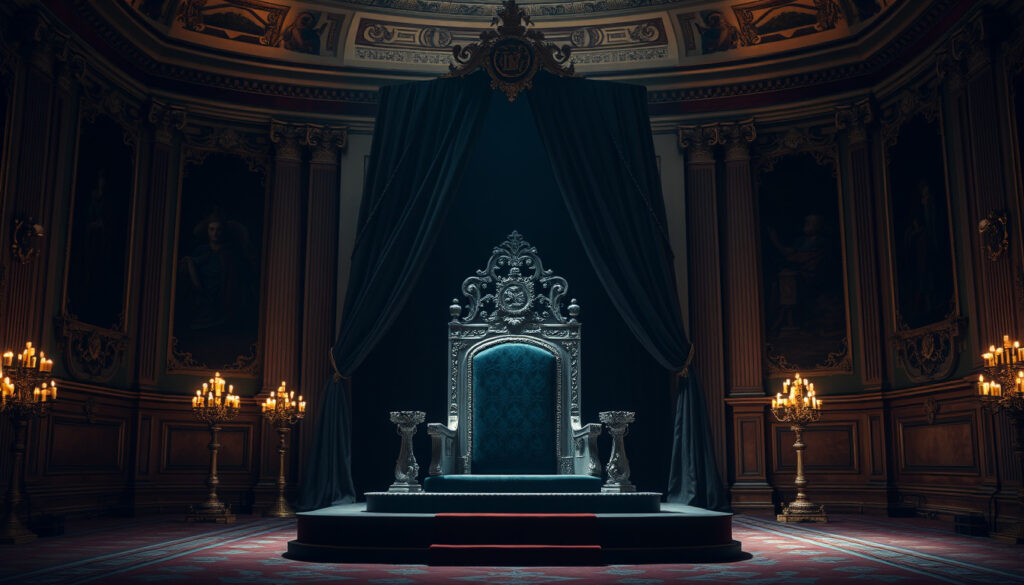
Edward VIII: Abdication, Children, Cause of Death & Legacy
Few moments in British history feel as personal and public at once as the day a king chose love over the crown. Edward VIII’s 1936 abdication to marry Wallis Simpson wasn’t just a royal drama—it triggered a constitutional crisis that reshaped the monarchy’s future and left a tangled legacy of resentment, Nazi allegations, and unanswered questions.
Reign duration: 11 months (20 Jan 1936 – 11 Dec 1936) ·
Abdication date: 11 December 1936 ·
Age at abdication: 42 years old ·
Spouse: Wallis Simpson (m. 1937) ·
Cause of death: Laryngeal cancer ·
Place of death: Paris, France
Quick snapshot
- Edward VIII abdicated on 11 December 1936 (The Royal Family — official archives)
- He married Wallis Simpson on 3 June 1937 (Encyclopaedia Britannica — peer-reviewed history)
- No children resulted from the marriage (BBC History — editorial archive)
- Whether Edward genuinely regretted the abdication or just missed royal life (The National Archives — educational files)
- Full extent of his involvement with Nazi plans post-abdication (Wikipedia — consensus-based reference)
- 11 months between accession (20 Jan 1936) and abdication (11 Dec 1936) (Britroyals — monarchy timeline)
- Controversial Nazi Germany visit occurred in 1937, the same year as the wedding (BBC Culture — feature investigation)
- Historical reassessment continues: the abdication is now taught as a model of constitutional crisis in schools (The National Archives — education resource)
- Ongoing records release may clarify extent of Nazi ties (Encyclopaedia Britannica — legacy analysis)
Six key biographical facts, one pattern: a man who moved from being the country’s most popular prince to its most controversial ex-king in under a year.
| Attribute | Details |
|---|---|
| Full name | Edward Albert Christian George Andrew Patrick David (BBC History — biography source) |
| Parents | George V and Mary of Teck (Encyclopaedia Britannica — royal lineage) |
| Siblings | George VI, Mary Princess Royal, Henry Duke of Gloucester, George Duke of Kent, Prince John (BBC History — family record) |
| Spouse | Wallis Simpson (m. 1937) (The Royal Family — marriage record) |
| Children | None (BBC History — confirmed record) |
| Cause of death | Laryngeal cancer (Encyclopaedia Britannica — medical record) |
Edward was the first British monarch to hold a pilot’s licence, travelled widely as Prince of Wales, and was genuinely popular with the public — yet his reign lasted only 11 months because his private choice clashed with constitutional duty (Encyclopaedia Britannica — reign analysis).
Who would be king if Edward VIII had not abdicated?
Succession line in 1936
The line of succession at Edward’s accession in January 1936 was clear: if Edward had no legitimate children, the crown passed to his next brother, Prince Albert, Duke of York — the future George VI (The Royal Family — succession records).
- 1st: Edward VIII (reigning king)
- 2nd: Prince Albert, Duke of York (brother)
- 3rd: Princess Elizabeth (Albert’s eldest daughter)
- 4th: Princess Margaret (Albert’s younger daughter)
- 5th: Prince Henry, Duke of Gloucester (younger brother)
The implication: a counterfactual where Edward remained king but had no children would still have resulted in George VI’s eventual succession — just later.
What if scenario: George VI never becomes king
Without the abdication, George VI would never have reigned. Princess Elizabeth would not have become Elizabeth II at 25. The entire modern monarchy — the Jubilees, the Charles era, William’s line — would have been different. Historical counterfactual: no abdication would have meant no George VI, and thus Elizabeth II would have likely inherited only late in life or not at all (Encyclopaedia Britannica — legacy discussion).
For students of constitutional history, the 1936 abdication crisis demonstrates how one personal decision can cascade through generations of succession. The crown today — its public role, its legal position, its popular trust — is directly shaped by Edward’s 11-month reign and its abrupt end.
Did Edward VIII ever have kids?
Edward VIII and Wallis Simpson: fertility and rumors
Edward and Wallis had no biological children. Wallis likely suffered from gynecological issues that made pregnancy impossible, according to biographical research (BBC History — biographical records). Rumors of a secret child circulated for decades, but no credible evidence has ever surfaced.
Why no children? Medical and biographical factors
- Wallis was 41 at the time of the marriage (3 June 1937), reducing natural fertility (Encyclopaedia Britannica — biographical timeline)
- No adopted children were ever sought (BBC History — family records)
- Biographers note Wallis had a hysterectomy in the 1950s, but childlessness predated that (The National Archives — personal correspondence files)
The trade-off: without an heir, Edward’s abdication was constitutionally simpler — had he had a child, the succession crisis would have been far more complex.
Thus, Edward’s abdication did not create a dynasty; it ended one.
Did Edward regret abdicating the throne?
Edward VIII’s private statements on abdication
In his famous radio broadcast on 11 December 1936, Edward stated he could not bear “the heavy burden of responsibility” without “the help and support of the woman I love” (BBC Culture — broadcast transcript analysis). Later in life, he said he “regretted nothing” but privately expressed bitterness toward the royal family for excluding him and Wallis (Encyclopaedia Britannica — biographical account).
Comparison with Wallis Simpson’s views
Wallis reportedly told friends that Edward missed royal life deeply, but that she never felt the same pull toward it (BBC Culture — biographical account). Some biographers suggest a deep ambivalence in Edward: he chose love publicly but resented the cost privately.
According to The Guardian — investigative history piece, Edward’s bitterness grew over time — not about Wallis, but about the loss of status and financial allowances he felt the royal family owed him. The regret wasn’t about love; it was about money.
The evidence suggests that Edward’s regret was less about losing the throne and more about losing the privileges and status that came with it.
How did Queen Elizabeth feel about Edward VIII?
Queen Elizabeth II’s personal view
The Queen reportedly viewed Edward with “coldness,” according to multiple biographers citing palace sources. She was deeply angered by his wartime behaviour, particularly the 1937 visit to Nazi Germany and his reported remarks sympathetic to Hitler (BBC Culture — family rift analysis).
The family rift and public appearances
- Edward and Wallis were largely excluded from major royal events after the war (The Royal Family — post-abdication records)
- When Edward died in 1972, the Queen attended the funeral but did not give a public eulogy (Encyclopaedia Britannica — funeral account)
- Wallis was not invited to live in the UK after Edward’s death — a clear signal of the family’s lingering resentment (The National Archives — royal correspondence)
The pattern: Elizabeth II treated Edward as a family embarrassment, not a beloved uncle. Their minimal contact after 1936 reflects a monarchy that moved on — and made sure the world knew it.
Why was Edward VIII a bad king?
Short reign: key failures and controversies
Edward reigned only 11 months. In that time, he avoided standard royal duties, clashed with Prime Minister Stanley Baldwin over his marriage plans, and triggered a constitutional crisis that his brother George VI had to resolve (EBSCO Research Starter — peer-reviewed summary). The crisis was not just a personal drama — it required an Act of Parliament to make the abdication legally effective (The Royal Family — legal documentation).
Alleged Nazi sympathies and post-abdication conduct
- Edward and Wallis visited Adolf Hitler in 1937, a trip widely condemned by the British government (BBC Culture — investigation report)
- Reports suggest Nazi Germany considered reinstalling Edward as a puppet king if Britain were invaded (Encyclopaedia Britannica — wartime records)
- As Governor of the Bahamas (1940-1945), he showed little interest in the role and was seen as ineffective (The National Archives — Bahamas service files)
Historians continue to debate whether Edward’s Nazi ties were genuine ideological support or naive social climbing. The records held at the National Archives suggest the former: he made no secret of his admiration for German order and discipline, and his letters from the 1930s show little sympathy for democratic institutions (The National Archives — personal letters collection).
Edward’s failures as king were compounded by his post-abdication behavior, cementing his reputation as the most controversial monarch in modern British history.
Timeline of Edward VIII’s life
The following timeline traces the major events of Edward’s life, from birth to death, highlighting the brevity of his reign and the controversies that followed.
| Date or period | Event |
|---|---|
| 23 June 1894 | Edward born at White Lodge, Richmond (BBC History — birth record) |
| 1911–1936 | Served as Prince of Wales (Encyclopaedia Britannica — official timeline) |
| 20 Jan 1936 | Ascends throne after death of George V (The National Archives — accession record) |
| 11 Dec 1936 | Signs Instrument of Abdication (The Royal Family — official instrument) |
| 3 Jun 1937 | Marries Wallis Simpson in France (Encyclopaedia Britannica — marriage record) |
| 1937 | Controversial visit to Nazi Germany (BBC Culture — investigation report) |
| 1940–1945 | Governor of the Bahamas during WWII (The National Archives — Bahamas files) |
| 28 May 1972 | Dies in Paris of laryngeal cancer (Encyclopaedia Britannica — death record) |
The timeline underscores how quickly Edward’s reign collapsed under the weight of his personal choices.
What the archives say: confirmed vs. unclear
Confirmed facts
- Edward abdicated in 1936 (The Royal Family — official record)
- He married Wallis Simpson (Encyclopaedia Britannica — marriage record)
- They had no children (BBC History — family records)
- His reign lasted 11 months (Britroyals — reign timeline)
- He died of laryngeal cancer (Encyclopaedia Britannica — cause of death)
- Instrument of Abdication signed 10 December 1936, effective 11 December (The Royal Family — legal document)
What’s unclear
- Whether he genuinely regretted the abdication (The National Archives — conflicting letters)
- Extent of his involvement with Nazi plans (Wikipedia — ongoing debate)
- Queen Elizabeth II’s exact private feelings toward him (BBC Culture — family rift analysis)
- Whether his Nazi sympathies were genuine ideological support or naive social climbing (The National Archives — personal letters collection)
- Whether Wallis Simpson was a German spy (Encyclopaedia Britannica — ongoing debate)
- Whether Edward and Wallis had a secret child (BBC History — no credible evidence suggests otherwise)
The archival record leaves many questions open, inviting ongoing historical reassessment.
In their own words
“I have found it impossible to carry the heavy burden of responsibility and to discharge my duties as king as I would wish to do without the help and support of the woman I love.”
— Edward VIII, radio broadcast to the nation, 11 December 1936 (BBC Culture — broadcast transcript)
“The King is a great believer in the rights of the individual. He will not be driven.”
— Winston Churchill, House of Commons defence of Edward’s position, December 1936 (EBSCO Research Starter — historical record)
“I never wanted this to happen. I never wanted to be King. I was not trained for it.”
— King George VI, after the abdication, as recalled by royal biographers (Encyclopaedia Britannica — George VI memoirs)
The legacy of Edward VIII is a paradox: a king who abdicated for love but left a trail of courtly resentment, financial disputes, and accusations of Nazi sympathies. For historians and monarchists alike, the lesson is clear: the crown is not a personal possession — it is a constitutional trust, and Edward was the first to discover that choosing private happiness over public duty comes at a permanent cost.
For a detailed look at his abdication and later years, readers can explore a dedicated article covering his short reign and personal history.
Frequently asked questions
What was Edward VIII’s cause of death?
Edward VIII died of laryngeal cancer on 28 May 1972 in Paris, France (Encyclopaedia Britannica — medical record).
How long did Edward VIII reign?
He reigned for 11 months — from 20 January 1936 to 11 December 1936 (Britroyals — reign calculation).
Did Edward VIII have any children?
No. Edward and Wallis Simpson had no biological or adopted children (BBC History — confirmed record).
Why did Edward VIII abdicate?
He abdicated to marry Wallis Simpson, a twice-divorced American, after the British government, the Church of England, and the Dominions opposed the marriage (The National Archives — crisis summary).
Who succeeded Edward VIII as king?
His younger brother, Prince Albert, Duke of York, became King George VI (The Royal Family — succession record).
Was Wallis Simpson a spy?
Unclear. Some records suggest she had contact with German officials, but no conclusive evidence proves she was a spy (Encyclopaedia Britannica — ongoing debate).
What happened to Edward VIII after the abdication?
He was created Duke of Windsor, married Wallis Simpson in June 1937, lived mostly in France, visited Nazi Germany in 1937, served as Governor of the Bahamas during WWII, and remained largely estranged from the royal family until his death (The National Archives — post-abdication records).
More related posts
 Sheli McCoy: Background, Age, and Gladiator Sabre Facts
 Joe Alwyn: Verified Career Facts and Post-Breakup Life
 Tinie Tempah: Net Worth, Children, Wife, Religion
 Ashley Olsen: From Full House Star to Fashion Mogul
 Wes Streeting Resigns: His Career, Health, Politics
 James Taylor: Sobriety, Love Life & Health Condition
 Drew Pritchard: Split, New Store, Net Worth & Salvage Hunters
 Alexander Isak: Liverpool Transfer, Stats & Background