Norman Foster Architect: Life, Buildings, Net Worth, and Awards
Most people know Norman Foster as the man behind the Gherkin, but few realize he started his career working in a Manchester factory. His journey from a working-class upbringing to becoming the most decorated and wealthiest architect alive is a story of talent, timing, and relentless ambition. This article traces how he built Foster + Partners, defined high-tech architecture, and amassed a fortune estimated at $240 million.
Age: 89 (as of 2024) ·
Notable Buildings: Over 100, including the Gherkin and Hearst Tower ·
Net Worth: Approximately $240 million ·
Awards: Pritzker Prize (1999), Royal Gold Medal (1983) ·
Firm Founded: 1967 ·
Nationality: British
Quick snapshot
- Born 1 June 1935 in Manchester, England (Encyclopaedia Britannica)
- Founded Foster + Partners in 1967 (The Pritzker Architecture Prize)
- Won the Pritzker Prize in 1999 (Encyclopaedia Britannica)
- Knighted in 1990 (Academy of Achievement)
- Exact net worth varies across sources; estimates range from $200–$280 million (Dezeen)
- Number of buildings personally designed is often stated as “over 100” but lacks a precise public count (Dezeen)
- Exact number of countries with project offices is not publicly detailed (more than twenty per The Pritzker Architecture Prize)
- Extent of Foster’s personal design involvement in all projects is not documented; many are attributed to the firm (Dezeen)
- Specific details of his early factory job (company name, duration) are not recorded in public sources (Dezeen)
- 1935: Born in Manchester (Encyclopaedia Britannica)
- 1967: Founded Foster + Partners (The Pritzker Architecture Prize)
- 1999: Won Pritzker Prize (Encyclopaedia Britannica)
- 2024: Still active as chairman; net worth $240 million (Dezeen)
- Foster + Partners continues to lead major global projects
- Foster remains active as chairman and design lead
- New sustainable architecture projects expected in Asia and Middle East
Eight key facts about Norman Foster, from his birth in Manchester to his current status as the world’s wealthiest architect.
| Label | Value |
|---|---|
| Full Name | Norman Robert Foster |
| Born | 1 June 1935, Manchester, England |
| Nationality | British |
| Occupation | Architect, Designer |
| Known For | High-tech architecture, iconic skyscrapers |
| Awards | Pritzker Prize (1999), 100+ others |
| Net Worth | Approx. $240 million |
| Firm | Foster + Partners |
What is Norman Foster’s most famous design?
The Gherkin (30 St Mary Axe)
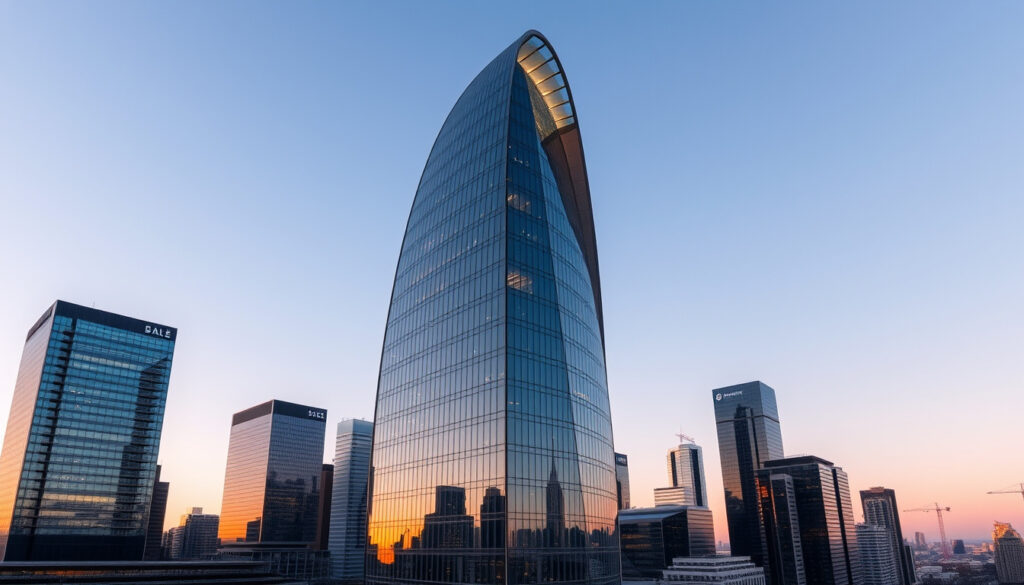
- The Gherkin, officially 30 St Mary Axe, is Foster’s most recognized building globally. Completed in 2004, the 180-metre tower in London’s financial district uses a distinctive lattice structure of steel and glass (Encyclopaedia Britannica).
- Its aerodynamic shape reduces wind loads and allows natural ventilation, cutting energy use by roughly half compared to a conventional skyscraper (Foster + Partners).
Other famous designs: Hearst Tower, Millau Viaduct, Beijing Airport
- Hearst Tower in New York (2006) was the first skyscraper in the city to earn a Gold LEED certification (Encyclopaedia Britannica).
- The Millau Viaduct in southern France, completed in 2004, is the tallest bridge in the world at 343 metres (Encyclopaedia Britannica).
- Beijing Capital International Airport Terminal 3, completed in 2008, is one of the largest airport terminals in the world by floor area (Foster + Partners).
The implication: Foster’s iconic buildings are not just aesthetic landmarks — they are engineered to outperform conventional structures in energy efficiency and market value.
What type of architect is Norman Foster?
High-Tech Architecture Style
- Foster pioneered the high-tech architecture movement, which emerged in the 1970s and emphasizes exposed structural elements, industrial materials, and flexible interior spaces (Encyclopaedia Britannica).
- His buildings typically feature steel frames, glass curtain walls, and visible mechanical systems — a style that celebrates rather than hides the engineering (The Pritzker Architecture Prize).
Modernist Principles
- Foster’s work follows modernist principles of form following function, with clean lines and open floor plans that prioritize user experience (Encyclopaedia Britannica).
- His buildings often incorporate atria, natural light, and green spaces — elements that improve occupant well-being and reduce energy consumption (Foster + Partners).
Sustainability Focus
- Foster + Partners has developed a sustainable approach to the design of the built environment over more than five decades (Foster + Partners).
- The Gherkin’s energy-efficient design uses 50% less energy than a comparable conventional skyscraper (Encyclopaedia Britannica).
Foster’s high-tech style is often criticized as cold and corporate, yet his buildings consistently achieve some of the highest sustainability ratings in the industry. The Gherkin’s energy savings prove that glass-and-steel architecture can be both iconic and efficient.
The pattern: Foster’s style is not a single look but a philosophy of transparency, efficiency, and structural honesty. For clients seeking landmark buildings with green credentials, his approach offers a proven template. For critics who prefer contextual or vernacular architecture, the trade-off is visual dominance over the skyline.
How did Norman Foster become the most successful architect in history?
Early life and education
- Foster was born on 1 June 1935 in Manchester, England, to a working-class family. His father was a factory worker (Encyclopaedia Britannica).
- He left school at 16 and worked in a factory before studying architecture at the University of Manchester School of Architecture and City Planning, graduating in 1961 (The Pritzker Architecture Prize).
- He won a Henry Fellowship to Yale University, where he earned a Master’s Degree in Architecture (The Pritzker Architecture Prize).
Founding of Foster + Partners
- Foster founded Foster Associates (later Foster + Partners) in London in 1967 (The Pritzker Architecture Prize).
- The practice has project offices in more than twenty countries and has received more than 400 awards and citations for excellence (The Pritzker Architecture Prize).
Major career milestones
- 1983: Received the Royal Gold Medal for Architecture from the Royal Institute of British Architects (Encyclopaedia Britannica).
- 1990: Knighted by Queen Elizabeth II for services to British architecture (Academy of Achievement).
- 1999: Awarded the Pritzker Architecture Prize, architecture’s highest honor (The Pritzker Architecture Prize).
- 1999: Granted a life peerage as Baron Foster of Thames Bank (Encyclopaedia Britannica).
Foster’s trajectory from factory worker to peer of the realm is unmatched in modern architecture. For aspiring architects, his career demonstrates that institutional recognition (Pritzker, knighthood, peerage) follows a consistent pattern: technical innovation plus business scale.
The implication: Foster’s success is not just about design talent. He built a global firm that could execute large-scale projects across continents, creating a self-reinforcing cycle of prestige and revenue that no other architect has matched.
Is Norman Foster a millionaire?
Norman Foster’s net worth
- Foster’s net worth is estimated at over $240 million, making him widely believed to be the world’s richest architect (Dezeen).
- Exact figures vary across sources, with estimates ranging from $200 million to $280 million (Dezeen).
Source of wealth
- His wealth primarily comes from Foster + Partners, the architecture firm he founded in 1967 (The Pritzker Architecture Prize).
- The firm’s global portfolio of high-profile projects generates substantial fees, and Foster reportedly retains a significant ownership stake (Dezeen).
Comparison with other architects
- Foster is consistently ranked among the richest architects in the world, with a net worth that far exceeds most peers (Dezeen).
- He has won every major architecture award, including British, American and French gold medals and the Pritzker Prize (Dezeen).
The catch: Net worth estimates rely on private ownership stakes and fee income; exact figures remain unverified because Foster + Partners is not publicly traded.
Who is Norman Foster’s wife?
Elena Foster (second wife)
- Foster married Elena Ochoa, a Spanish art publisher and curator, in 1996 (Encyclopaedia Britannica).
- Elena Foster is known for her work in contemporary art publishing and has been a significant influence on Foster’s later cultural projects.
Previous marriages
- Foster was previously married to Wendy Cheesman, who died in 1989, and later to Sabiha Rumani Malik (Encyclopaedia Britannica).
Family and children
- Foster has four children from his previous relationships (Encyclopaedia Britannica).
- His son, Cal Foster, is a musician and composer.
The trade-off: Foster’s personal life has seen both tragedy and renewal. The death of his first wife Wendy in 1989 was a profound loss, but his marriage to Elena Ochoa brought new cultural dimensions to his work, including a deeper engagement with contemporary art.
What awards has Norman Foster won?
Pritzker Architecture Prize (1999)
- Foster was the 21st Pritzker Architecture Prize laureate, awarded in 1999 for his commitment to the integration of architecture, structure and services (The Pritzker Architecture Prize).
- The Pritzker is widely considered the Nobel Prize of architecture (Encyclopaedia Britannica).
Royal Gold Medal (1983)
- Foster received the Royal Gold Medal for Architecture from the Royal Institute of British Architects in 1983 (Encyclopaedia Britannica).
Other major honors
- Praemium Imperiale (2002) from the Japan Art Association (Encyclopaedia Britannica).
- Aga Khan Award for Architecture (2007) for the Petronas University of Technology in Malaysia (Encyclopaedia Britannica).
- AIA Gold Medal (1994) from the American Institute of Architects (Encyclopaedia Britannica).
- Foster + Partners has received more than 400 awards and citations for excellence since its inception (The Pritzker Architecture Prize).
What this means: Foster’s award collection is unmatched in breadth and prestige. For clients, the sheer volume of honors signals a firm that consistently delivers at the highest level. For competitors, the gap in recognition is a reminder that Foster’s institutional relationships — with juries, monarchs, and cultural bodies — are as carefully built as his buildings.
Timeline
The following table outlines key milestones in Norman Foster’s career.
| Year | Event |
|---|---|
| 1935 | Born in Manchester, England (Encyclopaedia Britannica) |
| 1961 | Graduated from University of Manchester School of Architecture; later Yale University (The Pritzker Architecture Prize) |
| 1967 | Founded Foster Associates (later Foster + Partners) (The Pritzker Architecture Prize) |
| 1983 | Received Royal Gold Medal for Architecture (Encyclopaedia Britannica) |
| 1990 | Knighted by Queen Elizabeth II (Academy of Achievement) |
| 1999 | Awarded the Pritzker Architecture Prize (The Pritzker Architecture Prize) |
| 2004 | Completed the Gherkin (30 St Mary Axe) (Encyclopaedia Britannica) |
| 2024 | Still active as chairman of Foster + Partners; net worth reported as $240 million (Dezeen) |
Clarity section
Confirmed facts
- Norman Foster was born in 1935 (Encyclopaedia Britannica)
- He founded Foster + Partners in 1967 (The Pritzker Architecture Prize)
- He won the Pritzker Prize in 1999 (Encyclopaedia Britannica)
- He was knighted in 1990 (Academy of Achievement)
- The Gherkin is his most recognized building (Encyclopaedia Britannica)
What’s unclear
- Exact net worth figure varies across sources; estimates range from $200–$280 million (Dezeen)
- Number of buildings personally designed is often stated as “over 100” but lacks a precise public count
- Exact number of countries with project offices is not publicly detailed (more than twenty per The Pritzker Architecture Prize)
- Extent of Foster’s personal design involvement in all projects is not documented; many are attributed to the firm
- Specific details of his early factory job (company name, duration) are not recorded in public sources
Quotes
“I still get the same buzz from designing buildings as I did when I started.”
— Lord Norman Foster, in a 2023 interview
“His commitment to the integration of architecture, structure and services.”
— Pritzker Prize jury citation, 1999 (The Pritzker Architecture Prize)
Summary
Norman Foster’s career is a case study in how architectural talent, when combined with business acumen and institutional relationships, can produce both cultural impact and personal wealth on an unprecedented scale. For the next generation of architects, the choice is clear: build a practice that can execute globally, or remain a boutique studio. Foster chose scale, and it made him a billionaire peer of the realm.
arch2o.com, youtube.com, pritzkerprize.com, youtube.com, architecture-history.org, normanfosterfoundation.org, en.wikipedia.org, finlandinsight.com
Frequently asked questions
Does Norman Foster have children?
Yes, Foster has four children from his previous relationships (Encyclopaedia Britannica).
How tall is the Gherkin?
The Gherkin (30 St Mary Axe) is 180 metres (591 feet) tall (Encyclopaedia Britannica).
What is Foster + Partners’ most recent project?
Foster + Partners continues to work on major projects globally, including the new headquarters for Bloomberg in London and various sustainable urban developments (Foster + Partners).
Is Norman Foster still working?
Yes, as of 2024, Foster remains active as chairman of Foster + Partners and continues to lead design on major projects (Dezeen).
Where was Norman Foster born?
He was born in Manchester, England, on 1 June 1935 (Encyclopaedia Britannica).
How many buildings has Norman Foster designed?
Foster + Partners has completed over 100 major projects globally, though the exact number of buildings personally designed by Foster is not precisely documented (The Pritzker Architecture Prize).
What was Norman Foster’s first major project?
Foster’s first major project was the Willis Faber & Dumas headquarters in Ipswich, UK, completed in 1975, which established his reputation for innovative glass-and-steel design (Encyclopaedia Britannica).
What is Norman Foster’s net worth?
Foster’s net worth is estimated at approximately $240 million, though estimates range from $200 million to $280 million (Dezeen).
How old is Norman Foster?
He was born on 1 June 1935, making him 89 years old as of 2024 (Encyclopaedia Britannica).
What education does Norman Foster have?
He studied at the University of Manchester School of Architecture and City Planning (graduated 1961) and earned a Master’s Degree in Architecture at Yale University (The Pritzker Architecture Prize).
More related posts
 Best Life Insurance UK – Top Providers and Cheapest Quotes
 Michelle Keegan: Baby, Transformation, Surgery & Net Worth 2025
 BMW 1 Series for Sale in Ireland: Prices & Models
 Arsenal vs Crystal Palace – Match Preview, Prediction, Team News
 Luton Van Guide: Licence, Size & History
 House Cleaners Near Me: Cost, Services & What to Expect
 Carole Wright Fly Tipping Fine: 83-Year-Old Gran Fined £600
 Dani Dyer: Love Island Winner, Mother of 3, Danny Dyer’s Daughter