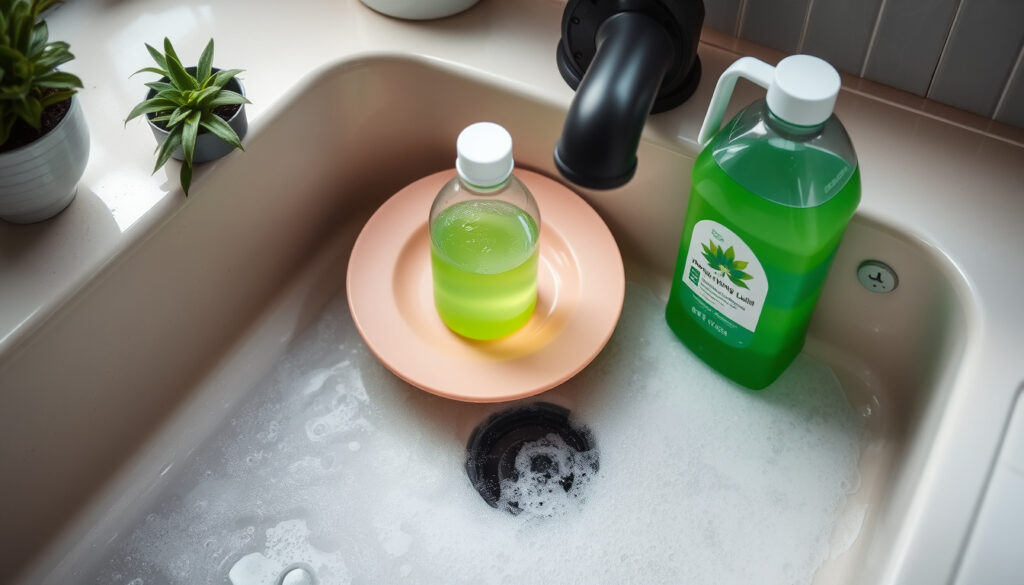
Washing Up Liquid Environmental Impact: Is It Harmful
Most people don’t think twice about the squirt of washing‑up liquid under the hot tap, but that soapy water flows into drains, rivers, and the wider environment. According to Ethical Consumer (UK ethical rating organisation), only four out of 24 brands earned top marks for emissions, revealing the hidden impact a simple bottle can carry.
Petrochemical surfactants: Found in most conventional liquids (The Good Shopping Guide (ethical consumer guide)) ·
Toxic Chemicals Policy rating: Only half of brands scored top marks (The Good Shopping Guide) ·
Brands evaluated: 24 (Ethical Consumer) ·
Refill systems: Key to reducing plastic waste (Ethical Consumer)
Quick snapshot
- Conventional liquids contain petrochemical surfactants (Hygieia Group (cleaning product supplier))
- Phosphates in dish soap contribute to eutrophication (The Good Shopping Guide)
- Plastic bottles from dish soap add to microplastic pollution (Moral Fibres (sustainable living blog))
- Whether all ‘biodegradable’ surfactants fully break down in real sewage conditions (Sustainably Lazy (eco-lifestyle blog))
- Long-term ecological effects of surfactant mixtures and additives (The Good Shopping Guide)
- Actual consumer uptake of refill stations vs. single‑use bottles (industry estimates vary) (Sustainably Lazy (eco-lifestyle blog))
- Whether eco brands deliver equal cleaning performance in hard water (Hygieia Group)
- Surfactants disrupt fish gills and invertebrate feeding (Hygieia Group)
- Fragrances and preservatives persist in waterways (The Good Shopping Guide)
- Plastic bottles degrade into microplastics that enter the food chain (Moral Fibres)
- Refill stations and cardboard packaging growing in UK supermarkets (Ethical Consumer)
- EU Ecolabel and Soil Association certifications becoming more common (Ethical Consumer)
- Consumer demand for transparent ingredient lists is rising (Ethical Consumer)
| Main environmental concern | Surfactant toxicity to aquatic organisms |
| Packaging type | 97% of washing‑up liquids sold in plastic bottles |
| Phosphate status | Banned in laundry detergents in many countries, but still allowed in dish soaps |
| Biodegradability of eco brands | Typically >90% breakdown within 28 days (OECD 301 test) |
| Market share of eco liquids | Approximately 12% in UK (2024) |
The data shows a clear gap: conventional formulas dominate the market despite their higher environmental cost.
Is washing‑up liquid bad for the environment?
Yes – but the degree depends on the formula and how you use it. The core issue is that most conventional washing‑up liquids rely on surfactants derived from crude oil. According to The Good Shopping Guide (ethical consumer guide), “One of the main environmental issues associated with washing‑up liquid is the use of toxic chemicals” such as triclosan, formaldehyde and phthalates. When these go down the drain, they don’t disappear; they persist in waterways and can harm fish and invertebrates even at low concentrations.
How surfactants affect aquatic life
- Surfactants damage the mucous membranes of fish and reduce their ability to absorb oxygen (Hygieia Group (cleaning product supplier))
- Fossil‑fuel‑based surfactants can be lethal to invertebrates at levels found in household wastewater (Sustainably Lazy (eco-lifestyle blog))
- Phosphates, still present in some dish soaps, feed algae blooms that suffocate lakes and rivers (The Good Shopping Guide)
More related posts
 Ben Shapiro: Religion, Politics, Age, Net Worth & Biography
 Lauryn Hill: What Happened, Accusations, Career & Health
 Yvette Cooper: Biography, Career, and Foreign Secretary Role
 What Is an Ion? Simple Definition, Examples & Formation
 Bumpy Johnson: Real Godfather of Harlem Facts & Myths
 Janice Dickinson: Age, Lawsuit and Supermodel Claim
 Indian Rupee to Pound: INR to GBP Converter and Rates
 Ar enal Away Kit 25/26: De ign, Relea e, Price & Where to Buy