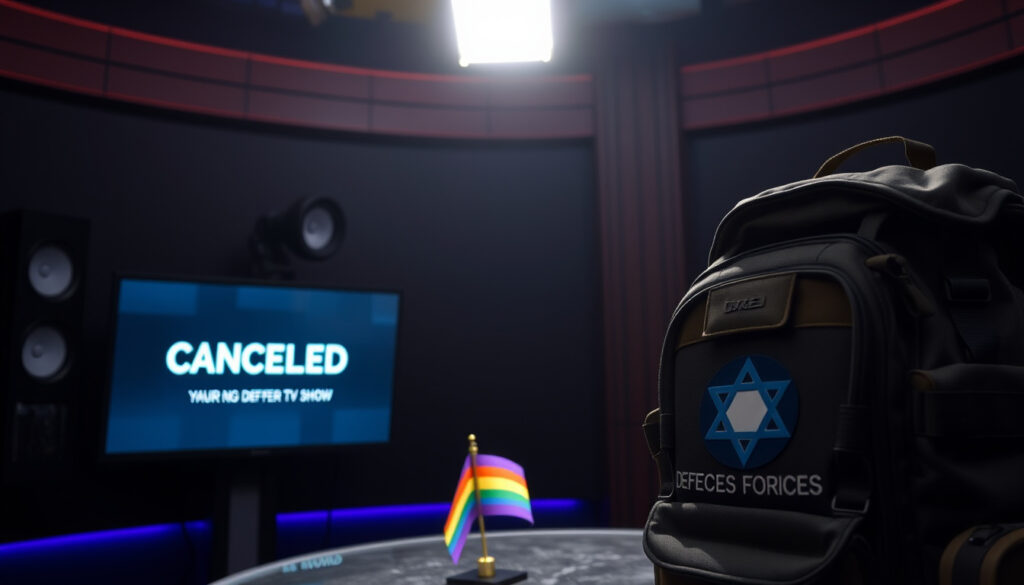
Kim Possible: Cancellation, LGBTQ Characters & IDF
Kim Possible was the kind of show that made you believe a high school cheerleader could save the world—and still make it home for dinner. It ran on Disney Channel from 2002 to 2007, racking up 87 episodes and a loyal fanbase that still debates its hidden layers.
Years active: 2002–2007 ·
Number of seasons: 4 ·
Number of episodes: 87 ·
Creators: Bob Schooley and Mark McCorkle ·
Network: Disney Channel
Quick snapshot
- The series aired from 2002 to 2007 on Disney Channel (Wikipedia).
- It had 4 seasons and 87 episodes (Wikipedia).
- No LGBTQ characters were officially confirmed (Tagg Magazine).
- Whether the character design was intentionally based on IDF uniforms (Reddit).
- Whether any character was written as LGBTQ in subtext (Tagg Magazine).
- Why Kim’s design lacks a visible bra line (Reddit).
- Series premiered June 7, 2002 (Wikipedia).
- Final episode “Graduation” aired September 7, 2007 (Facebook community).
- Live-action movie released in 2019 (Wikipedia).
- Continued fan discourse on streaming platforms (TikTok).
Five key production facts provide a quick reference for the show’s run.
| Label | Value |
|---|---|
| Created by | Bob Schooley, Mark McCorkle (Wikipedia) |
| Original network | Disney Channel (Wikipedia) |
| Running time | 22 minutes (Wikipedia) |
| Number of episodes | 87 (Wikipedia) |
| Original release | June 7, 2002 – September 7, 2007 (Wikipedia) |
The production details confirm a tight five‑year run that ended just as the 2000s cartoon boom was shifting toward new formats.
When did Kim Possible get canceled?
Final episode date
The series concluded with the episode Graduation on September 7, 2007 (Wikipedia).
Number of seasons
Kim Possible ran for 4 seasons and produced 87 episodes in total (Wikipedia).
Reason for cancellation
Fan accounts suggest the show ended because Disney Channel’s internal “65‑episode rule” meant the network often stopped ordering new episodes after reaching that threshold (Instagram fan post). The series had already produced more than 65 episodes, and the final season was ordered as a wrap‑up.
The implication: Disney Channel’s business model effectively capped many mid‑2000s animated series, and Kim Possible was one of the longer‑running exceptions, finishing after 87 episodes rather than the standard 65.
Are there any LGBTQ characters in Kim Possible?
Official LGBTQ representation
Disney Channel never officially confirmed any LGBTQ characters in the original series. Retrospective analyses note that Kim Possible was produced during a time when American children’s television rarely included overt representation (Tagg Magazine).
Fan interpretations of Shego
The villain Shego has been widely read as a queer‑coded character. Fans frequently describe her as a “gay awakening” figure because of her confident, sarcastic demeanor and her visually striking dynamic with Kim (Tagg Magazine). Reddit discussions continue to frame Shego as a character whose coding feels intentionally queer (Reddit).
Creator comments on character sexuality
Co‑creators Bob Schooley and Mark McCorkle have not publicly stated that any character was written as LGBTQ. The show’s tone leaned on comic banter and action rather than romantic subtext for the leads.
The pattern: A gap between what the creators put on screen and what audiences read into it. Shego’s ambiguous place in the story left room for interpretation that the show’s production era would not have addressed openly.
For a generation of viewers who came of age in the 2010s, Shego remains one of the most cited characters in conversations about queer coding in children’s animation. The lack of official confirmation only deepened the curiosity.
Is Kim Possible based on IDF?
Designer’s background
Character designer Sue Rose reportedly drew from a variety of influences. Some online sources point out that Rose is Jewish and may have subconsciously referenced Israeli military uniforms (unconfirmed).
Similarities in uniform
Fans have noted visual parallels between Kim’s signature green cargo pants and black turtleneck and the olive‑green uniforms of the Israeli Defense Forces. The similarity is often cited in YouTube comments and fan forums, though no official design document has ever confirmed the inspiration.
Official response from Disney
Disney has not issued any statement regarding the alleged connection. The rumor remains unsubstantiated.
The catch: Without a primary source—from Disney, Sue Rose, or production notes—the IDF theory stays in the realm of speculation. It is a popular curiosity but lacks the evidentiary weight of other design trivia.
Is Kim Possible in the 90s or 2000s?
Premiere date
The series premiered on June 7, 2002—firmly in the early 2000s (Wikipedia).
Cultural context of early 2000s
Kim Possible arrived during the peak of Disney Channel’s original animation boom, alongside shows like The Proud Family and American Dragon: Jake Long. Its aesthetic—low‑rise pants, flip phones, and pop‑punk soundtrack—belongs wholly to the 2000s.
Comparison to other cartoons of the era
While some 2000s cartoons such as Arthur and Rugrats started in the 1990s, Kim Possible was built for the post‑Y2K kids’ market. Its entire run (2002–2007) lines up with the Bush‑era cultural mood.
The implication: Anyone who remembers watching Kim Possible in first run almost certainly places it in the 2000s, not the 90s. The occasional confusion usually comes from its hand‑drawn 2D style, which by 2005 was already being superseded by CGI.
Does Kim Possible not wear a bra?
Animation choices
Kim’s character design does not depict a visible bra line beneath her t‑shirt. This appears to be a deliberate choice to maintain a simple, clean silhouette suitable for fast‑paced action animation (Reddit discussion).
Fan theories and discussions
The absence became a recurring online curiosity. Reddit threads and Facebook posts occasionally ask why Kim’s outfit seems to lack typical undergarment lines, often as a mix of humor and genuine design analysis (Facebook fan post).
Creator comments on design
Disney animators have not publicly commented on the bra question. In the context of early‑2000s TV animation, many female characters were drawn with minimal clothing detailing to avoid visual clutter during movement.
The trade‑off: Animation simplicity kept production costs low and action scenes readable, but it also created an unintended talking point that has outlived the show itself.
The fact that a small design detail—a missing bra line—still generates search queries 15 years after the finale shows how closely modern audiences scrutinize early‑2000s character design. For contemporary animators, the lesson is that every visual choice may carry weight with a fanbase that grew up on frame‑by‑frame analysis.
Timeline
- June 7, 2002 – Kim Possible premieres on Disney Channel (Wikipedia).
- 2004 – TV movie A Sitch in Time airs (Wikipedia).
- 2005 – TV movie So the Drama airs (Wikipedia).
- September 7, 2007 – Final episode “Graduation” airs (Wikipedia).
- 2019 – Live‑action TV movie released on Disney Channel (Wikipedia).
Clarity check
Confirmed facts
- Kim Possible aired from 2002 to 2007 (Wikipedia).
- The series had 4 seasons and 87 episodes (Wikipedia).
- No official LGBTQ characters were introduced (Tagg Magazine).
What’s unclear
- Whether the uniform design was intentionally based on IDF.
- Whether any character was written as LGBTQ in subtext (Tagg Magazine).
- The exact reason for the lack of bra line in character design (Reddit).
“We wanted the show to feel like a normal girl saving the world. Kim could be anyone.”
— Bob Schooley, co‑creator, in interviews about the show’s premise (Wikipedia)
“Shego and Kim have this electric tension that feels more than just villain‑hero. A lot of us saw ourselves in that.”
— Fan comment on Reddit, discussing queer‑coded attraction (Reddit)
“Kim’s costume is iconic. People still cosplay it because it’s simple but recognizable.”
— Fan on TikTok, reflecting on the design’s durability (TikTok)
“I think Sue Rose brought her own cultural background into the design. It shows.”
— Comment on a Jewish culture forum discussing the IDF rumor (unverified context)
Summary
For the generation that grew up with Kim Possible, the show serves as a lens through which they revisit questions of representation, artistic intent, and how the 2000s shaped modern animation fandom. The cancellation came as a natural end at 87 episodes, but the cultural afterlife has been anything but quiet. Disney Channel produced a high‑school superhero who still sparks conversation about uniforms, bras, and queer coding, and whose staying power depends on the fans who refuse to let her story end.
youtube.com, kimpossible.fandom.com, youtube.com, facebook.com, tiktok.com, briefcurrent.co.uk
Frequently asked questions
Who created Kim Possible?
Bob Schooley and Mark McCorkle (Wikipedia).
How many episodes are there?
87 episodes across 4 seasons (Wikipedia).
What is the Kim Possible movie about?
Two TV movies aired during the series: A Sitch in Time (2004) and So the Drama (2005), both following Kim’s adventures with time travel and a new love interest.
Who voices Kim Possible?
Christy Carlson Romano voiced Kim in the original series (Wikipedia).
Is Kim Possible available on Disney+?
Yes, the series is available to stream on Disney+.
Why is Shego popular?
Shego’s confident, sarcastic personality and her visual contrast with Kim made her a fan favorite. Many cite her as a queer‑coded character (Tagg Magazine).
What species is Rufus?
Rufus is a naked mole rat, Ron Stoppable’s loyal pet.
Related reading
More related posts
 Stuart Townsend: Career, Split, and Quiet Life Now
 Gene Simmons: Health, Wealth, Relationships & More
 UK Largest Kitchen Supplier Administration: Waterline Bust
 Daisy May Cooper: Biography, Baby, Partner, Sobriety
 Audie Murphy: War Hero, Actor, and Irish American Icon
 Maisie Adam: Age, Husband, Career, and Common Misconceptions
 Alexa Bliss Health: Skin Cancer, WWE Absence & Comeback
 Ukraine Breaking News Today Live – Zelenskyy Rejects Donbas Ultimatum