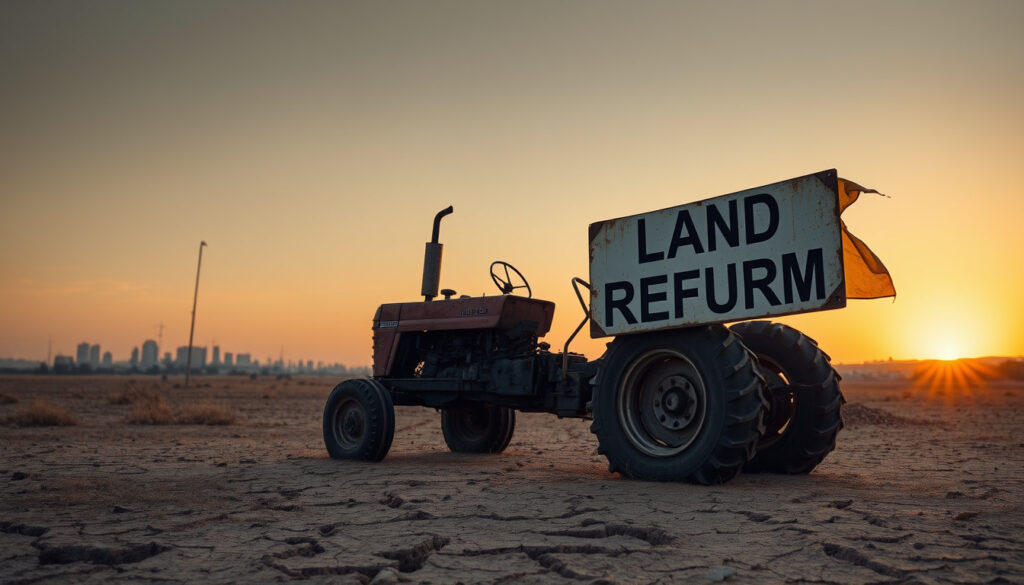
Robert Mugabe: Biography, Downfall, Land Reform, and Legacy
Robert Mugabe was a liberator to some and an architect of Zimbabwe’s economic collapse to others. Over 37 years, he went from independence leader to presiding over hyperinflation, violent land seizures, and a coup.
Years in power: 37 (1980–2017) ·
Peak monthly inflation: 79.6 billion percent (November 2008) ·
White farmers in 2000: ~4,500; after land reform ~300 ·
Corruption Perception Index rank (2023): 157 out of 180
Quick snapshot
- Born 1924, died 2019 at age 95 (Britannica (authoritative encyclopedia))
- Prime minister 1980–1987, president 1987–2017 (Amnesty International (human rights organization))
- Hyperinflation peaked at 79.6 billion percent in November 2008 (Cato Institute (libertarian think tank))
- Exact death toll from land reform program remains disputed (BBC News (UK public broadcaster))
- Precise extent of Mugabe’s personal wealth abroad unknown (Transparency International (anti-corruption NGO))
- Whether his removal was a “constitutional transition” or a coup (VOA (U.S. state-funded broadcaster))
- 1980: Independence and Mugabe becomes Prime Minister
- 2000: Fast Track Land Reform triggers farm invasions
- November 2017: Military coup ends his 37-year rule
- Zimbabwe’s economy remains fragile, with high unemployment
- Successor Emmerson Mnangagwa struggles to undo Mugabe-era damage
- Debate over Mugabe’s legacy continues in African politics
Seven key facts about Mugabe’s life at a glance:
| Fact | Value |
|---|---|
| Full name | Robert Gabriel Mugabe |
| Born | February 21, 1924, Kutama, Southern Rhodesia (Britannica) |
| Died | September 6, 2019, Singapore (BBC News) |
| Political party | Zimbabwe African National Union – Patriotic Front (ZANU-PF) |
| Spouse | Sally Hayfron (m. 1961–1992), Grace Mugabe (m. 1996–2019) |
| Predecessor | Canaan Banana (as President) |
| Successor | Emmerson Mnangagwa |
What was Robert Mugabe known for?
Early life and education
Robert Mugabe was born on February 21, 1924, in Kutama, Southern Rhodesia, a Catholic mission area. He attended Kutama College and later the University of Fort Hare in South Africa, where he earned a Bachelor of Arts in history and English. He went on to obtain a Bachelor of Education and a law degree from the University of London through correspondence, making him one of Africa’s most academically credentialed leaders (VOA). Before entering politics, he taught at several schools in Southern Rhodesia and Zambia.
Role in the liberation struggle
Mugabe became active in nationalist politics in the 1960s. He was a founding member of the Zimbabwe African National Union (ZANU) in 1963 and was imprisoned for ten years by the white-minority government. From prison, he led ZANU’s military wing during the Rhodesian Bush War (1975–1979). The war ended with the Lancaster House Agreement, paving the way for majority rule. In 1980, Zimbabwe held its first free elections, and Mugabe’s ZANU-PF won a landslide victory (Amnesty International).
First Prime Minister of Zimbabwe
At independence in 1980, Mugabe became Zimbabwe’s first Black prime minister. Initially, he preached reconciliation, retaining some white ministers and investing heavily in health and education. The country earned the nickname “breadbasket of Africa” thanks to a thriving commercial farming sector (BBC News). But by the end of the decade, Mugabe had consolidated power, changed the constitution to make himself executive president in 1987, and crushed a political rival in the Matabeleland region through a brutal campaign known as Gukurahundi.
The early promise of Mugabe’s rule – cross-racial harmony and strong public services – makes the later collapse all the more dramatic. That same reconciliation policy was abandoned once land became the central political issue.
The pattern of early success followed by authoritarian consolidation is a common one in post-colonial Africa.
How did Robert Mugabe lose power?
The 2017 Zimbabwean coup d’état
In November 2017, the military placed Mugabe under house arrest. Tanks rolled into Harare, and a statement read on state television announced that the army was “targeting criminals” around the president. The trigger was Mugabe’s dismissal of Vice President Emmerson Mnangagwa, which the military viewed as an attempt to position his wife Grace as successor. The move backfired spectacularly (Britannica).
Internal ZANU-PF power struggles
Mugabe had long played factions inside ZANU-PF against each other. By 2017, the “Generation 40” faction loyal to Grace Mugabe clashed with the “Lacoste” faction backing Mnangagwa. When Mugabe sacked Mnangagwa, the military, which was allied with Lacoste, stepped in. Even the party itself turned on Mugabe, expelling him and demanding his resignation (VOA).
Military intervention and house arrest
After days of negotiations and massive street protests calling for his departure, Mugabe finally resigned on November 21, 2017. Mnangagwa was swiftly sworn in as president. Mugabe was allowed to remain in Zimbabwe, with full immunity and a generous pension (BBC News). The coup was widely seen as the end of an era, though some questioned whether it was a genuine democratic transition or a simple change of guard.
The implication: Mugabe’s downfall was the result of his own factional maneuvering. By trying to install his wife as successor, he alienated the military – the one institution that had always backed him.
What happened to the white farmers in Zimbabwe?
Land reform program from 2000
In 2000, Mugabe launched the “Fast Track Land Reform Program,” which allowed the government to seize white-owned commercial farms without compensation. Supporters argued it was a necessary correction of colonial injustice, but the execution was chaotic and violent. War veterans and ruling party loyalists invaded farms, often attacking owners and workers. By 2002, an estimated 4,000 white commercial farmers had been forcibly removed (VOA Zimbabwe). The Cato Institute reports that some 23 million acres of land were seized during these invasions (Cato Institute).
Violent farm invasions
The invasions were often led by veterans of the liberation war, but many were simply party militants looking for land. Violence against white farmers and their black workers was widespread. The Mugabe government repeatedly called the program a “land reform” while international observers condemned it as illegal confiscation. The number of white farmers in Zimbabwe dropped from around 4,500 in 2000 to just a few hundred today (BBC News).
Decline of commercial agriculture
Agriculture – once Zimbabwe’s economic backbone – collapsed. Maize production fell by 60%, and the country became a net food importer. The government claimed it had replaced 6,000 white farmers with 245,000 black families, but productivity never recovered (Vanguard Africa (advocacy publication)). The land reform is widely cited as the primary cause of Zimbabwe’s economic meltdown.
Redistributing land to the majority addressed a deep historical grievance, but the way it was done – without legal process, without support for new farmers – destroyed the country’s most productive sector. For Zimbabwe, the cost was a decade of hunger and hyperinflation.
The land reform program remains one of the most debated aspects of Mugabe’s legacy.
How bad is corruption in Zimbabwe?
Corruption under Mugabe’s rule
Under Mugabe, corruption became systemic. The ruling party controlled access to land, mining licenses, and government contracts. The biggest scandal involved the looting of the national diamond mines in Marange, where billions of dollars disappeared before reaching state coffers. A 2018 report estimated that up to $2 billion in diamond revenue was stolen between 2009 and 2017 (BBC News).
Institutionalized graft and patronage
Mugabe himself was accused of using state resources to reward loyalists and buy political support. The patronage machine extended from the presidency down to local party officials. The result: a civil service that was overstaffed, underpaid, and deeply corrupt. Public hospitals ran out of medicine, schools lacked books, and roads crumbled – while party elites prospered (Transparency International).
Impact on economy and public services
Corruption was a major driver of hyperinflation. The Reserve Bank of Zimbabwe printed money to cover deficits, fueling a spiral. By 2008, prices doubled every 24 hours. The economy contracted by more than 50% between 2000 and 2008. Even after Mugabe left, Zimbabwe still ranks 157 out of 180 on the Corruption Perceptions Index (Transparency International).
The pattern: Mugabe’s system of patronage turned the state into a vehicle for personal enrichment. Graft wasn’t a side effect – it was the operating system.
What was Robert Mugabe’s education?
University degrees and qualifications
Mugabe held at least three degrees: a Bachelor of Arts from the University of Fort Hare, a Bachelor of Education from the University of South Africa, and a Bachelor of Laws (LLB) from the University of London. He also studied at the University of Oxford for a short period. His academic credentials were often highlighted by supporters as proof of his intellectual superiority over other African leaders (Britannica).
Teaching career
Before politics, Mugabe worked as a teacher in Southern Rhodesia and later in Ghana. He taught at several mission schools and was known as a strict disciplinarian. His teaching experience shaped his early political rhetoric, which often emphasized discipline, education, and self-reliance.
Comparison with other educated leaders
Mugabe was among the most formally educated heads of state in the world. By comparison, many African leaders of his era had only secondary or military education. His degrees were frequently cited in his speeches to contrast his rule with the “ignorance” of his opponents. However, critics note that his education did not translate into sound economic policy.
A man with multiple university degrees presided over the total collapse of his country’s education system. By 2015, Zimbabwe had one of the lowest literacy rates in southern Africa, according to UNICEF (UN children agency).
Mugabe’s intellectual achievements did not shield him from making catastrophic policy decisions.
What is Robert Mugabe’s legacy?
Death and burial
Mugabe died on September 6, 2019, at a hospital in Singapore at age 95 (Britannica). His body was returned to Zimbabwe, where he was given a state funeral at the National Heroes Acre in Harare. The government declared him a national hero – but his burial was delayed for weeks as his family argued with President Mnangagwa about where to inter him. Eventually, he was buried in his home village of Kutama.
Economic collapse and recovery attempts
Zimbabwe’s economy has never recovered from the Mugabe era. Unemployment hovers above 80%, and poverty remains widespread. Under Mnangagwa, the government has tried to attract foreign investment and stabilize the currency, but reforms have been slow. Corruption continues, and the land issue remains unresolved – most of the farms seized under Mugabe are still occupied without clear title (BBC News).
Historical assessment
Mugabe’s legacy is deeply split. In Africa and the Global South, he is remembered as a liberation icon who stood up to Western imperialism. In Zimbabwe, many blame him for the country’s ruin. His obituary in the BBC captured the tension: “From liberator to tyrant, Robert Mugabe leaves a mixed legacy” (BBC News). The truth is that both narratives contain uncomfortable facts.
For Zimbabweans under the age of 30 – who have known only economic collapse – Mugabe is a symbol of failure. For older generations, the pride of independence remains. The question is whether the country can build a future that honors the liberation without repeating the dictatorship.
Timeline of key events
- — Born in Kutama, Southern Rhodesia (Britannica)
- — Active in nationalist politics
- — Leads ZANU during Rhodesian Bush War
- — Becomes Prime Minister of independent Zimbabwe (Amnesty International)
- — Becomes executive President
- — Fast Track Land Reform begins; farm invasions (BBC News)
- — Hyperinflation peaks at 79.6 billion percent (Cato Institute)
- — Military coup; Mugabe placed under house arrest (VOA)
- — Mugabe resigns (Britannica)
- — Death in Singapore (Britannica)
Confirmed vs. unclear
Confirmed facts
- Mugabe was born in 1924 and died in 2019 (Britannica)
- He was prime minister from 1980 to 1987 and president until 2017 (Amnesty International)
- The 2017 coup was a military operation that forced his resignation (BBC News)
- Fast Track Land Reform led to seizure of white-owned farms (VOA Zimbabwe)
- Hyperinflation peaked at 79.6 billion percent in 2008 (Cato Institute)
What’s unclear
- Exact number of deaths caused by the land reform program (BBC News)
- Precise extent of Mugabe’s personal wealth abroad (Transparency International)
- Whether his removal was a coup or a “constitutional transition” (VOA)
- The true number of white farmers displaced (estimates vary from 3,000 to 6,000) (BBC News)
- Whether Mnangagwa’s reforms can revive the economy (BBC News)
Quotes on Mugabe
“The land is ours. We will not be forced to give it back.”
— Robert Mugabe, speaking at the United Nations in 2013, defending his land reforms (VOA)
“He was a great leader and a fighter for independence. But he also made mistakes that hurt Zimbabwe.”
— Emmerson Mnangagwa, after taking office, describing Mugabe’s legacy (BBC News)
“The man who liberated Zimbabwe and then ruined it.”
— BBC obituary summary, reflecting the divided assessment (BBC News)
Related reading
- Henry Ford: Biography, Inventions, and Controversial Legacy
- Edward VIII: Abdication, Children, Cause of Death & Legacy
en.wikipedia.org, cfr.org, ebsco.com, state.gov, instagram.com, dublinjournal.com
Frequently asked questions
What was Robert Mugabe’s net worth?
Official figures are elusive, but Mugabe was widely believed to have amassed significant wealth through diamond concessions and government corruption. No verified estimate exists (Transparency International).
How did Mugabe come to power?
He led ZANU to victory in Zimbabwe’s first free elections in 1980 after the Lancaster House Agreement ended white-minority rule (Britannica).
What is the Gukurahundi?
From 1983 to 1987, Mugabe’s North Korean-trained Fifth Brigade killed an estimated 20,000 civilians in Matabeleland to crush a political rival (Amnesty International).
Did Mugabe have any children?
Yes. With Sally Hayfron he had one son, Nhamodzenyika, who died young. With Grace Mugabe he had three children: Bona, Robert Jr., and Bellarmine.
What was Mugabe’s relationship with China?
China was Mugabe’s key foreign ally, providing loans, arms, and diplomatic cover. Zimbabwe became deeply indebted to China during his rule.
How did Robert Mugabe die?
He died on September 6, 2019, in Singapore after a long illness. The cause of death was not officially disclosed (Britannica).
Is Mugabe considered a dictator?
Most political scientists classify him as an authoritarian or dictator, especially after 2000 when elections became blatantly rigged and opposition suppressed.
What is the current state of Zimbabwe’s economy?
Zimbabwe remains in crisis. Hyperinflation has receded but the local currency is unstable, unemployment is above 80%, and poverty is widespread (BBC News).
More related posts
 Martin Lewis Cash ISA – Best Rates Ahead of 2027 Cuts
 Lance Reddick Movies and TV Shows: Full Filmography
 Bobcat Goldthwait: Voice, Career, and What He Does Now
 Charlie Cooper: Actor, Comedian, This Country Star
 Conic Hill Walk: Beginner Guide, Parking & Difficulty
 Pain In Lower Abdomen Female – Causes Symptoms And Red Flags
 Howard Donald: Career, Net Worth, and Personal Life in 2025
 Barry Bannan Bio: Age, Height, Wife, Net Worth, Career Stats