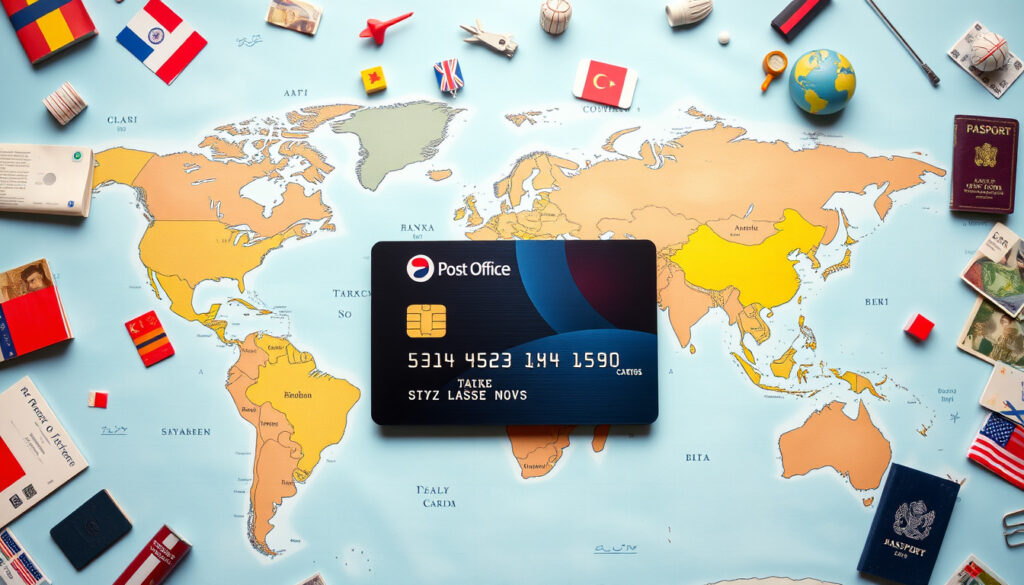
Post Office Travel Card – Guide to Setup, Fees and Reviews
The Post Office Travel Money Card offers UK holidaymakers a prepaid, reloadable way to spend in multiple currencies without linking directly to a bank account. Backed by Mastercard, the card works at millions of locations worldwide, supporting chip and PIN, contactless payments, Apple Pay, and Google Wallet. This guide covers how to apply, manage your account through the app, what users say about it, and what fees to expect before you load your first currency.
Available through Post Office branches across the UK and the official website, the card holds up to 23 currencies simultaneously. It is free to obtain, though a minimum initial load of £50 per currency applies. The card remains valid for three years, after which renewal is required.
How to Apply for a Post Office Travel Money Card
Ordering the card takes just a few minutes whether you prefer to apply in person or online. Branch customers can visit any Post Office location, while those applying digitally can use the official card ordering page. Both methods involve no upfront cost, making it accessible for first-time travellers looking to avoid direct bank debit exposure abroad.
New cardholders must load at least £50 in each currency they wish to use. The card supports 23 currencies including euros, US dollars, Australian dollars, and Japanese yen. New users receive the advertised exchange rate on initial loads, which is typically more competitive than the rate offered on subsequent reloads.
- Order online at postoffice.co.uk or visit a Post Office branch
- Load a minimum of £50 per selected currency
- Receive the advertised initial exchange rate on first loads
- Activate the card via the Post Office Travel App once it arrives
- No credit check or bank account linking required
Each currency requires its own £50 minimum load. If you plan to visit three countries, you need at least £150 on the card at the point of loading. Some users have reported confusion over whether balances apply per currency or as a combined total.
| Feature | Details |
|---|---|
| Type | Prepaid multi-currency Mastercard |
| Provider | Post Office Money |
| Currencies supported | Up to 23 |
| Minimum load per currency | £50 |
| Validity | 3 years |
| Card cost | Free |
How to Log In, Top Up, and Use the Post Office Travel Card App
Day-to-day management of the card happens through the Post Office Travel App, available for iOS and Android devices. After your card arrives by post, activation happens within the app using the details printed on the card carrier. Once activated, you can check balances, initiate top-ups, and switch funds between currencies without visiting a branch.
Logging in and topping up
Topping up via the app accepts amounts between £10 and £5,000 per transaction. Currency exchanges occur at the rate available at the time of loading, which is where users have encountered the most frustration. Multiple sources, including customer reviews on Smart Money People, note that reload rates can be approximately 10% worse than the initial or cash rates advertised.
GBP top-ups incur a 1.5% commission fee, subject to a minimum charge of £3 and a maximum of £50 per transaction. This means even small top-ups carry a proportionally higher cost. Branch top-ups are also possible but follow the same commission structure for GBP loads.
Balance accuracy concerns
Some users report that the app balance does not always match what appears on the physical card or at ATMs. This discrepancy has been highlighted on forums including Money Saving Expert discussions, where users describe it as a source of confusion and anxiety when managing travel budgets abroad.
Unlike the initial load rate, reloads consistently attract worse exchange rates. A Currensea analysis found reload rates can be around 10% lower than cash rates, making it worth loading the full amount you expect to need before departure rather than relying on top-ups while travelling.
Post Office Travel Money Card Reviews and User Feedback
Customer sentiment around the card is mixed, with aggregated ratings averaging 2.5 out of 5 based on 39 reviews compiled by Smart Money People. Positive experiences cluster around ease of use and acceptance at hotels, shops, and restaurants across destinations including Sweden, Australia, and the United States. Users appreciate the prepaid structure, which separates spending from their everyday bank account.
What users praise
- Wide acceptance at major retailers and hospitality venues abroad
- Initial exchange rates on first loads described as competitive
- Prepaid security reduces risk if the card is lost or stolen
- Contactless and chip and PIN functionality works reliably
- No ongoing fees as long as the card remains active
What users criticise
The most consistent complaints focus on reload rates and hidden costs. Forum discussions describe experiences where subsequent loads cost significantly more than expected, with some users calling it their “worst choice” for travel money. ATM withdrawal fees also draw criticism, with charges stacking up through the £1.50 minimum per transaction plus foreign exchange markups.
App reliability issues and mismatches between displayed and actual balances have led some users to describe their experience as a “nightmare,” particularly when trying to verify available funds before making purchases abroad.
Post Office Travel Card Exchange Rates and Fees
The card markets itself with 0% commission, but the mechanism involves built-in foreign exchange markups on loads and conversions rather than transparent flat fees. Understanding the actual cost requires looking beyond the headline commission-free promise.
Key charges breakdown
| Fee type | Details |
|---|---|
| Initial load | Free for supported currencies |
| GBP reload | 1.5% commission (minimum £3, maximum £50) |
| ATM withdrawal | £1.50 minimum plus FX markup |
| Currency conversion | FX markup included in exchange rate |
| Ongoing card fee | None |
| Card replacement | Not specified in public pricing |
For context, withdrawing €300 from an ATM abroad could attract an effective fee of around 12% when combining the £1.50 minimum with the FX markup, according to analysis from Currensea. This is significantly higher than some alternatives offering fee-free withdrawals up to monthly limits.
How it compares to alternatives
Compared to Revolut Standard, the Post Office card supports fewer currencies (22 versus 150+), charges higher ATM fees, and applies a 1.5% GBP load commission. Revolut offers fee-free ATM withdrawals up to £200 monthly and uses mid-market exchange rates, whereas the Post Office card builds its margin into the rate itself.
For travellers who need access to niche currencies or prefer transparent mid-market rates, standalone providers like Wise may offer better value despite requiring a separate account setup.
Check whether Post Office branch rates for cash purchase match what the card offers on initial loads. Some users find buying currency directly at a branch achieves the same or better rates without the app management complexities.
Security Features and Trip Cancellations
Because the card is prepaid and not linked to a bank account, fraudulent activity on the card cannot directly access your personal savings. The Mastercard network provides chip and PIN protection alongside contactless payment functionality, and the card works at over two million ATMs worldwide for balance checks and withdrawals.
One feature worth noting is the 100% refund guarantee on unused travel money. If your trip is cancelled and you have not used the funds, the Post Office will refund the balance at the same rate at which you loaded it, excluding any bank or delivery fees incurred during the original purchase.
Lost or stolen cards can be reported and replaced, though replacement fees and delivery times should be confirmed through customer support before departure for international trips.
What the Post Office Travel Card Is Best Suited For
The card works well for travellers who want to separate their holiday spending from their main bank account, predetermine a budget, and use a widely accepted Mastercard abroad. It is particularly useful for families or groups where multiple people can use the same card without each requiring their own bank account.
However, the weaker reload rates, ATM fees, and app balance inconsistencies make it less suitable for travellers who need to top up funds while overseas or who prefer to track spending in real time through a reliable mobile interface. Those travellers may find a digital-first alternative more aligned with their needs.
For travellers heading to destinations with strict airport security regulations, prepaid cards offer a clean way to carry funds without the risks of carrying large amounts of cash. Similarly, those planning visits to countries requiring advance visa arrangements may benefit from having a dedicated travel card separate from daily spending accounts.
Sources and Customer Feedback
Some users have described their experience as a “nightmare,” particularly when trying to verify available funds before making purchases abroad. Forum discussions on Money Saving Expert reflect this frustration.
— Customer feedback, Money Saving Expert forums
Official product information comes from postoffice.co.uk, while comparative fee analysis draws on reporting from Currensea and Wise. Customer experience data is sourced from Smart Money People, which aggregates independent user reviews, and Money Saving Expert forum discussions where real users share hands-on experiences.
Summary
The Post Office Travel Money Card provides a straightforward prepaid option for UK travellers wanting multi-currency support backed by a recognisable brand. It is free to obtain, accepts Mastercard worldwide, and keeps holiday spending isolated from your bank account. However, hidden FX markups, weaker reload rates, and reported app balance issues mean it pays to read the fee details carefully before loading large amounts. For those travelling to destinations requiring visa pre-arrangements, having a dedicated travel card alongside your passport documentation can simplify finances abroad.
Frequently Asked Questions
Is the Post Office Travel Card prepaid?
Yes. It is a prepaid, reloadable Mastercard not connected to a bank account. You load currencies before spending and cannot spend more than the balance loaded.
How many currencies does the card support?
The card holds up to 23 currencies simultaneously, including euros, US dollars, Australian dollars, and Japanese yen.
Can I top up the card while abroad?
Yes, via the Post Office Travel App or in branch, though GBP reloads incur 1.5% commission and reload rates are typically worse than initial load rates.
What ATM fees apply?
A minimum charge of £1.50 applies per withdrawal, plus a foreign exchange markup. The effective cost on smaller withdrawals can be significant.
Is the card accepted everywhere?
The Mastercard network works at over 36 million locations globally. Acceptance is high at hotels, shops, and restaurants, but some petrol stations and supermarkets report lower compatibility.
What happens if my trip is cancelled?
Unused balance can be refunded at the original loading rate if the trip cancels, excluding bank and delivery fees from the original transaction.
Does the card work with Apple Pay and Google Wallet?
Yes. The card supports Apple Pay, Google Wallet, chip and PIN, and contactless payments once activated.
More related posts
 Silver Ring Guide: Daily Wear, Finger Luck & 925 vs Pure | 2025
 Ben Shapiro: Religion, Politics, Age, Net Worth & Biography
 Anthony Perkins: Psycho Curse, Ed Gein, and Death
 Ellie Kildunne: Age, ADHD, Nationality & Harlequins Exit
 Iberostar Selection Kuriat Palace: 5-Star Monastir Hotel Review
 Lahore Qalandars vs Islamabad United Match Scorecard – Result, Stats and Analysis
 Dice Dreams Free Rolls – Legit Claim Methods
 Claudia Heffner Peltz: Biography, Children & Family Facts